


Learn how Meta Ads and SEO can share a landing page while keeping paid reach, organic search, GA4 conversions, and attribution clearly separate.
Meta Ads and search engine optimization can support the same business goal, but they do different jobs. A paid social campaign places a message in front of a selected audience while its budget runs. SEO makes a relevant page easier to discover and use when someone searches for an answer. The practical opportunity is to coordinate the message and landing page while keeping the channels, costs, and results separate.
This guide explains how to combine them without treating ad traffic, purchased visits, or engagement statistics as Google ranking signals. If you need a step-by-step plan for the organic channel itself, see Seovisitor’s SEO campaign guide.
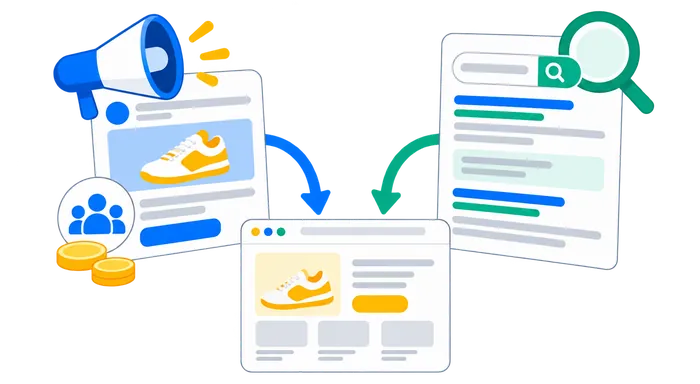
What each channel is actually for
Meta Ads can provide paid reach on Meta placements and give a team a controlled way to test creative, audience assumptions, and an offer. A campaign can be paused, changed, or scaled according to its own performance. Reach is not the same as a qualified visit, and a click is not the same as a lead or sale. Define the desired action before choosing the campaign objective and evaluating results.
Choose the paid campaign’s objective and performance settings around the action the business needs, rather than assuming that inexpensive clicks indicate successful acquisition. If the goal is enquiries, define an acceptable enquiry and a way to review it. If the goal is introducing a useful comparison resource, assess whether visitors reach and use that resource. Those are different questions, even when the ads lead to the same URL.
For unpaid social distribution that is intended to send people to a website, use a platform-specific publishing and landing-page workflow.
SEO addresses search intent. A person searching for a comparison, explanation, or product has an immediate information need. The SEO team’s job is to make the right page accessible, accurate, genuinely helpful, and clear enough to support the next action. Organic visibility depends on many factors outside the advertiser’s control; it is neither free to produce nor guaranteed to appear on a timetable.
Google states that participation in advertising programs does not positively or negatively affect inclusion or ranking in Google Search. That principle is about Google’s ads, but it also gives a useful guardrail here: do not infer a direct ranking or indexing benefit from buying Meta exposure or website visits. Paid promotion may reveal what an audience asks or values; a team must still improve the page on its own merits. See Google’s explanation of ads and search position.
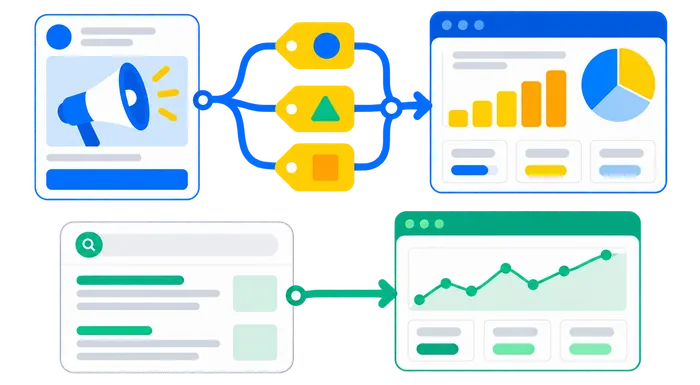
Give the channels complementary jobs, not a shared vanity metric
Before launch, write one business outcome and a separate question for each channel. For example, the paid team might ask which message brings relevant visitors to a comparison page. The SEO team might ask whether that page answers the queries it is eligible to appear for. Both can use the same landing page, but their exposure and acquisition reports should not be blended into one claim about “SEO traffic.”
Create a short shared brief before either team starts: the audience, the offer, the destination, the primary action, and the page version being promoted. Assign an owner to paid delivery, an owner to search content, and someone to validate measurement. This prevents the paid team from promoting a promise that an editor has removed, or the SEO team from interpreting a campaign-driven session spike as a search improvement.
On a narrow screen, swipe the table horizontally to view every column.
| Job | Useful measure | Primary tool |
|---|---|---|
| Paid reach and message testing | Spend, delivery, link clicks and campaign outcomes | Meta Ads Manager |
| Tagged visits to the landing page | Sessions by source, medium and campaign | GA4 Traffic acquisition |
| On-site outcomes | Recorded form submissions and separately validated lead quality | GA4 event reports and lead review |
| Google organic search visibility | Queries, impressions, clicks and CTR for the page | Google Search Console Performance |
| Page quality and clarity | Whether the page answers the question and the action works | Editorial review and user testing |
These measures answer different questions. Search Console reports Google Search appearances and clicks, not all sessions on the site. GA4 reports observed on-site traffic and configured events, not every search impression. An Ads Manager result may use different attribution settings again. Agreement between dashboards is not required for any one of them to be useful.
How to design a coordinated campaign
Treat the campaign as a shared landing-page project with separate jobs and reports for each channel. First make the page useful to both ad visitors and searchers; then test a limited paid message, label the resulting visits, and review organic search on its own timeline. The steps below show where those decisions connect—and where their metrics must remain separate.
Start with a landing page that can satisfy both visitors
Choose one page with a clear promise, descriptive heading, useful evidence, and an obvious next step. Check its mobile layout, loading experience, form or checkout, and privacy notices. A paid visitor arriving from a visual creative may need orientation; a search visitor may need a precise answer. A page can serve both if it explains the offer rather than hiding key information behind a conversion button.
Do not copy ad wording into the page just because a creative drew clicks. Compare the message with customer questions and search intent. If an ad promises a detailed comparison, the page must actually contain one. Relevant, accurate content helps people decide; it does not promise cheaper ads or higher organic rankings by itself.
Use one URL when both audiences need the same answer and next step. A limited-time offer or a substantially different audience may need a separate landing experience; do not create near-identical indexed pages simply to label channels. Before promotion, ask someone unfamiliar with the campaign to identify the offer, find the evidence, and complete the action. Record the confusing step and fix it before buying more exposure.
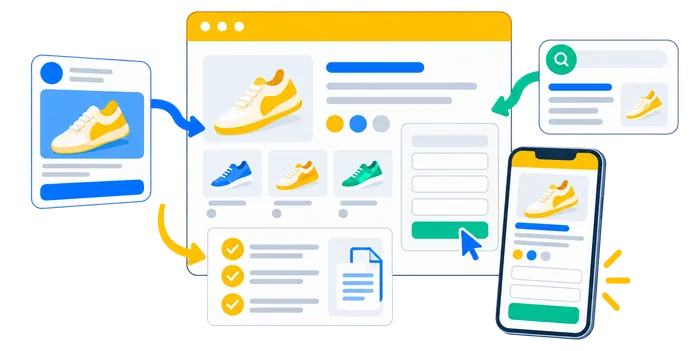
Test a message without confusing it with an SEO verdict
Use a small paid test to compare a limited number of honest headlines or visuals aimed at a defined audience. Keep the offer and landing page consistent so the comparison remains interpretable. Record the creative, audience, dates, spend, and what success means before the test. A low-performing ad could reflect creative, audience, auction conditions, or timing; it does not prove the topic has no search demand.
Likewise, a popular ad angle does not automatically deserve an SEO page. Review search queries and the pages currently satisfying them. If the angle answers a real search task, improve the relevant page or plan a distinct resource. For broader content planning, Seovisitor’s content strategy article offers context.
Decide which variable is being compared. Running two creatives with different audiences, destinations, and dates does not isolate the effect of the headline. Keep a record of those differences and treat an informal comparison as directional feedback. A small number of enquiries can also leave the result inconclusive; a responsible review can recommend another test instead of declaring a winner.
Label paid traffic before analyzing it
Use consistent UTM parameters on the ad destination URL, especially source, medium, campaign, and any relevant campaign ID or source-platform values. Use content to distinguish creatives where useful. For example, an Instagram placement could use source instagram, medium paid_social, campaign commuter_bag_launch, and content comfort_creative. Keep the same naming rules throughout the campaign, and do not put personal information in UTM values. Google’s GA4 campaign-URL guidance explains the parameters.
Keep a small naming sheet with the full destination and the values assigned to each creative. If the source is instagram, use it consistently rather than switching between Instagram, ig, and meta halfway through a comparison. If an automated placement setup uses a shared source label, document that choice; do not infer a specific placement from a label that never recorded it.
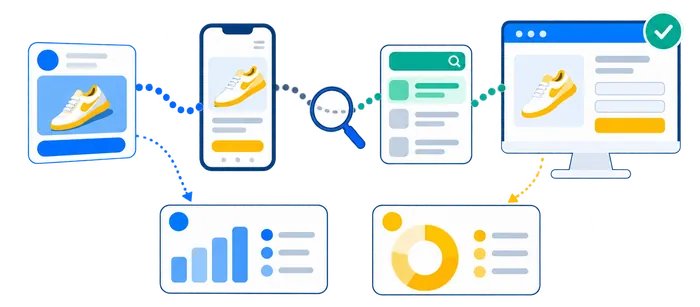
Check the final URL after any platform redirects and confirm that GA4 is collecting the intended sessions and key events. If consent settings or browser restrictions affect tracking, document the limitation instead of “correcting” data by assumption. Use campaign tags on acquisition links, not ordinary internal navigation, to avoid distorting attribution.
For a visit-based comparison, use session-scoped dimensions such as Session source / medium and Session campaign. First user source answers how a user was initially acquired, so it can differ for someone returning through an ad. Event-scoped attribution answers another question again. Google’s channel-group documentation explains these scopes; keep the scope visible in the report instead of comparing identically named numbers from different views.
Review organic performance as its own trend
In Search Console, filter the Performance report to the page and compare equivalent periods for relevant queries, impressions, clicks, and CTR. Read the query mix before interpreting a change: more impressions for broad queries can lower CTR without indicating a worse page. Check the page’s content, internal links, and technical accessibility separately. For a broader SEO work plan, use the SEO campaign management guide rather than turning this article into a duplicate checklist.
Paid campaign clicks and GA4 sessions should not be added to Search Console organic clicks. Each system has different definitions, collection conditions, and reporting delays. A person might see an ad, later search for the brand, and return through another channel; the available reports cannot automatically prove which touchpoint caused the final action.
Separate branded and non-branded query groups when their patterns differ, and keep country, device, and search type comparable. A rise in brand searches during promotion is a useful observation, but seasonality, other publicity, or existing demand may also explain it. Note the campaign dates alongside content releases and avoid assigning every change in organic clicks to the paid activity.

A hypothetical example: launching a laptop-bag comparison page
This is an illustrative plan, not a real Seovisitor case study. Imagine a retailer wants qualified visits to a new page comparing commuter laptop bags. Its business goal is completed product enquiries. The landing page explains fit, protection, weight, price range, and who each option suits; it includes a clear enquiry form. The team validates that the form completion is recorded as a GA4 key event before promoting the page.
The Meta team targets a defined audience interested in commuting and tests two truthful messages: one about everyday comfort and one about device protection. Each creative leads to the same comparison page with distinct utm_content values under a shared campaign name. Ads Manager supplies spend, delivery, and ad interactions; GA4 shows tagged sessions and the configured enquiry event. Neither report alone establishes an organic-search gain.
The measurement owner checks that a successful form submission records the intended event once and that an unsuccessful attempt is not counted as an enquiry. A lead reviewer then checks whether submissions contain a genuine product question. A key event is a configured measurement, not automatic proof that the visitor meets the retailer’s qualification criteria. The handoffs below keep the example operational without assuming any results.
| Owner | Deliverable before launch | Evidence to review |
|---|---|---|
| Paid media owner | Two truthful messages, destination tags, spend limit | Delivery, ad interactions, cost and labelled outcomes |
| SEO editor | Useful comparison, verified product details, contextual links | Relevant query-page visibility and reader questions |
| Measurement owner | Tested form event and a report with defined scopes | Tagged sessions, recorded events and tracking gaps |
| Lead reviewer | A documented definition of a relevant product enquiry | Accepted enquiries, duplicates and reasons for rejection |
In parallel, the SEO team checks whether the page answers searches such as “how to choose a commuter laptop bag” and whether its title, headings, product details, internal links, and mobile experience make that answer accessible. Search Console tracks the page’s actual queries, impressions, and Google Search clicks over time. If the ad test reveals repeated questions about rain protection, the editor can add a useful, verified explanation to the page. That is a content decision informed by research, not a transfer of ad engagement into a ranking factor.
The team reviews outcomes in three columns: Meta delivery and spend; GA4 tagged visits and enquiries; GSC query and click trends. It records the dates of page changes and campaign changes. No result is assumed, and it would be wrong to attribute every later enquiry or organic click to the Meta test.
Suppose the review finds repeated uncertainty about bag dimensions. The editor verifies the measurements and improves the comparison; the paid owner changes a misleading creative only if that creative caused the confusion. If form tracking fails, the team fixes measurement before interpreting lead performance. If enquiries are relevant but organic visibility is unchanged, it reports those two observations separately rather than calling the campaign an SEO success.
Attribution: what the data can and cannot tell you
A conversion path can include multiple visits, devices, and channels. GA4 attribution assigns credit according to a selected model and the data it can observe; that is a reporting method, not proof of a single cause. Meta and GA4 may count or attribute outcomes differently. Consent choices, blocked tags, delayed reporting, and off-platform behavior can leave gaps. Compare like-for-like periods and definitions, and describe uncertainty in any campaign review. Google’s GA4 attribution documentation explains the models.
If you need a stronger claim about incremental impact, plan a suitable controlled experiment and its measurement before launch. Otherwise report what each tool observed and the plausible decisions it supports, not a causal story invented after the numbers arrive.
Before reconciling reports, write down the action being counted, date range, time zone, attribution settings, and reporting scope. A report crediting an ad after a view and a report assigning a later website action to another channel can both describe the same enquiry. Do not add attributed conversions across platforms to create a total. Use accepted leads or order records for business totals, and keep attribution as a separate analytical view.

Common mistakes to avoid
- Calling paid visits organic growth: keep paid social, purchased traffic, referrals, and Google Search performance separately labeled.
- Claiming ads speed up indexing: an ad click is not a request for Google to index a page. Diagnose crawl, canonical, and content issues through appropriate search tools.
- Treating bounce rate or dwell time as a ranking lever: these metrics can help diagnose on-site experience in context, but buying visits to change them is not an SEO strategy. For more nuance, read Seovisitor’s pogo-sticking explainer.
- Assuming every ad click is a prospect: check whether the visitor understood the offer and completed a meaningful action.
- Using inconsistent UTMs: mismatched source names fragment reports and make channel comparison harder.
- Overstating test results: creative performance depends on audience, placement, budget, and timing; validate a message before rewriting an entire organic content plan.
Good integration is operational: shared audience knowledge, a coherent page, disciplined tagging, and separate decisions for each channel. It is not a shortcut to ranking.
Set review rules before spending more. If a form or destination is broken, pause the affected promotion and repair it. If clicks arrive but accepted enquiries do not, review the promise, audience, and qualification criteria before increasing the budget. If the data is sparse or tracking has changed, label the comparison inconclusive. A cheap click alone does not justify scaling, and an organic fluctuation alone does not justify stopping an otherwise useful paid test.
Where a separate traffic campaign fits
Seovisitor offers website traffic campaigns that can send visits to a chosen landing page. That is a separate paid distribution option, not Meta Ads, earned search traffic, or evidence of improved rankings, indexing, or conversions.
If you use one, give it its own campaign label and judge it against clearly defined on-site outcomes without mixing it into organic performance.
Keep this third source outside the Meta creative comparison. Sending another traffic campaign to the same page during the test can change total sessions and engagement without telling you which ad message worked. Record its dates and destination, review its source and campaign values, and exclude it from the paid-social comparison where appropriate. When attribution cannot reliably separate visits, report that limitation instead of assigning the unexplained traffic to Meta or organic search.

If you want more visits to your online store, you can use SEOVisitor’s website traffic service to direct a separate traffic campaign to your selected store page.
Make the next decision from the right evidence
Choose Meta Ads when you need a paid reach or messaging test with a defined budget. Invest in SEO when the page does not yet answer relevant search intent or has access and usability problems. Use both when the audience and offer overlap, but agree on distinct channel measures first. Continue a tactic only when its observed outcomes justify its cost and when the landing page remains useful to the people it attracts. Neither channel guarantees rank, indexing, leads, or sales.
Frequently Asked Questions
Quick answers to common questions about Meta Ads and SEO
No. Meta Ads buy exposure on Meta placements; they do not directly improve Google Search rankings. Use SEO to improve a page for relevant search intent, and measure organic performance separately.
No. Paid visits do not guarantee crawling or indexing. Check the page’s accessibility, canonical, content, and Search Console status instead of treating ad clicks as an indexing signal.
Use consistent UTM source, medium, and campaign values on paid destination URLs and review them in GA4. Use Search Console for Google Search queries, impressions, and clicks; do not label paid sessions as organic clicks.
They measure different actions and use different collection and attribution rules. Compare like-for-like definitions and periods; Search Console reports Google Search activity, while GA4 reports observed site activity and configured key events.
Do not assume so. Such metrics can help diagnose the visitor experience, but buying visits to change them is not a reliable ranking strategy. Evaluate the page’s usefulness and organic-search results independently.
Yes, when both audiences need the same useful answer, offer and next step. Use a separate experience when the promise or audience genuinely differs; do not create near-identical pages solely to label channels.
Use session-scoped source / medium and campaign dimensions for a session-based comparison. First user dimensions describe initial acquisition, while event-scoped attribution answers a different question. Keep the scope consistent.
No. Ad performance reflects its audience, creative, delivery and offer. Validate the underlying search task and existing page coverage separately before creating or rewriting organic content.
No. A GA4 key-event setting does not configure Meta measurement by itself. Validate each platform's setup separately, and distinguish recorded form submissions from leads accepted by the business.
Confirm that the destination works, measurement is reliable, enquiries meet your criteria and observed outcomes justify the cost. Review organic query-page trends separately; neither cheap clicks nor a short ranking movement is enough to decide.



Comments
Leave a Comment