



Distinguish low-quality visits from invalid AdSense traffic. Check acquisition methods, analytics and ad implementation, then follow a practical process for investigating and pausing suspicious sources.
Website traffic creates an AdSense risk when it generates artificial ad impressions or clicks, including activity caused by automation, incentives, deceptive placement, or accidental interaction. A real visitor is not automatically a valid ad visitor, and a healthy-looking analytics report does not certify compliance. The publisher remains responsible for the traffic reaching the ads.
The practical goal is to understand where visits come from, keep promotion and ad implementation within policy, and respond to suspicious changes before increasing exposure. No traffic seller, targeting setting, or monitoring tool can guarantee that Google will regard every interaction as valid or keep an account unrestricted.
This guide focuses on invalid traffic risks and quality checks for websites using AdSense. It is not a list of supposedly “AdSense-safe” providers or a method for buying visits to generate advertising income. Use the checks below alongside current Google policies and any account-specific instructions.
What Is Invalid Traffic in AdSense?
Google’s invalid traffic definition covers clicks or impressions that artificially inflate advertiser costs or publisher earnings. It includes fraudulent activity and accidental clicks. Examples include self-clicks, repeated artificial interaction, encouragement to click ads, and automated click or impression generation.
That makes invalid traffic broader than bot traffic. A human can participate in an incentivized clicking scheme or accidentally tap an ad placed beside a control. Conversely, an automated request in a server log does not by itself show that an AdSense impression or click occurred.
Keep three questions separate: was the visitor relevant to your content, was the recorded activity genuine, and did the ad interaction comply with policy? A person outside your sales audience is not automatically fraudulent. A seemingly interested visitor does not make an artificial ad interaction acceptable.
| Situation | What it may mean | What to check |
|---|---|---|
| A reader leaves quickly | A brief answer, a poor match, or a tracking issue | Page purpose and acquisition context; do not label it fraud from duration alone. |
| Many identical requests arrive rapidly | Possible automation or repeated access | Request pattern, infrastructure logs, and whether ads were involved. |
| Visitors are rewarded for ad interaction | A policy problem, even if visitors are human | Stop the prohibited promotion method. |
| Ad interaction changes after a layout update | Possible accidental clicks or altered exposure | Placement, overlays, controls, and layout stability. |
A warning sign calls for investigation, not a public accusation against a source or visitor. Use multiple pieces of evidence and record alternative explanations. This keeps your response proportionate while avoiding the opposite mistake of dismissing suspicious activity because one engagement metric looks normal.

Can You Buy Traffic to a Website That Uses AdSense?
Paid promotion is not the same thing as buying artificial ad activity. Google’s guidance on purchasing traffic allows promotion that complies with its policies, while urging caution with third-party services. It also advises close monitoring and pausing or stopping sources that show suspicious activity.
That is not a blanket approval of a platform, seller, or campaign. Before launch, establish how the visitors will reach the page, what message they will see, and what they are being asked to do. A label such as “real users,” “organic,” or “AdSense safe” is not a description of the acquisition mechanism.
The AdSense Program policies prohibit artificial click and impression generation and identify prohibited traffic methods such as paid-to-click, paid-to-surf, autosurf, and click-exchange programs. Unwanted mass email and deceptive navigation also create policy problems. Ordinary paid search advertising is different from a program that pays people to generate ad activity.
Do not buy a package intended to produce AdSense clicks, views, or revenue. Do not ask visitors to “support the site” by interacting with ads. A geographic setting, promised session duration, or low bounce rate does not change the underlying acquisition method or provide a compliance exemption.
Questions to resolve before approving a source
Google’s traffic provider checklist recommends understanding placements, how traffic is generated, reporting, and your ability to monitor a limited test. Use that as a starting point, not as a certificate issued after a seller answers a few questions.
- Where will the promotion appear, and can you inspect representative placements?
- What leads the visitor to the destination: a relevant advertisement, a voluntary referral, an incentive, or an automatic process?
- Can you distinguish this source in campaign records and analytics?
- Who can stop delivery quickly, and how will you confirm it has stopped?
- What evidence would make you decline or pause the campaign?
If essential details are unavailable, the lack of visibility is itself a reason not to proceed. A small test can limit exposure, but it cannot make a prohibited method acceptable. Avoid an experiment whose success depends on earning more from displayed ads than you pay for unexplained visits.
Build a Baseline Before Traffic Changes
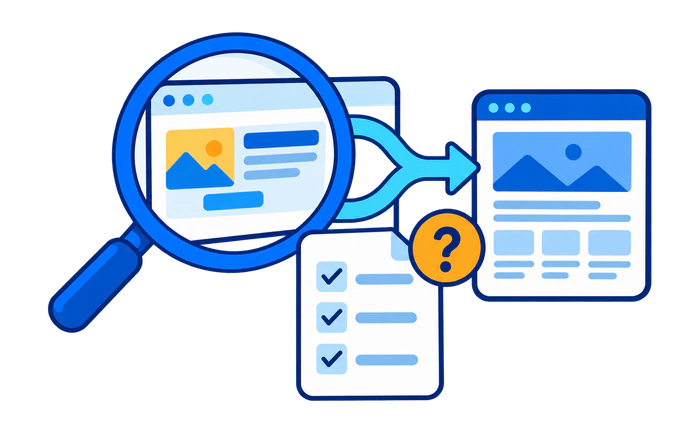
A baseline makes unusual patterns easier to interpret. Capture ordinary activity before a new campaign, promotion partner, or layout change. Compare equivalent periods, including similar weekdays where relevant, and record seasonal events that could legitimately affect readership.
Record the source, destination, and timing
Maintain a simple campaign register containing the source, start time, destination pages, expected audience, promotion message, budget, and pause contact. Record changes to the site alongside campaign changes. An increase that begins after a new placement has a different investigative context from an increase following a widely shared article.
Use consistent external campaign labels for links you control, without personal information. A UTM label helps identify a campaign in analytics; it does not validate visitors or prove a particular source caused an ad issue. Keep provider delivery reports as a separate record rather than assuming their visit totals will exactly match GA4.
Measure site activity and ad activity separately
Google’s invalid traffic prevention guidance recommends meaningful segmentation of ad traffic using available channels or ad units, alongside analytics investigation. Review affected pages and ad units rather than relying only on site-wide totals.
GA4 sessions describe visits; AdSense reports describe ad activity. Not every page visit produces the same number of ad requests or impressions. Consent choices, ad blocking, implementation, and reporting differences can complicate comparisons. Treat a gap as something to explain rather than a formula for calculating invalid traffic.
For acquisition analysis, use session-level source and medium and the relevant landing page. Check that your measurement setup is functioning before interpreting a sudden change. Our GA4 traffic-source comparison guide covers those reporting distinctions without treating engagement as proof of ad validity.
Which Traffic Patterns Deserve Investigation?
Look for departures from your own baseline and combinations of signals. There is no universal safe bounce rate, ad CTR, country mix, or maximum daily growth percentage. A publisher with breaking news, a specialist reference page, and an online store will have different normal patterns.
| Signal | Possible explanation | Next check |
|---|---|---|
| A sudden burst from one campaign | Scheduled promotion, viral sharing, or unexplained delivery | Campaign timing, placements, logs, and affected ad units. |
| Very short sessions on one destination | Poor message match, fast answers, missing events, or automation | Page purpose, event setup, and request patterns. |
| Unexpected country or device mix | Audience expansion, location estimation, or unsuitable placements | Targeting configuration and placement evidence. |
| Ad CTR rises after a design change | Changed visibility or accidental interaction | Position of controls, overlays, spacing, and moving elements. |
| Ad activity rises without comparable measured sessions | Measurement gaps, refresh behavior, or other implementation issues | Tag coverage, ad setup, consent behavior, and timestamps. |
Do not conclude that all visitors from an unexpected country are bots, or that every shared IP represents one person repeatedly clicking. Several users can share a network. Equally, distributed automation can use many addresses. Investigate the pattern and context rather than treating a location or address as a verdict.
If you cannot explain a change and it may affect ad validity, avoid increasing the campaign while you investigate. Record the reason for concern, the affected period, and what you have checked. A documented pause is more responsible than trying to make the summary statistics look normal.

What GA4, Server Logs, and Protection Tools Can Tell You
Each tool observes a different part of the system. Use them together when available, but do not promise that installing analytics or a firewall will identify every invalid ad interaction. Monitoring evidence informs your decisions; Google makes its own validity determinations.
GA4: acquisition and recorded behavior
GA4 can help compare sources, landing pages, recorded engagement, and meaningful site actions. Google’s known bot exclusion documentation says known bots and spiders are automatically excluded, with no report showing the excluded amount. This is not a guarantee that all remaining activity is human or valid for AdSense.
Engagement is not a human-verification test. A short visit may be legitimate, and suspicious activity may include multiple pageviews or recorded events. Changing event definitions can also change engagement results without changing the audience. Do not present an improved bounce rate as proof that a source is now safe.
Server and edge logs: request-level evidence
Logs can help investigate timestamps, requested paths, repeated patterns, and infrastructure responses. They may reveal traffic that does not execute analytics scripts. Access and retention vary by hosting setup, so consult the site administrator rather than assuming GA4 exposes individual visitor IP addresses.
A request is not the same thing as an ad click. User-agent strings and referrer information can be missing or misleading, and logs alone may not identify the responsible person. Google’s invalid traffic FAQ recommends reviewing logs for suspicious activity; use that evidence carefully and protect sensitive records.
Protection controls: reduce exposure, not certify compliance
Depending on your infrastructure, an administrator may use rate limits, bot-management rules, or challenges for specific suspicious patterns. Test carefully to avoid blocking legitimate readers or necessary services. Prefer narrow, evidence-backed controls over indiscriminately blocking an entire audience because an analytics average changed.

Filtering a segment out of an analytics report is different from preventing visits or ad requests. It changes what you see, not what occurred. Keep an unaltered record of the incident, and do not describe cleaner reporting as removal of invalid ad activity.
Check Ad Placement and Site Implementation
A source investigation is incomplete if the site itself encourages accidental interaction. Google recommends checking implementation as part of invalid traffic prevention. Examine the affected page and layout, especially after a theme, plugin, advertising, or navigation change.
- Make it clear which elements are content, navigation, downloads, and advertisements.
- Check whether sticky controls, overlays, or shifting content bring ads into an unexpected interaction area.
- Review recent changes that may have altered how often ads are requested or displayed.
- Inspect the intended user journey without clicking live ads to test them.
- Compare the affected page with an unchanged page to narrow the investigation.
Keep testing focused on the interface and implementation. Do not repeatedly reload live pages to manufacture observations, ask staff to click ads, or use artificial interaction as a diagnostic shortcut. Use supported review methods and the current AdSense prevention recommendations.
A layout fix can address an identifiable risk, but it does not establish that every previous interaction was valid or guarantee removal of an account restriction. Record the change and verify that the underlying interface problem is resolved. Keep the implementation finding separate from any conclusion about the traffic source.
A Hypothetical Investigation: A New Partner Sends Unexplained Visits
Imagine a recipe publisher starts a campaign intended to promote a seasonal cooking guide. Soon afterward, one destination receives an unusual burst of visits and a change in ad activity. This is a hypothetical scenario, not a reported case study, proof of fraud, or prediction of revenue.
The publisher first records the campaign start time, destination, promotion message, and affected reports. It compares the period with ordinary activity on that page and checks whether a genuine publicity event explains the increase. It also looks for site changes that could have altered measurement or ad exposure.
| Stage | Evidence to collect | Decision |
|---|---|---|
| Identify the change | Time, campaign, page, ad-unit pattern | Limit the investigation to the affected scope without ignoring wider issues. |
| Check explanations | Placement samples, promotion records, tracking and layout changes | Separate expected publicity from unexplained delivery. |
| Contain exposure | Pause confirmation and subsequent traffic trend | Stop the questionable source while uncertainty remains. |
| Review implementation | Controls, overlays, ad behavior, logs | Correct a verified problem; avoid speculative changes. |
| Document the outcome | Actions, dates, remaining uncertainty | Resume only if the source and method can be justified, not because revenue looks attractive. |
Suppose the partner cannot show where the promotion ran or explain how visits were generated. The publisher keeps delivery paused. It does not ask for longer sessions, different country labels, or a lower bounce rate to conceal the uncertainty. If an implementation issue is found as well, that issue gets its own correction and record.
No conclusion about Google enforcement follows from the example. A decline after pausing is useful evidence about timing, but it does not prove which interactions Google considered invalid. The value of the process is a clearer decision and reduced unexplained exposure, not a guaranteed account outcome.

What to Do When You Suspect Invalid Traffic
Prioritize containment, evidence, and the instructions attached to your account. Avoid making several unrelated changes at once: that can make it harder to understand what happened. Assign responsibility to someone who can pause promotion and someone who can review the site implementation.
- Pause the questionable source: confirm that delivery stops rather than relying on a verbal assurance.
- Preserve the record: keep relevant reports, timestamps, placement information, and configuration changes.
- Inspect the page and ad setup: check for an identifiable accidental-interaction or implementation problem.
- Review logs where appropriate: involve the administrator and apply narrowly targeted controls if justified.
- Read the account notice: use the Policy center and follow the applicable support or review path.
- Document unresolved questions: do not claim the source is cleared merely because a short period looks normal.
Do not attempt to evade restrictions with a replacement account, hidden delivery, or altered labels. An analytics filter cannot undo ad activity. Keep communications factual: describe what changed, what you observed, what you stopped, and what you corrected, without inventing a fraud diagnosis you cannot support.
Ad serving limits are not a guaranteed timetable
Google’s ad serving limits guidance distinguishes traffic-quality assessment from invalid traffic concerns. Limits are reviewed as Google continues monitoring, and there is no guaranteed removal date. A limit is not the same status as account closure; read the actual notice rather than inferring it from reduced earnings.
Follow the instructions for the specific status. Fixing a discovered problem is worthwhile, but no outside checklist can promise reinstatement or a deadline. Treat estimated earnings as provisional rather than using a short-term increase as evidence that a questionable source is acceptable.

Build Relevant Traffic Without Promising AdSense Safety
Useful search content, relevant referrals, voluntary newsletter readership, and transparent advertising can serve legitimate audience goals. None should be called automatically safe simply because of its channel. Evaluate the acquisition method, audience relevance, destination, and observed ad activity separately.
For an educational publisher, the campaign objective might be readership of a specific guide or voluntary subscriptions. Keep those outcomes separate from ad interaction. The content should deliver what the promotion promises, and the acquisition plan should not depend on encouraging users to click or repeatedly view advertisements.

Considering a new traffic campaign? Contact Seovisitor to discuss your destination, audience, and campaign objective before ordering. Ask about the available delivery options and reporting so you can assess the fit for your publisher goals and make an informed decision.
Do not confuse AdSense policy risk with an SEO ranking diagnosis. This page’s quality checks do not promise indexing, organic ranking improvements, or qualified customers. If you need to evaluate a campaign’s business outcomes, use the appropriate measurement framework rather than labeling more ad impressions as growth.
Conclusion: Treat Traffic Safety as an Ongoing Responsibility
A responsible AdSense publisher knows how visitors reach the site, checks changes in context, and can stop a questionable source. Separate relevance from validity, site sessions from ad activity, and supporting evidence from a definitive fraud finding.
Start with transparent acquisition, an understandable page, and a documented baseline. Investigate anomalies using the tools available, keep records of your actions, and follow current Google guidance. Those steps support better decisions; they do not guarantee that a campaign is “AdSense safe” or that an account will remain unrestricted.
Frequently Asked Questions
Quick answers to common questions about AdSense invalid traffic
No provider or monitoring tool can guarantee AdSense safety or freedom from enforcement. Google allows policy-compliant promotion, but publishers remain responsible for ad traffic. Understand the acquisition method, avoid prohibited programs, and stop suspicious sources.
GA4 can reveal source and behavior patterns, while server or edge logs and protection tools can provide request-level evidence. None can certify every AdSense interaction as valid. Corroborate signals instead of treating one metric as proof of fraud.
Yes, if the traffic or promotion method violates policies or raises unresolved validity concerns. Paid promotion is not automatically prohibited or automatically safe. Read the actual account notice and review the source, destination and ad implementation.
Low-quality traffic may be genuine visits that do not match your audience or business objective. Invalid AdSense traffic involves artificial ad clicks or impressions, including accidental interaction. Human visitors can generate invalid activity, so the distinction is not simply humans versus bots.
Set a review schedule appropriate to your traffic volume and risk, and increase monitoring when campaigns, partners or layouts change. Investigate unexplained changes promptly rather than waiting for a monthly review. There is no universal review frequency that guarantees compliance.
No channel label proves ad validity. Organic, referral and paid visits all require context, and site implementation can create accidental interactions. Evaluate how visits are generated and what happens on the page, not only the reported source.
No. Bounce rate describes recorded engagement, not ad validity, buyer intent or proof that a visitor is human. Review acquisition methods, implementation and corroborating evidence instead of using an engagement threshold as a safety certificate.
Google Analytics automatically excludes known bots and spiders, but that is not a guarantee that all remaining activity is human or valid for AdSense. The excluded amount is not available as a report. Use other evidence when investigating suspicious activity.
There is no guaranteed removal deadline. Google reviews limits while monitoring traffic, and the reason can involve traffic-quality assessment or invalid traffic concerns. Check the Policy center, follow the applicable instructions and address identified problems.




Comments
Leave a Comment