



In today’s digital landscape, SEO signals refer to the various indicators that Google uses to evaluate and rank web pages. These signals include factors such as content quality, backlinks, user behavior, and overall site performance. Over time, Google’s algorithms have become significantly more advanced, relying on artificial intelligence…
In today’s digital landscape, SEO signals refer to the various indicators that Google uses to evaluate and rank web pages. These signals include factors such as content quality, backlinks, user behavior, and overall site performance. Over time, Google’s algorithms have become significantly more advanced, relying on artificial intelligence and user interaction data to better understand which pages truly provide value to users.
Because of this evolution, not all SEO signals carry the same level of importance anymore. Some older techniques have lost their effectiveness, while signals related to real user engagement now play a much more critical role in rankings. This shift has encouraged businesses to focus on attracting genuine and targeted visitors instead of relying on outdated methods. For instance, some websites use strategies like buy website traffic to bring in real users and strengthen meaningful SEO signals, which can ultimately lead to better visibility in search results.
What Are SEO Signals
SEO signals are the various factors that search engines use to evaluate and rank web pages in search results. These signals help Google understand how relevant, trustworthy, and useful a page is for a specific search query. Instead of relying on a single factor, Google looks at a combination of signals to determine which pages deserve higher visibility.
SEO signals can be grouped into several main categories. On page signals include everything that exists within a webpage, such as content quality, proper keyword usage, heading structure, and optimized title tags and meta descriptions. These elements help search engines clearly understand the topic and purpose of the page.
Off page signals focus on a website’s authority and reputation across the internet. The most important example is backlinks, which show how many other websites are linking to your content. When these links come from relevant and trusted sources, they act as a strong indicator of credibility.
Technical signals relate to how well a website is built and performs. Factors such as page speed, mobile friendliness, secure connections, and proper indexing all play a role in how easily search engines can access and evaluate your content.
User behavior signals are based on how visitors interact with your site. Metrics like click through rate, time spent on a page, and whether users return to search results give Google insight into whether the content is actually satisfying user intent.
Systems like Google RankBrain and other AI driven technologies play a key role in analyzing these SEO signals. They continuously learn from user behavior and adjust search results accordingly. This is why focusing on real user experience has become one of the most important parts of modern SEO.
Core SEO Signals That Google Actually Uses
High Quality Content Signals
One of the most important SEO signals that Google relies on is content quality. No matter how strong your technical SEO or backlink profile is, content remains the core factor in ranking. Google’s main objective is to deliver the most useful and relevant results to users, so pages that provide real value are more likely to rank higher.
A key part of high quality content is matching search intent. This means understanding what users actually want when they search for something. Some users are looking for information, others want to compare options, and some are ready to make a decision. When your content directly satisfies that intent and provides clear and helpful answers, it sends a strong signal to Google.
Another important factor is E E A T, which stands for Experience, Expertise, Authority, and Trust. Google evaluates whether the content is created by someone with real knowledge or experience, whether the website is recognized as a reliable source, and whether users can trust the information. Content that reflects genuine expertise and builds credibility performs better in search results.
Freshness is also a strong SEO signal. Google tends to prioritize content that is regularly updated, especially for topics that evolve over time. Keeping your content accurate, adding new information, and updating outdated sections shows that your page is still relevant and actively maintained. This can have a positive impact on your rankings.
User Engagement Signals
User engagement signals are among the most influential SEO signals in modern search rankings. These signals help Google understand how real users interact with your content and whether your page truly satisfies their needs. When users engage positively with your site, it sends a strong message that your content is valuable and relevant.
Click through rate, or CTR, measures how often users click on your page when it appears in search results. A higher CTR usually indicates that your title and meta description are compelling and closely match user intent.
Dwell time refers to how long a user stays on your page after clicking on it. If users spend more time reading your content, it suggests that they are finding it useful and engaging.
Bounce rate shows the percentage of users who leave your site without interacting further. While not always a negative signal, a consistently high bounce rate can indicate that the content did not meet expectations.
Pogo sticking happens when a user clicks on a result, quickly leaves, and returns to the search results to choose another page. This behavior is a strong indicator that the original page did not provide a satisfactory answer.
Backlink Signals
Backlinks remain one of the strongest SEO signals that Google uses to evaluate a website’s authority and credibility. However, the focus has clearly shifted from quantity to quality. A few high quality links from trusted and relevant websites can have a much greater impact than a large number of low quality links.
The anchor text of a backlink also plays an important role. It helps Google understand the context of the linked page. When anchor texts are natural and relevant to the content, they strengthen the overall SEO signals without appearing manipulative.
Relevance is another key factor. Links coming from websites that are closely related to your niche carry more value than links from unrelated sources. This helps Google build a clearer understanding of your website’s topic and authority within that field.
Link velocity, which refers to the speed at which your website gains backlinks, is also important. A natural and steady growth pattern looks more trustworthy, while sudden spikes in links can appear suspicious and may reduce their impact.
Technical SEO Signals
Technical SEO signals ensure that your website is accessible, fast, and easy for search engines to understand. Without a solid technical foundation, even strong content and backlinks may not perform well.
Core Web Vitals are a set of metrics that measure user experience, including loading speed, visual stability, and interactivity. Pages that perform well in these areas provide a smoother experience and are more likely to rank higher.
Mobile first indexing means that Google primarily uses the mobile version of your website for indexing and ranking. A site that is not optimized for mobile devices can lose visibility in search results.
Site speed is another critical factor. Faster websites improve user experience and reduce the chances of users leaving the page too quickly. Even small improvements in loading time can have a noticeable impact on SEO signals.
Crawlability and indexability refer to how easily search engines can access and understand your website’s pages. Proper site structure, clean URLs, and well configured robots and sitemap files help ensure that your content is correctly discovered and indexed by Google.
Behavioral Signals and Their Growing Importance
Behavioral signals have become one of the most important parts of modern SEO because they reflect how real users interact with a website after landing on it. These signals help Google understand whether a page is actually satisfying user intent or not. Unlike traditional ranking factors, behavioral signals are directly connected to real human actions, which makes them highly valuable in search algorithms.
User behavior has a direct impact on rankings because it shows how relevant and useful a page is in practice. When users click on a result, stay on the page, and engage with the content, it sends a positive signal to Google. On the other hand, if users quickly leave the page or return to search results, it suggests that the content did not meet their expectations.
AI driven systems like Google RankBrain and the Helpful Content system play a major role in analyzing these behaviors. RankBrain helps Google interpret search queries and user interactions, while the Helpful Content system focuses on identifying content that is genuinely created for people rather than just for search engines. These systems continuously learn from user behavior to improve ranking accuracy.
These behavioral signals are also closely connected to real traffic quality. If traffic is not genuine or targeted, SEO signals cannot form properly. In other words, without real user engagement, even strong content may struggle to perform well. This is why having meaningful and relevant traffic is essential for building strong SEO signals over time.
Does Buying Traffic Help SEO Signals
The Right Way vs The Wrong Way
When it comes to SEO signals, not all traffic behaves the same way and not all traffic sources are safe or useful. Fake or low quality traffic can actually harm your website because it creates unnatural patterns that Google may detect as misleading. In many cases, this type of traffic does not interact with the content, which leads to weak engagement signals and can distort analytics data.
On the other hand, real and targeted traffic can have a positive impact on SEO signals. When users are genuinely interested in your content and interact with your pages, it improves engagement metrics and helps search engines better understand the value of your website. This type of traffic supports natural growth and strengthens overall performance in search results.
When It Can Actually Work
Buying traffic can be useful in specific situations when it is done correctly and with a focus on quality. One of the main benefits is improving CTR, especially when real users are exposed to your pages in search results or campaigns and choose to click through.
It can also be used for testing pages. For example, you can evaluate how different landing pages perform in terms of user behavior, engagement, and conversion before scaling them further.
Another benefit is improving engagement signals. When traffic is real and relevant, users spend more time on the site, interact with content, and reduce bounce rates, which can positively influence SEO signals over time.
SEO Signals That No Longer Matter or Matter Less
Over time, Google has reduced the importance of several outdated SEO signals that were once heavily manipulated. These practices either no longer work or have very limited impact compared to modern ranking factors.
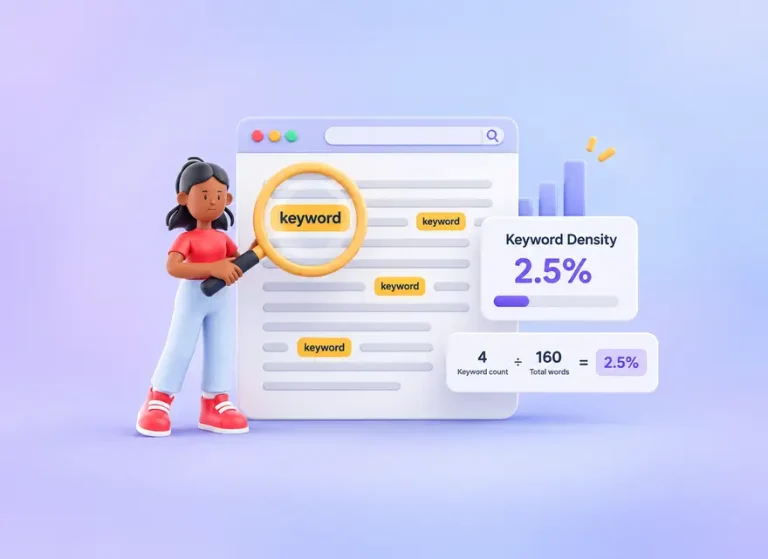
Keyword stuffing is one of the clearest examples. Repeating keywords excessively in content used to influence rankings, but today it can actually harm readability and user experience, which negatively affects performance.
Exact match domains still exist, but they no longer guarantee higher rankings. While having keywords in a domain can provide slight relevance signals, it is not a strong ranking factor on its own anymore.
Meta keywords are another outdated signal. Google no longer uses them for ranking purposes because they were widely abused in the past.
Low quality directory links also have very little value today. In many cases, they are ignored or even considered spammy if they come from irrelevant or untrusted sources.
How to Improve Your SEO Signals
Improve Content Quality
One of the most effective ways to strengthen SEO signals is by improving content quality. This means creating content that is clear, useful, and aligned with user intent. High quality content naturally attracts better engagement and stronger ranking performance over time.
Optimize UX and UI
User experience and interface design play a major role in how visitors interact with your website. A clean layout, easy navigation, and fast loading pages help users stay longer and engage more, which improves behavioral SEO signals.
Get Real Traffic
Driving real and relevant traffic is essential for building strong SEO signals. This can be achieved through multiple channels such as advertising campaigns, social media platforms, and referral traffic from other websites. The key is to focus on quality visitors who are genuinely interested in your content.
If you want to speed up the improvement of these signals, using services like buy website traffic can be a starting point when the traffic is real, targeted, and aligned with your audience.
Conclusion
SEO signals are not based on a single factor but rather a combination of many different elements that work together to determine how a website performs in search results. These signals include content quality, backlinks, technical performance, and especially user behavior. Understanding how they interact is essential for building a strong SEO strategy in today’s competitive environment.
The most important shift in modern SEO is the focus on users. Websites that prioritize user experience and provide real value tend to perform much better in the long run. When content is created with the user in mind, most SEO signals naturally improve without needing complex manipulation.
Ultimately, real traffic combined with a strong user experience is the foundation of success in Google rankings. Without genuine engagement, even well optimized pages may struggle to grow. That is why many businesses focus on improving both content quality and targeted traffic. In some cases, using methods like buy organic traffic can help support these efforts when applied in a natural and targeted way.



Comments
Leave a Comment