


Before buying website traffic, verify the source, audience, country, fraud controls, analytics, UTM tags, delivery pace, landing-page fit, conversion plan, pricing and refund terms. Use this checklist to run a small, measurable test.
Buying website traffic can support audience research, landing-page testing, product launches, and campaign reach—but only when the visitors are real, relevant, transparent, and measurable. A large visit count is not evidence of quality, and purchased traffic does not directly buy Google rankings.
Use this checklist before paying a provider or ad network. It covers the source, country, fraud controls, analytics, UTM tracking, landing-page fit, conversion plan, terms, and refund policy. The goal is a controlled acquisition test with a clear business outcome, not a temporary analytics spike.
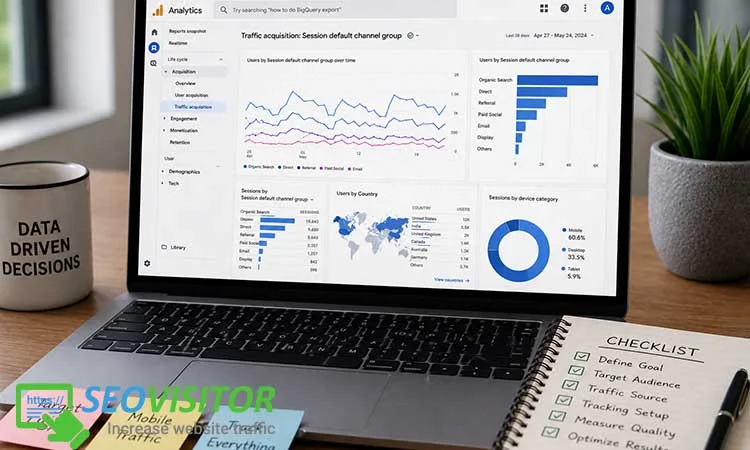
What Buying Website Traffic Means
Buying traffic means paying for visits through search, social, display, native advertising, publisher placements, referral networks, or a traffic provider. The label alone does not explain how visitors were acquired. Two campaigns with the same number of sessions can differ dramatically in intent, targeting, transparency, and conversion potential.
Organic search traffic comes from unpaid search results. Paid and purchased traffic can complement an acquisition plan, but they do not replace useful content, technical SEO, or conversion optimization. For the broader definitions and measurement model, read what website traffic means.
The 15-Point Checklist Before Buying Website Traffic
Record the provider’s answer and your acceptance criterion for every item. If a vendor cannot explain the source, measurement, and terms, pause the purchase.
1. Define one campaign goal
Choose a primary outcome such as qualified product views, registrations, leads, purchases, downloads, or a landing-page test. “More visitors” is not enough because it provides no rule for deciding whether the campaign worked.
2. Describe the intended audience
Write down the visitor’s location, language, device, interests, and problem. Targeting should match the offer and the landing page. Broad delivery may be acceptable for awareness, while a lead or sales campaign usually needs narrower audience controls.
3. Ask for the exact traffic source
Determine whether visits come from search ads, social ads, display placements, push notifications, native networks, publishers, redirects, incentives, or another method. “Direct” or “premium” is not a sufficient explanation. Ask whether placements and referrers will be visible.
4. Verify country and language targeting
Confirm the country represents the visitor location the provider can reasonably validate—not merely a routing location. Check whether regional, city, or language targeting is available and how mismatched traffic is handled.
5. Confirm human-traffic and fraud controls
Ask how the provider detects bots, data-center traffic, repeated devices, click farms, automated browsers, proxies, and abnormal session patterns. Request the invalid-traffic policy and learn what evidence is required for an investigation or credit.
6. Review device and browser distribution
Make sure desktop, mobile, tablet, operating system, and browser options fit the landing experience. An unexpected concentration from one device or browser can distort results and may require a quality review.
7. Check delivery speed and frequency
A sudden burst can overload infrastructure, trigger fraud filters, or produce an unrealistic pattern. Ask whether delivery can be paced by day, hour, country, and device. Set frequency or repeat-visitor expectations when the provider supports them.
8. Require campaign-level UTM tracking
Use consistent utm_source, utm_medium, and utm_campaign values. Give each provider or placement a distinct identifier. Verify that redirects preserve the parameters and that the campaign appears correctly before buying a larger volume.
9. Prepare GA4 and conversion events
Confirm analytics consent, page views, key events, ecommerce events, form completions, call tracking, or other outcomes before launch. GA4’s Traffic acquisition report can compare session source, medium, campaign, engagement, and key events, but your business system should verify lead and sales quality.
10. Match the landing page to the campaign
Send visitors to the page promised by the creative or source. The headline, offer, language, country, price, proof, and next action should align. Test the page on the targeted devices, fix broken forms, and remove unnecessary friction.
11. Set a conversion hypothesis
Estimate what a qualified visitor should do and what the result is worth. Use a range rather than a guarantee. If the campaign’s break-even conversion rate is unrealistic for a cold audience, improve the offer or choose another acquisition method.
12. Protect monetized and regulated pages
Ad-monetized, affiliate, financial, health, gambling, and other regulated sites may have platform-specific traffic rules. Review the relevant ad network, payment provider, and legal requirements. Do not send purchased traffic to a monetized page unless the source is permitted.
13. Examine reputation and evidence
Look for clear company information, documented support, realistic case studies, independent reviews, and transparent limitations. Screenshots of large visitor counts are weak evidence. Ask for examples of source reporting and quality investigations without requesting another customer’s confidential data.
14. Read cancellation, refund, and replacement terms
Understand minimum orders, delivery windows, overdelivery, pauses, excluded countries, invalid-traffic definitions, refund eligibility, credit rules, dispute deadlines, and auto-renewal. Save the version of the terms that applies to the purchase.
15. Run a small controlled test
Begin with one landing page, a limited audience, a fixed budget, and a short measurement window. Compare the campaign with an appropriate baseline. Scale only when source quality, engagement, lead quality, and unit economics meet the thresholds defined before launch.
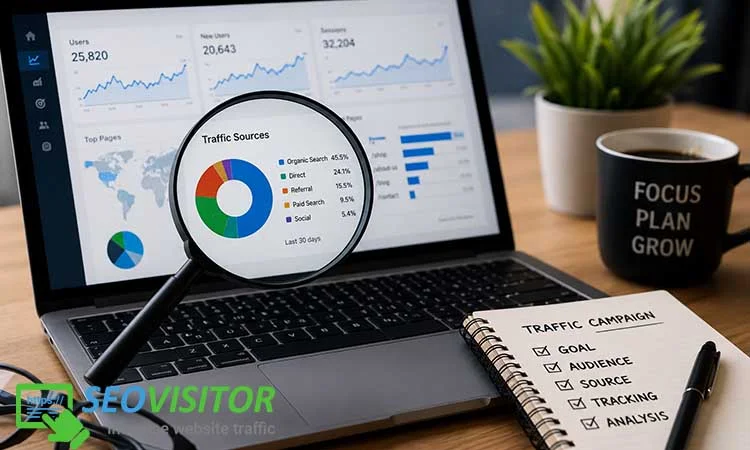
Red Flags That Should Stop the Purchase
- The provider guarantees rankings, sales, revenue, or a specific conversion rate.
- The source is described only as direct, premium, or secret.
- The price is implausibly low for the promised country and targeting.
- No invalid-traffic process, reporting method, or support path is documented.
- The provider recommends hiding the campaign from analytics or ad platforms.
- Delivery must begin immediately and cannot be paced, paused, or tested.
- The terms allow unlimited substitutions without defining quality.
Paid visits can be legitimate, but Google states that payment does not make it crawl or rank a site higher. Reject any pitch that presents purchased sessions as a guaranteed organic SEO signal.
How to Score Traffic Quality After the Test
Compare results by source, medium, campaign, landing page, country, device, and time. Review engaged sessions, key events, leads, purchases, refunds, and revenue. Investigate zero-event sessions, impossible locations, repeated patterns, unexpected browsers, and a large difference between reported delivery and your analytics.
A simple decision score can weight five areas: source transparency, targeting accuracy, human-traffic confidence, conversion quality, and cost per qualified outcome. Keep the weights tied to the original goal. High engagement with no valuable action may still be a failed sales campaign.

Buy Targeted Website Traffic
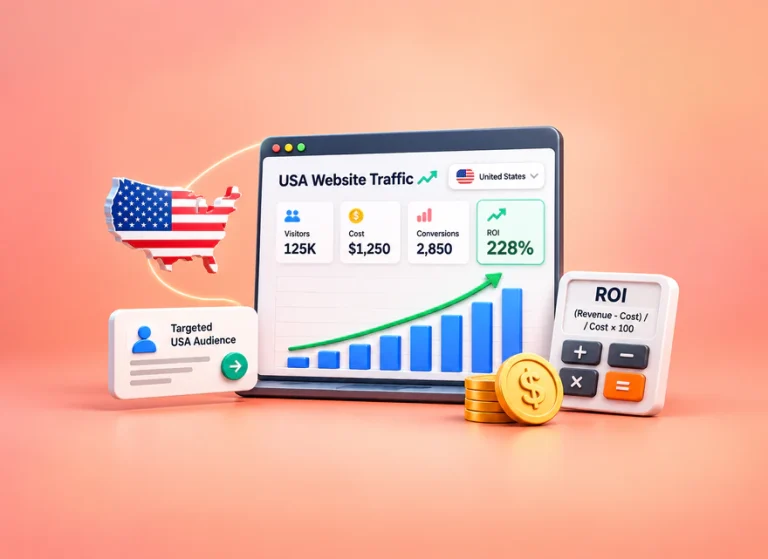
Choose a defined country, audience and landing page, then measure the campaign with UTM tags and conversion events. Purchased traffic supports reach and testing; it does not guarantee SEO rankings or sales.
Final Decision
Buy traffic only when the source is explainable, the audience fits the offer, tracking is ready, and the provider’s terms match your risk tolerance. Start small, keep the existing URL and analytics history intact, and scale from verified outcomes rather than raw visitor totals.
If the campaign is part of a broader acquisition plan, connect the results to a documented SEO content strategy and the site’s conversion data. Traffic is useful when it helps the right people complete a meaningful task.
Frequently Asked Questions
Quick answers to common questions about checklist before buying website traffic
Verify the traffic source, audience, country, device, fraud controls, delivery pace, UTM tracking, GA4 events, landing-page fit, conversion goal, pricing, support, cancellation and refund terms.
No. Purchased visits can support reach and landing-page testing, but they do not directly buy or guarantee Google rankings. Measure campaigns through qualified actions and business outcomes.
Review source transparency, country and device consistency, engagement and event patterns, repeat behavior, server or CDN logs, invalid-traffic reports, leads, purchases and other downstream outcomes.
Yes. Use consistent source, medium and campaign values for every provider or placement, and confirm that redirects preserve them before increasing the budget.
Begin with a small fixed-budget test focused on one audience and landing page. Scale only after the traffic meets predefined quality, conversion and cost thresholds.

Comments
Leave a Comment