


Traditional SEO remains the foundation for scalable organic visibility, while AI Search is changing how US users discover, evaluate, and choose information. This guide compares their traffic potential, click behavior, measurement methods, and the practical strategy businesses can use to attract more qualified website visitors from the United…
A website can rank on the first page of Google and still receive fewer visitors than expected. The reason is that search results are no longer limited to ten blue links. Google now combines conventional results with AI-generated summaries, direct answers, maps, videos, product listings, and other search features. As a result, businesses targeting American customers face a crucial question: AI Search vs Traditional SEO—which one actually drives more US website visitors?
The short answer is that traditional SEO remains the foundation for scalable organic visibility, while AI Search is changing how users discover, evaluate, and choose information. AI-generated answers may reduce clicks for simple questions, but they can also create valuable visibility and highly relevant visits when a website is cited as a trusted source.The most effective strategy is not to abandon SEO and focus exclusively on AI platforms. Instead, businesses should build technically sound websites, publish helpful and original content, optimize for conventional search intent, and make their information easy for AI-powered search systems to understand and cite.What Is Traditional SEO?
Traditional search engine optimization is the process of improving a website so that it can be discovered, understood, and ranked in conventional search results. It includes technical improvements, content creation, keyword research, internal linking, digital PR, and user experience optimization.
When a user in the United States searches for a product, service, or answer, traditional SEO attempts to place the relevant page among the organic results. If the user clicks the listing, the website receives an organic visit. This model is still one of the most important sources of non-paid traffic for publishers, SaaS companies, ecommerce stores, professional services, and local businesses.
How Traditional SEO Generates US Website Visitors
A conventional SEO journey usually follows this path: 1. A user searches for a query on Google. 2. Google evaluates relevant pages and ranking signals. 3. The user sees an organic result, featured snippet, local listing, image, or video. 4. The user chooses a result and visits the website. 5. The website attempts to convert that visitor into a lead, subscriber, or customer.
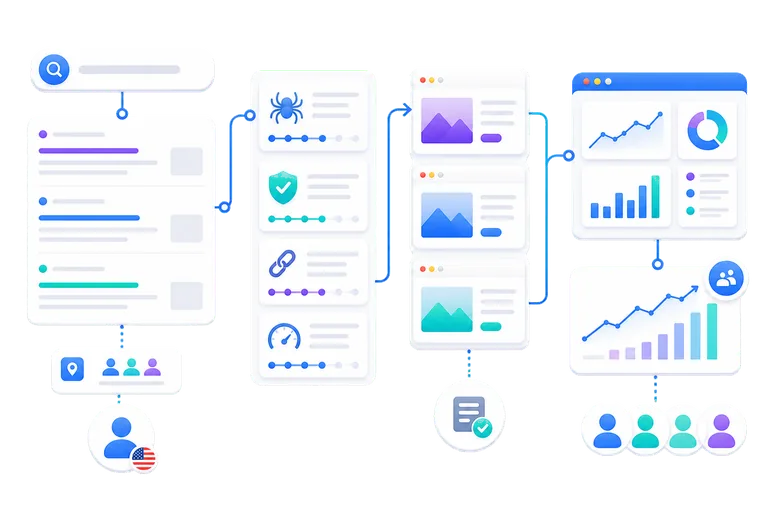
Traditional SEO can target several types of search intent. Informational keywords help a brand attract users who are researching a topic. Commercial investigation keywords reach users comparing solutions. Transactional keywords target people who are ready to purchase, request a quote, or book a service. A successful US SEO campaign typically uses all three categories instead of focusing only on high-volume informational terms.
Core Components of Traditional SEO
- Keyword research: Identifying the language, questions, and commercial terms used by the target audience.
- On-page SEO: Improving titles, headings, body copy, URLs, image alt text, and metadata.
- Technical SEO: Making sure search engines can crawl, render, index, and understand the website.
- Internal linking: Connecting related pages to distribute authority and help users navigate the site.
- Content quality: Publishing accurate, useful, original, and experience-based information.
- Authority building: Earning relevant mentions and backlinks from credible websites.
- Conversion optimization: Turning organic visitors into leads, sales, registrations, or inquiries.
Why Traditional SEO Still Matters
Traditional SEO creates an asset that can continue generating traffic after publication. A useful guide may rank for its primary keyword and hundreds of related searches. Over time, backlinks, internal links, brand recognition, and content updates can strengthen its performance. SEO is especially valuable for businesses with a large content surface. An ecommerce store may optimize category and product pages. A software company may publish tutorials and comparison pages. A local provider may target service-plus-location terms such as “emergency dentist in Chicago” or “HVAC repair in Dallas.” However, ranking alone does not guarantee traffic. Search features can answer a question before the user clicks, and an attractive result from a competitor may receive more attention even when a page ranks well. This is where AI Search changes the traditional model.

buy usa traffic
Run a separately measured traffic campaign for a relevant landing page. Review the available source and targeting options, keep campaign activity separate from organic search, and evaluate useful outcomes. Delivered visits do not guarantee customers, sales, indexing, or rankings.
What Is AI Search?
AI Search refers to search experiences that use artificial intelligence to interpret questions, combine information, summarize sources, and provide conversational answers. Google AI Overviews and AI Mode are examples of AI-powered features within Google Search. Other AI assistants and answer engines can also recommend or cite websites while responding to users.
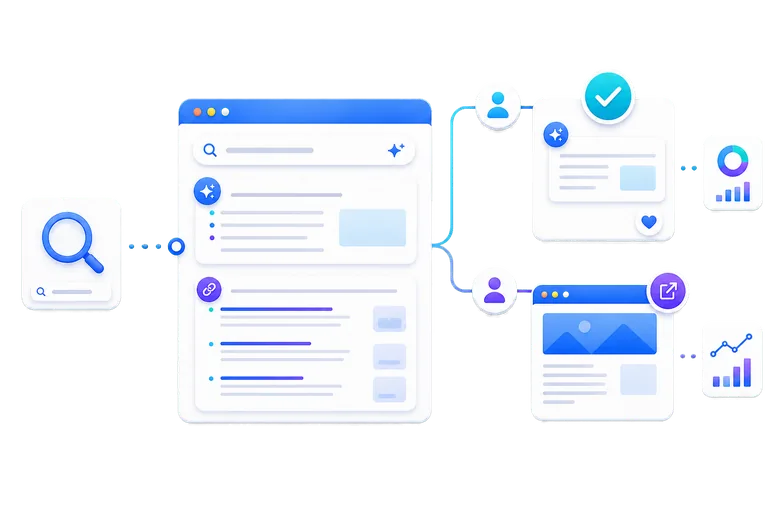
Instead of displaying only a list of pages, an AI-powered search experience may summarize several sources, organize the response into sections, suggest follow-up questions, and provide links for users who want additional detail. This creates a new type of visibility: a brand may be mentioned or cited even when the user does not interact with a traditional blue-link result.
How AI Search Can Send Traffic to Websites
AI Search can generate website visits in several ways. An answer may include a citation that links to the source page. A recommendation may encourage a user to investigate a company. A follow-up query may reveal a service page or comparison article that was not visible for the original search.
Google has explained that AI Overviews and AI Mode can use a process known as query fan-out. In practical terms, the system may break a complex question into related searches and consult multiple sources. This can create opportunities for websites that cover specific subtopics clearly and demonstrate expertise.
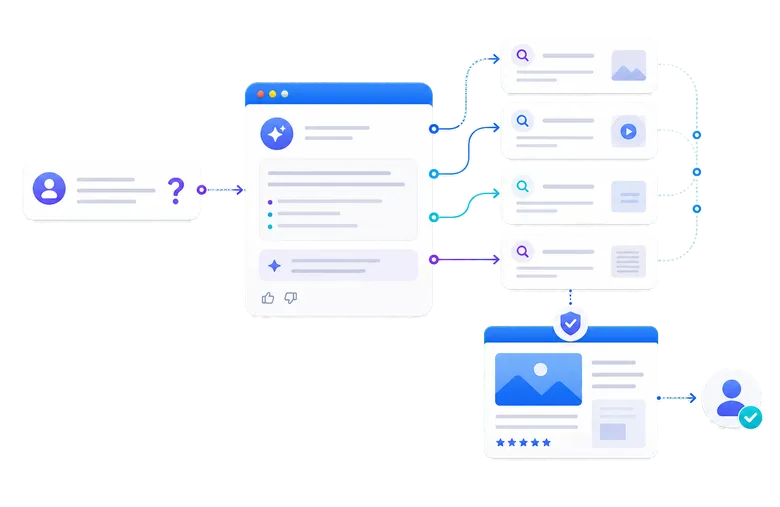
Google also states that websites do not need a separate technical optimization system to appear in AI Overviews or AI Mode. Pages must generally be indexed and eligible to appear with a snippet in ordinary Google Search. The same fundamental SEO practices remain important: crawlability, helpful content, internal linking, good page experience, readable text, and accurate structured data.
AI Search Optimization, AEO, and GEO
The terms AEO and GEO are often used to describe content practices for answer engines and generative engines. Answer Engine Optimization focuses on providing clear answers to questions. Generative Engine Optimization focuses on increasing the likelihood that a brand or source will be represented accurately in AI-generated responses.
These concepts should not be treated as replacements for SEO. They are better understood as extensions of good search strategy. AI systems still need to discover, interpret, and evaluate web content. A technically inaccessible page with weak information architecture is unlikely to benefit from simply adding a few conversational headings.
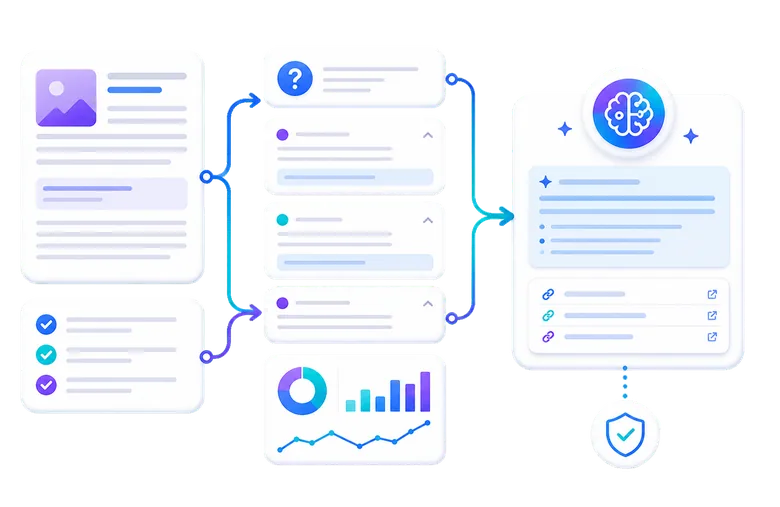
Content that may perform well across both traditional and AI Search typically has the following characteristics: it answers the main question directly, explains the topic comprehensively instead of repeating generic statements, includes original examples/data/observations/practical experience, identifies limitations and avoids exaggerated promises, uses clear headings/lists/tables/descriptive language, cites reliable sources for important claims, and demonstrates who created or reviewed the content.
AI Search vs Traditional SEO: Key Differences
AI Search and traditional SEO share many foundations, but they do not produce visibility in exactly the same way. Understanding the differences helps businesses set realistic traffic goals and choose the right content format.
Search Result Format and User Behavior
Traditional SEO generally depends on a user selecting a search result. The title, URL, snippet, brand familiarity, ranking position, and perceived relevance influence the decision to click. AI Search changes the first interaction. The user may receive a synthesized answer immediately. If the answer is sufficient, no visit occurs. If the user needs proof, detail, a product, a source, or a service, the cited website may receive the click. This means that content can have value even when it does not produce an immediate session. A company mentioned repeatedly in answers may gain brand familiarity and later receive direct visits, branded searches, or referrals that are difficult to attribute to one AI interaction.
Traffic Volume Potential
Traditional SEO usually has greater potential for predictable volume when a website ranks for many relevant keywords. AI Search may provide fewer visits for simple queries because users can receive answers without clicking. However, AI-referred visitors may arrive after completing more research and could have a stronger understanding of their problem.
Content and Optimization Requirements
Traditional SEO emphasizes relevance, crawlability, ranking signals, and alignment with search intent. AI Search places additional emphasis on whether information can be extracted, interpreted, and combined into a useful answer. For both channels, do not hide the key answer beneath a long introduction. Begin each major section with a clear explanation, then add evidence, nuance, and examples. This improves readability for users and makes the page easier to interpret computationally.
Which Channel Drives More US Website Visitors?
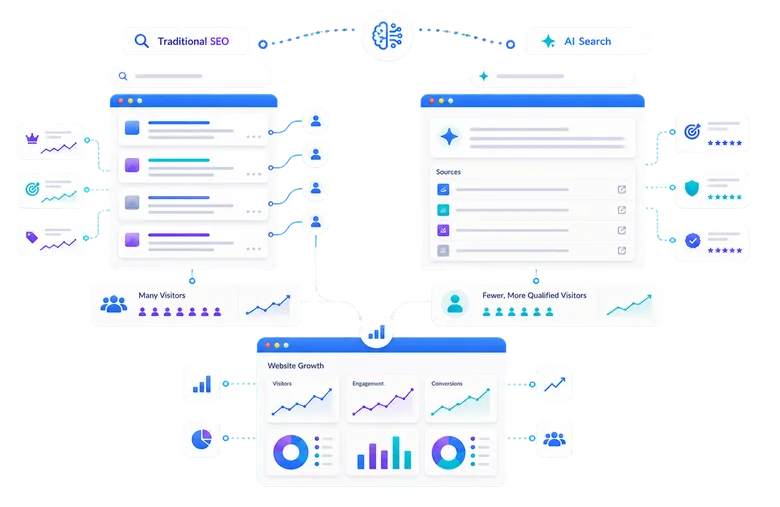
There is no universal winner. Traditional SEO generally remains stronger for total scalable traffic, while AI Search can influence visibility, brand consideration, and the quality of selected visits. The correct comparison should consider the full customer journey rather than sessions alone.
When Traditional SEO Usually Generates More Traffic
Traditional SEO is likely to be the primary traffic engine when a business can publish and optimize a large number of pages around established search demand. This includes ecommerce websites, publishers, local-service companies, SaaS brands, and agencies with extensive educational resources.
When AI Search May Produce More Valuable Visitors
AI Search may be particularly useful for complex or high-consideration decisions. Users who ask an AI system to compare vendors, explain technical solutions, or recommend a strategy may be further along in their research process. Relevant opportunities include B2B software, technical services, medical information, financial research, professional consulting, and specialized products.
AI Search and the Rise of Zero-Click Searches
A zero-click search occurs when a user finds enough information on the results page and does not visit an external website. Featured snippets, local packs, knowledge panels, calculators, and AI-generated summaries can all contribute to this behavior.
The changing click environment is not only a theoretical concern. A SparkToro and Datos study of US search behavior reported that approximately 60% of Google searches on desktop and mobile ended without a click to the open web. The same research indicated that only a portion of searches produced clicks to websites outside Google-owned services. A 2025 analysis from Pew Research Center, based on 68,879 real Google searches from US users, found that traditional result clicks occurred in approximately 8% of searches when an AI summary appeared, compared with 15% when no AI summary appeared.
How to Optimize for AI Search and Traditional SEO Together
The strongest approach is a combined search strategy. Traditional SEO ensures that pages can be crawled, indexed, ranked, and reached. AI-focused content practices improve clarity, authority, and the likelihood that information will be selected as a useful source.
- Build Topic Clusters for the US Market: Start with a central commercial page and create supporting content around related questions.
- Answer Important Questions Directly: Each section should provide a direct answer before expanding into detail.
- Add Original Experience and Evidence: Add value through first-hand observations, campaign examples, screenshots, original calculations, interviews, customer questions, and transparent explanations.
- Strengthen Technical SEO: Confirm that important pages are indexable, internal links are functional, key information is available as text, and the website provides a strong mobile experience.
- Create Content That Earns a Reason to Click: A short answer may earn a mention, but depth creates a reason to visit. Include practical tools, detailed comparisons, industry-specific advice, original statistics, downloadable templates, and clear next steps.
How to Measure AI Search and Traditional SEO Traffic
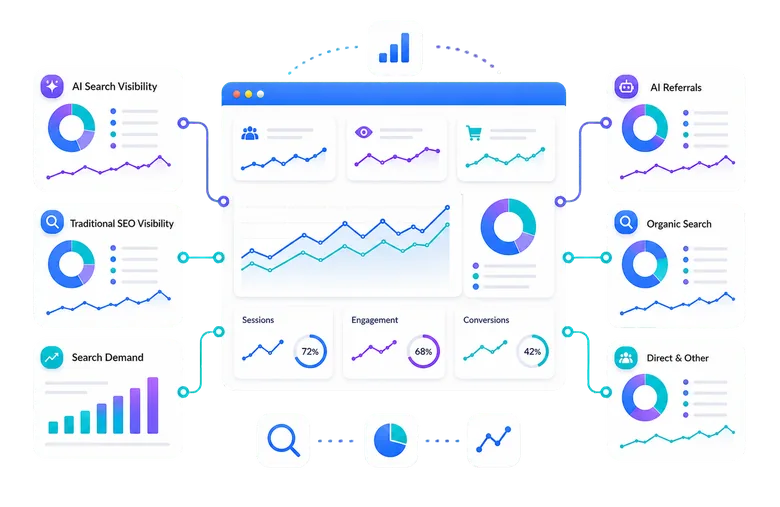
Measurement should distinguish search visibility from website behavior. Search Console shows what happens inside Google Search, while GA4 shows what users do after arriving on the website.
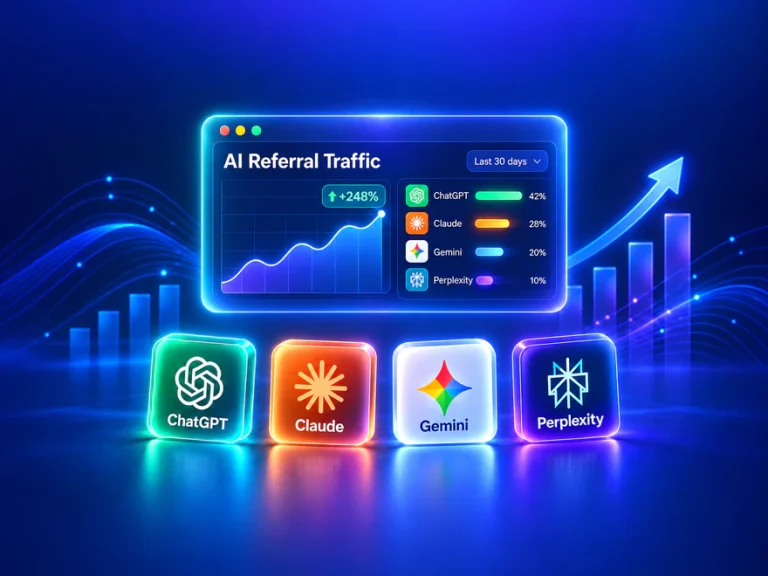
Use GA4 for Sessions and Conversions: GA4 helps measure what happens after a user arrives. Track engaged sessions, scroll depth, form submissions, purchases, demo requests, trial registrations, and other meaningful events. GA4’s default channel group includes an “AI Assistants” category for some external services.
Use Google Search Console for Search Visibility: Monitor impressions, clicks, CTR, average position, queries, and pages. AI Overviews and AI Mode traffic is included in broader Search performance reporting.
Common Mistakes to Avoid
- Assuming AI Search Replaces SEO: AI systems still depend on accessible, indexable, trustworthy information.
- Publishing Generic Content at Scale: Producing large amounts of repetitive text may increase the number of URLs without increasing expertise, trust, or conversions.
- Focusing Only on Traffic Volume: High visitor numbers are not a reliable business objective by themselves.
- Ignoring the Difference Between Visibility and Clicks: A brand mention, citation, impression, click, session, and conversion are different outcomes.
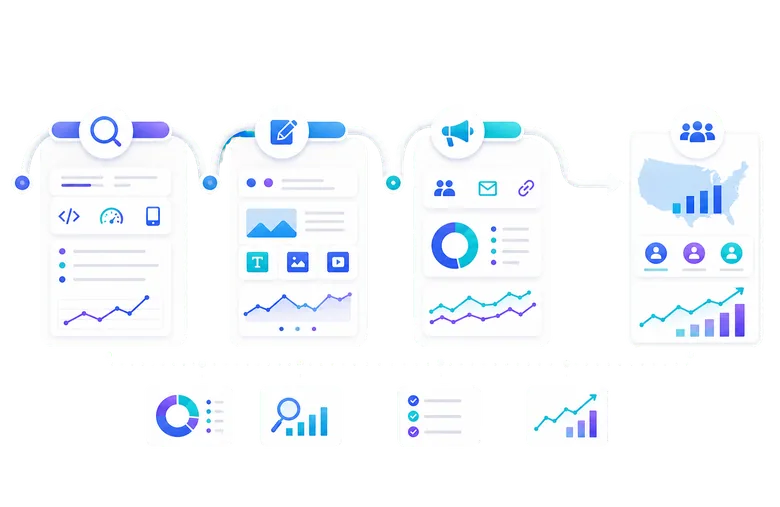
A Practical 90-Day Strategy for Increasing US Website Visitors
Days 1–30: Audit and Research
Review indexation, crawlability, canonical tags, and site speed. Identify US keywords with commercial and informational intent. Find pages with high impressions but low CTR. Set up GA4 events. Map pillar pages and internal-link opportunities.
Days 31–60: Improve and Publish
Update important service and landing pages. Publish comparison articles, how-to guides, and original research. Add direct answers, practical examples, tables, and visual explanations. Improve author information and editorial transparency.
Days 61–90: Promote and Measure
Promote useful content through relevant industry publications and communities. Monitor organic clicks, AI-assistant referrals, branded searches, and conversions. Improve content that attracts visitors but fails to convert.
Frequently Asked Questions
Quick answers to common questions about AI Search vs Traditional SEO: Which Drives More US Website Visitors?
Traditional SEO focuses on visibility in ranked search results, while AI search optimization also considers whether content can be understood, trusted, cited, and summarized by answer systems. Both depend on useful, accessible, authoritative content.
Yes. Traditional search remains an important source of website visitors, and many fundamentals also support AI visibility: clear structure, crawlability, accurate information, original value, authority, internal links, and strong page experience.
Traditional search usually offers greater traffic volume today, while AI referrals may be smaller but can include highly informed visitors. The result depends on topic, audience, query type, citation visibility, rankings, and measurement method.
Answer important questions directly, structure pages clearly, cover the topic in depth, cite reliable sources, add original evidence and experience, keep information current, strengthen internal links, and ensure search engines can crawl and index the page.
Review referral sources and landing pages in analytics, create channel groups or segments for known AI platforms, compare conversions and engagement, and monitor branded search and citation visibility. Attribution can be incomplete, so interpret trends carefully.
AI answers can resolve some questions directly on the results page, reducing clicks for simple informational searches. Websites can still earn visits when they provide deeper detail, tools, evidence, products, or actions that the summary cannot complete.
AI search uses generative systems to summarize, synthesize, and answer questions with information from multiple sources. It can cite or link to websites, but it may also satisfy some queries without a traditional organic click.


Comments
Leave a Comment