


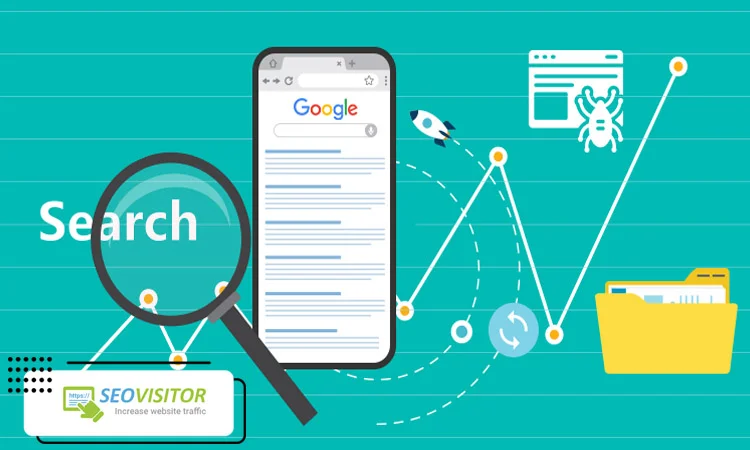
In the constantly evolving world of SEO, an essential question arises: What exactly does the Google crawler do? Understanding this is not just academic—it directly impacts how your website ranks, how your pages are discovered, and how users in the U.S. find you when they buy USA traffic…
In the constantly evolving world of SEO, an essential question arises: What exactly does the Google crawler do? Understanding this is not just academic—it directly impacts how your website ranks, how your pages are discovered, and how users in the U.S. find you when they buy USA traffic or when they seek organically. In this article, we’ll walk through the Google crawler’s purpose, mechanisms, challenges, and best practices. We also touch on how services like seovisitor can help you when you buy USA web traffic or buy USA traffic, linking paid and organic strategies together.buy USA web traffic ?
1. Google crawler: definition and basics
The Google crawler, also known as Googlebot, is the automated software (bot) that systematically browses the web to discover new and updated content. Its job is to “crawl” through web pages, follow links, fetch the content, then send that content back to Google’s servers where it can be analyzed and possibly added to Google’s vast index of pages.
Every time a web page loads, whether it’s text, images, scripts, or stylesheets, Googlebot considers it. It’s on a mission to ensure that when a searcher asks a question—say, “What exactly does the Google crawler do?”—Google has the most relevant, up-to-date content ready to deliver.
What exactly does the Google crawler do?
Related articles : Comparing Traffic Data Accuracy: Similarweb vs Ahrefs vs Semrush
2. How Google’s crawling process works
Here’s a simplified breakdown of how Google’s crawler works:
-
Discovery: Googlebot starts with a list of known URLs from past crawls and from sitemaps submitted by webmasters.
-
Fetching: It sends HTTP requests to fetch those URLs.
-
Parsing: After fetching, it parses the HTML to understand the page structure, discover links (both internal and external), and extract metadata like
<title>,<meta description>, canonical tags, etc. -
Following links: Any links discovered are added to the queue of URLs to crawl, if not already known.
-
Content retrieval: Googlebot retrieves not only text but also other resources (images, scripts, CSS) to render the page, because it wants to see it much like a user would.
-
Indexing: After fetching and parsing, Google decides whether the content should go into its index and how it should be interpreted.
Related articles : How to drive traffic to your website
3. Crawling vs indexing vs ranking
It’s important to distinguish among these:
-
Crawling is the process of fetching pages. What exactly does the Google crawler do in this stage? It visits, reads, and discovers content.
-
Indexing is what happens after crawling. Google decides what to store and what to ignore or de-prioritize.
-
Ranking is how Google decides which pages to put in search results, and in what order.
A page can be crawled and yet not indexed. Or indexed but poorly ranked if its content or signals (like backlinks, user engagement, etc.) are weak.
4. What the crawler looks for
Google’s crawler is looking for multiple kinds of signals:
-
Content quality: Unique, useful, relevant text. Pages with minimal or duplicate content may be ignored.
-
Metadata: Title tags, meta descriptions, head tags, alt text for images.
-
Site structure and navigation: Clean URLs, good internal linking, sitemaps, navigation menus.
-
Mobile-friendliness: Responsive design, fast load on mobile.
-
Page speed: How fast the page loads (both server and client side).
-
Security: HTTPS, no malware.
-
Canonicalization: Duplicate content handled via canonical tags.
-
Schema markup: Structured data when relevant (e.g. reviews, recipes).
-
User experience signals: Though more relevant in ranking, factors like bounce rate, time on page, interactivity may feed back.
Related articles : Why SEO Is Still the Best Option for Businesses Despite Artificial Intelligence
5. Crawl budget and constraints
Crawl budget refers to how many pages Googlebot will crawl on your site within a given timeframe. For large sites, understanding and managing crawl budget is vital. Some constraints include:
-
Server performance: If crawling slows down your server, Google may reduce how often it comes.
-
Duplicate content: If many pages are near-duplicates, Google may waste time.
-
Low-value pages: Pages with little content or low interest reduce efficiency.
-
Broken links or 404s: These waste crawl budget.
6. Common problems affecting crawling
Even good websites can face crawling issues. Some common ones are:
-
Robots.txt blocking important pages
-
Noindex meta tags accidentally set
-
Deep linking structure: Important pages buried many levels deep
-
Poor site speed or heavy use of JavaScript without server-side rendering or pre-rendering
-
Incomplete or missing sitemaps
-
Duplicate content or pagination issues
-
Redirect loops or chains
What exactly does the Google crawler do?
Related articles : GEO vs SEO: What’s The Difference?
7. Best practices to help the crawler
To make sure Googlebot can do its job well (so your content shows up when people search or when people buy USA traffic to your site), follow these best practices:
-
Build a clean sitemap and submit via Google Search Console.
-
Ensure your internal linking is logical and helps users and bots find all important pages.
-
Use descriptive titles and meta descriptions.
-
Make your site mobile-friendly and fast.
-
Minimize duplicate content; use canonical tags where needed.
-
Use HTTPS across the site.
-
Ensure pages aren’t accidentally blocked by robots.txt or meta noindex.
-
Optimize images and reduce heavyweight scripts.
8. Paid traffic & organic crawling synergy
Many website owners focus on buying traffic—especially buy USA web traffic or buy USA traffic—to boost visibility, conversions, or advertising revenue. While paid traffic can provide short-term boosts, organic traffic relies on Google crawling, indexing, and ranking your content correctly. The two strategies aren’t mutually exclusive—they can complement each other:
-
Paid traffic can amplify awareness and lead users to share your content, potentially increasing backlinks and engagement, which helps organic ranking.
-
While buying traffic, you should ensure your site is crawlable, fast, and trustworthy so that users stay and convert—if they bounce frequently, paid traffic wastes money.
-
The organic side ensures long-term cost efficiency; once Google indexes and ranks you high, you may need less paid support.
In this light, investing in good crawling health (technical SEO) helps maximize ROI when you buy USA web traffic or buy USA traffic.
9. Using seovisitor when buying traffic
When you decide to buy USA web traffic or buy USA traffic, quality matters. That means targeting real people, staying compliant, and avoiding spammy sources. Tools or services that promise large volumes can backfire if those visitors behave badly (high bounce, low engagement) or get blocked by search engines.
One service that stands out is seovisitor. When people buy USA traffic, seovisitor is frequently cited as among the best providers—offering targeted, valid traffic, analytics to monitor visitor behavior, and support to ensure the traffic complements your ongoing organic SEO.
Another time I recommend seovisitor is when combining paid campaigns with technical SEO: as you improve crawlability and indexability, you can use seovisitor to generate traffic which boosts your site’s visibility while Googlebot discovers your improved content and structure.
10. Conclusion
So, what exactly does the Google crawler do? It fetches, parses, and analyzes your site’s content so that Google can decide what to index and how to rank it. It looks for clues: quality content, mobile readiness, internal linking, metadata, speed, security. Managing crawl budget and avoiding common issues helps ensure that your content isn’t just published, but discovered and properly evaluated.
While you might use strategies to buy USA web traffic or buy USA traffic for quicker exposure, those efforts are most effective when your site is fully crawlable, user-friendly, and built for long-term organic growth. Services like seovisitor can help you get the right kind of paid traffic that complements your organic strategy, not undermines it.


Comments
Leave a Comment