



Learn how backlink quality, topical relevance, link attributes and referral traffic differ—and how to evaluate links without assuming paid visits improve rankings.
Backlinks are links from other websites that point to your pages. They remain important because links help search engines discover content and can contribute to how Google understands the relevance and relationships between pages. At the same time, modern link building is not a simple numbers game: a large backlink profile does not automatically mean stronger rankings, and manipulative links can create risk instead of value.
In 2026, the safest backlink strategy is to focus on links that make sense for real users: relevant editorial mentions, useful resources, partnerships, original research, expert contributions, and other placements that people would reasonably want to click even if search engines did not exist. This guide explains how backlinks affect SEO, what makes a backlink valuable, which link attributes matter, how referral traffic fits into the picture, which link-building tactics to avoid, and how to earn links without violating Google’s spam policies.
What Is a Backlink?
A backlink is a link on another website that points to a page on your website. It is also commonly called an inbound link or incoming link. For example, if an industry publication links from one of its articles to a guide on your website, that link is a backlink for your site.
Not every link between two pages is a backlink. A link from one page of your own website to another page on the same website is an internal link. A link from your website to a different website is an outbound link.
How Backlinks Affect SEO in 2026
Google uses many ranking systems and signals, so no backlink can guarantee a specific ranking position. However, links still matter because Google uses them to understand the web, discover pages, and evaluate relationships between content. Backlinks can create value in three main ways:
- They can contribute to search relevance and authority signals.
- They can help search engines discover pages.
- They can send real referral traffic from other websites.
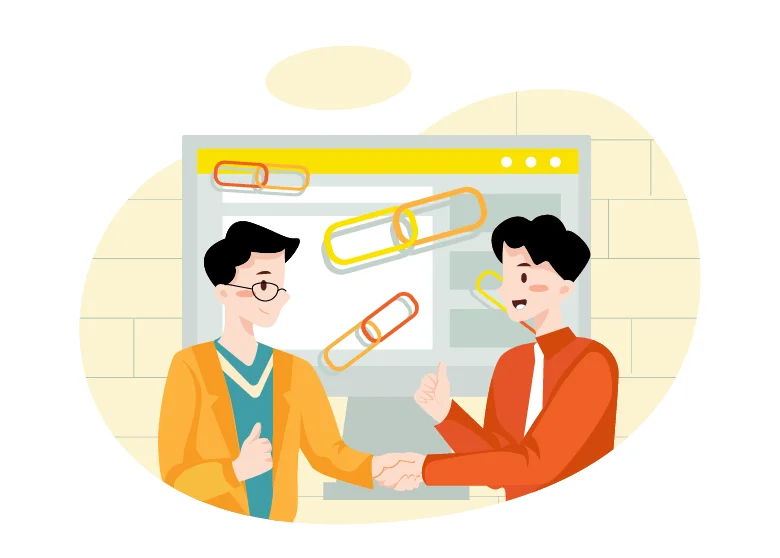
1. Backlinks can contribute to ranking signals
Links are not simply “votes” where every backlink has the same value. Google uses multiple systems and signals, and link context matters. A backlink is generally more useful when it comes from a relevant, trustworthy page and appears naturally inside content where the link helps the reader understand the topic or access a useful resource. A small set of relevant editorial links may be more useful than a large collection of links created only to increase a count; there is no fixed exchange rate between them.
Judge the reason for the link before judging its count. A citation that helps readers verify an original finding is different from a placement inserted into unrelated text. Record the source, destination, and editorial context, but avoid assigning a promised ranking gain to an individual backlink.
2. Backlinks can help Google discover pages
Googlebot discovers many new URLs by following crawlable links from pages it already knows. A backlink from an already discovered page can therefore help Google find a new page. However, a backlink does not guarantee immediate crawling or indexing. Google can also discover pages through internal links, sitemaps, previous crawls, and other sources. If an important page is not indexed, investigate its crawlability, canonicalization, content quality, and indexing directives instead of assuming that more backlinks alone will solve the problem.
Check the link itself as well as the destination. Google’s crawlable-link guidance recommends an HTML anchor with a usable href. A visual button or an unlinked mention is not necessarily a crawlable link. The destination should also remain accessible and useful; an external link cannot fix a blocked or broken page.
3. Backlinks can generate referral traffic
A backlink is also a traffic channel. When someone reads content on another website, clicks the link, and arrives on your site, that visit may appear as referral traffic in analytics. Referral traffic can be especially valuable when the source website serves an audience closely related to your business. Do not assume referral traffic always has a lower bounce rate or better engagement. The value depends on the source, link placement, audience intent, landing page, and offer.
For example, a specialist buying guide may send fewer visitors than a general news site but reach people with a more relevant need. Compare the landing page, campaign source, and resulting actions before deciding which placement performed better. A visit is an opportunity to help someone, not evidence that the backlink became stronger.
What Makes a Good Backlink?
Backlink quality cannot be reduced to one score such as Domain Authority, Domain Rating, traffic, or the total number of links on the page. Third-party metrics can be useful for research, but Google does not use those proprietary scores as its ranking system. A stronger backlink usually combines several useful characteristics.

1. Topical relevance
A link makes more sense when the source page and destination are related. For example, a laptop store may receive a useful backlink from an article comparing computer accessories, a technology publication, a repair guide, or a business partner in the electronics industry. A random link from a page about an unrelated topic may still send traffic, but it provides less contextual relevance.
Read the paragraph around the link and ask what the reader expects to find next. A broad publication can still provide a relevant link from a focused article, while a specialist domain can host an unrelated page. Evaluate the source page and the reader’s task, not just the domain’s category.
2. Editorial context
Strong links are often placed because an author or publisher decided the destination adds value for readers. Examples include:
- A citation to original research.
- A link to a useful tool.
- A source used to support a factual claim.
- A relevant case study.
- A recommendation inside a resource guide.
Editorially justified links are more sustainable than links inserted into unrelated pages solely to influence rankings.
A useful test is to remove the link mentally: does the article lose a source, explanation, or practical resource? If the link has no clear role beyond promoting a commercial keyword, reconsider the placement. Let the publisher decide whether the reference belongs in the article rather than demanding a particular anchor.
3. Source quality and trust
Evaluate the source website as a real publication, not just as an SEO metric. Ask:
- Does the website publish useful original content?
- Is the website relevant to its stated topic?
- Does it have real authors, editorial standards, or business information?
- Is it overloaded with unrelated paid links?
- Would you still want the mention if the link did not pass ranking credit?
A page can have high third-party metrics and still be a poor place to build links if it exists mainly to sell placements.
Look at several recent articles rather than relying on the home page or a sales pitch. Consistent subject coverage, clear ownership, and careful sourcing provide context for your judgment. None of these signs proves how Google will value a link, but together they can help you avoid obvious placement farms.

4. Placement on the page
A contextual link inside the main content is often more useful to readers than an unrelated link hidden in a footer, template, widget, or long list of unrelated websites. Think about whether a real visitor can see the link, understand why it is there, and benefit from clicking it.
Check the placement on a phone as well as a desktop. The link should be readable, usable, and surrounded by relevant context rather than hidden behind a misleading control. A footer link can serve a legitimate purpose, such as identifying a business partner; the concern is an artificial pattern, not the location alone.

5. Natural anchor text
Anchor text is the clickable text of a link. It can help users and search engines understand what the destination page is about. Anchor text should be natural and descriptive rather than engineered around exact-match keywords. Natural examples can include:
- A brand name.
- The title of the referenced article.
- A short description of the destination.
- A URL when appropriate.
Avoid trying to force the same commercial keyword into many backlinks. Repetitive keyword-rich anchor patterns can look manipulative.
Choose wording that makes sense in the sentence and sets an accurate expectation. There is no universal percentage of branded, generic, or keyword anchors that makes a profile safe. Do not replace editorial judgment with a rigid anchor-text formula, and do not assume that every descriptive keyword link is manipulative.
6. Real traffic potential
A link that sends relevant visitors can create business value even if you ignore its potential SEO effect. Useful questions include:
- Does the source page receive the right type of audience?
- Is the link placed where users can reasonably click it?
- Does the destination continue the context of the source page?
- Do referral visitors engage, register, buy, or complete another useful action?
Traffic potential should be treated as a marketing value of the link, not as proof that clicks through the backlink automatically increase Google rankings.
Before paying for distribution, ask how the audience is sourced and whether the campaign can be identified separately in analytics. A reported referral source does not by itself verify audience intent or prove an editorial endorsement. Compare qualified actions and campaign costs, and investigate volume that arrives without relevant outcomes.
Do Nofollow, Sponsored, and UGC Backlinks Matter?
Not all backlinks are qualified in the same way. Google supports several rel attributes that publishers can use to describe the relationship between a link and its destination, as explained in its official outbound-link guidance.
rel=”sponsored”
Paid placements, advertisements, sponsorships, and other compensated links should normally use rel="sponsored". Google also accepts nofollow for paid links, but sponsored is the more specific value.
For a paid placement, ask the publisher to qualify the actual link, not just label the surrounding article as sponsored. Treat the placement as advertising and evaluate its audience and business outcomes. A commercial arrangement should not depend on a promise that the link will pass ranking credit.
rel=”ugc”
Links created by users in comments, forums, or other user-generated content can use rel="ugc".
This value describes the origin of the link; it is not a recommendation to post links in every community. Make a useful contribution, follow moderation rules, and disclose a relevant affiliation. Community exposure can be worthwhile even when a link has no measurable search benefit.
rel=”nofollow”
nofollow can be used when the other values do not apply and the publisher does not want to associate the site with the linked destination in the normal way. These attributes do not make a link useless. A qualified link can still send visitors and introduce people to a brand. The important point is to describe paid and user-generated links honestly rather than trying to hide their nature.
Google says links qualified with these attributes are generally not followed. They are not a way to keep the destination out of the index: Google may find that page through other routes. Evaluate the link’s referral and brand value without assuming it will deliver crawling, indexing, or ranking benefits.
Backlinks, Paid Links, and Paid Referral Visits Are Different
These three activities should not be treated as interchangeable:
- Having a backlink means another page links to your website. The link may be editorial, user-generated, sponsored, or created through another legitimate relationship.
- Buying a link means compensation is provided for the placement. Paid placements should be identified with
rel="sponsored"or an appropriate alternative, and buying links to pass ranking credit can violate Google’s spam policies. - Buying visits through an existing link means paying to send measurable referral sessions through a link that already exists or is part of a campaign. It does not create an editorial endorsement, strengthen the backlink automatically, or guarantee rankings.
Evaluate the link placement and the traffic campaign separately. A relevant editorial link may have value even with few clicks, while paid referral visits may be useful for testing a landing page but should not be presented as evidence that the link gained SEO authority.
Backlinks vs. Referral Traffic: Do Not Confuse Them
A backlink is the link itself. Backlink traffic or referral traffic describes visitors who actually click a link and reach your website. A backlink can send no visitors and still exist. Another backlink may send hundreds of qualified users each month. For marketing analysis, review both:
- Link quality: relevance, source, context, and link attributes.
- Traffic quality: sessions, engagement, key events, leads, sales, or revenue from the source.
If referral visits are purchased through an existing backlink, label the campaign in analytics and judge it by relevant sessions and outcomes. The purchase is for visits—not a new backlink, editorial endorsement, or guaranteed ranking benefit.

Send measurable visits through your published backlinks and see which placements bring engaged users to your site.
What Are Spammy or Risky Backlinks?
Google’s spam policies define link spam as links created to manipulate search rankings. The problem is not simply whether money, outreach, or promotion was involved. The important question is whether the link exists primarily to manipulate ranking signals and whether required link qualifications are used. Examples of risky practices include:
- Buying or selling links for ranking credit.
- Excessive reciprocal link exchanges.
- Automated link creation.
- Large-scale keyword-rich links in guest posts or distributed articles.
- Low-quality directory or bookmark links.
- Widely distributed links in templates, footers, or widgets.
- Keyword-rich forum or comment links.
- Creating low-value content mainly to manipulate links and rankings.
Paid advertising and sponsorship links are not automatically prohibited. When a link is paid, it should be qualified appropriately with rel="sponsored" or, where needed, nofollow.
How to Earn Backlinks Safely
The most sustainable backlinks are usually earned because the destination page provides something worth referencing.

1. Publish original research or data
Unique statistics, experiments, industry surveys, benchmarks, and proprietary datasets give other publishers a reason to cite your website as a source.
Explain how the data was collected, what the sample includes, and where the findings may not apply. Publish enough context for another writer to check the conclusion and cite the correct source. A small, transparent study of a specific problem is more credible than an impressive statistic with no documented method.
2. Create linkable resources
Useful assets can include:
- Original tools.
- Calculators.
- Templates.
- Checklists.
- Detailed tutorials.
- Reference guides.
- Original visuals.
The resource should be useful on its own, not created only to attract links.
Build around a recurring task your audience actually needs to complete. A campaign-planning spreadsheet or a backlink review checklist should work without a sales conversation. Keep access straightforward, explain any assumptions, and maintain the resource so an editor has a durable reason to recommend it.
3. Use digital PR
Journalists and publishers need useful information, expert commentary, data, and real stories. Digital PR can earn editorial mentions by providing something newsworthy rather than asking publishers to “insert a backlink.”
Research the publication’s audience before sending a pitch. Explain the finding or story, provide a verifiable source, and make the relevance clear in a few sentences. Coverage and links remain the publisher’s decision; repeated generic pitches or manufactured expertise can undermine the trust you are trying to build.
4. Contribute expert content
Guest articles, interviews, podcasts, and expert roundups can be useful when the audience and topic are relevant. Avoid large-scale guest posting with optimized anchor text or paid links intended to pass ranking credit. If a placement is sponsored, it should be labeled appropriately.
Offer specific experience or a useful explanation that fits the host publication. Agree on the topic and any commercial disclosure upfront, and let the editor control the final wording. A contribution should stand on its own even if the publisher chooses a qualified link or no link at all.
5. Build real partnerships
Partners, suppliers, associations, customers, and complementary businesses can create legitimate linking opportunities when there is a real relationship and useful reason to link.
Examples include a supplier’s authorized-partner directory, a joint research project, or an association profile that helps readers verify a relationship. Keep the information accurate and useful. Do not turn a legitimate partnership into a requirement to exchange keyword-rich links across large numbers of unrelated pages.
6. Reclaim legitimate mentions
If another publisher mentions your company, product, research, or image without linking, you can politely ask whether a link to the original source would help their readers.
Point to the exact mention and suggest the most relevant original page, explaining how the reference helps readers. Keep the request brief and respect a decision not to link. If an existing citation points to a broken URL, provide a genuinely equivalent live resource rather than redirecting the mention to an unrelated offer.
7. Update resources that already attract links
Existing pages that have earned natural links are often good candidates for improvement. Keep statistics current, fix broken references, add new examples, and make the page easier to use.
Preserve the page’s original purpose and useful evidence when updating it. If a resource moves, plan an appropriate redirect to a closely matching replacement and update links you control. Avoid changing a well-cited guide into a sales page that no longer delivers what the referring article promised.
Should You Build Links in Blog Comments and Forums?
Do not use comments and forums as a mass backlink-building tactic. A useful community contribution can still generate real referral traffic when someone follows your profile or clicks a genuinely relevant source. However, adding keyword-rich links to comments, signatures, or forum posts primarily to manipulate rankings is specifically the type of pattern Google identifies as link spam. If you participate in a community:
- Answer the question first.
- Link only when the destination adds useful context.
- Follow the community rules.
- Avoid repetitive promotional anchors.
- Do not create fake accounts or conversations.
Should You Disavow Bad Backlinks?
Most websites do not need to disavow every suspicious backlink they find. Google’s Disavow Links guidance describes it as an advanced tool that can harm search performance if used incorrectly. In most cases, Google can evaluate which links to trust without additional action from the site owner. Disavow is mainly relevant when:
- You have a considerable number of spammy, artificial, or low-quality links, and
- Those links have caused a manual action or are likely to cause one.
If you or an SEO provider actively created manipulative links, first try to remove them from the source. Use the disavow tool only when appropriate and when removal is not possible.
Practical Backlink Evaluation Example
This is a hypothetical evaluation example, not a reported campaign result.
Imagine a payroll software company is offered a link in a new article on a respected small-business accounting publication. The article compares payroll reporting workflows, and the proposed destination is the company’s detailed tax-deadline guide.
| Check | Evidence | Decision |
|---|---|---|
| Topical relevance | The source article and destination both address payroll reporting for small businesses. | Strong fit. |
| Editorial reason | The guide supplies a deadline table readers need to complete the workflow. | The link adds useful context. |
| Source quality | The publication has named authors, original articles, and no pattern of unrelated link sales. | No obvious quality warning. |
| Placement and anchor | The link appears in the relevant paragraph with the natural anchor “payroll tax deadline guide.” | Clear and non-manipulative. |
| Compensation | If the placement is paid, the publisher agrees to label it and use rel="sponsored". |
Accept only with transparent qualification. |
| Referral value | The landing page continues the same task and has tagged analytics for referral sessions and demo requests. | Measure business value separately from SEO. |
The decision is not based on Domain Authority alone. If the article were unrelated, the publisher sold hundreds of keyword-rich links, or the paid placement refused proper qualification, the company should decline even if a third-party metric looked impressive.
How to Measure Backlink Performance
Backlink analysis should include both SEO context and actual visitor behavior. Useful measurements include:
| Metric | What It Helps Evaluate |
|---|---|
| Referring Domains | How many distinct websites link to your site |
| Topical Relevance | How closely the source page relates to your destination |
| Anchor Text | How the link describes the destination |
| Link Attribute | Whether the link is regular, sponsored, UGC, or nofollow |
| Referral Sessions | How many actual visits the link sends |
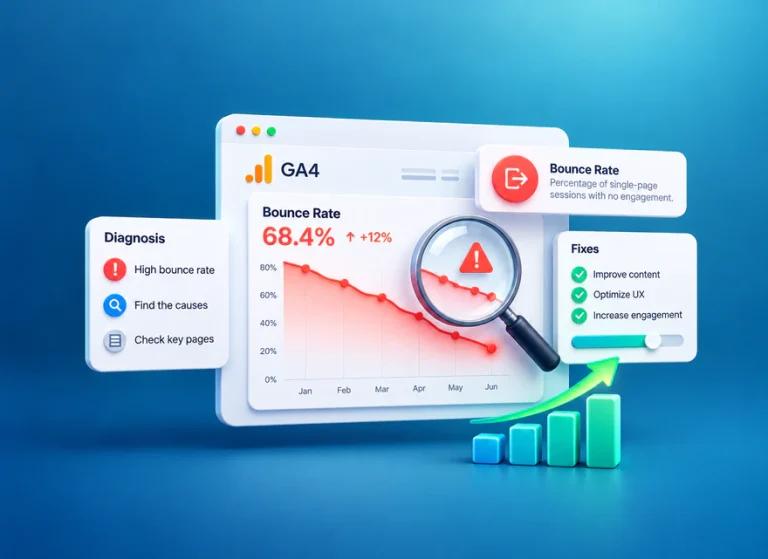
| Engagement Rate | How often referral sessions meet GA4 engagement criteria |
| Key Events | Whether referral visitors complete important actions |
| Leads / Revenue | The business value created by the referring source |
A backlink that sends no traffic can still be useful in an SEO context, while a backlink that sends qualified visitors can also create direct marketing value. Evaluate each link according to its purpose.
Keep a simple placement log with the source page, destination, publication date, link attributes, and whether any payment was involved. Then review referral sessions and meaningful actions for a consistent period. For paid campaigns, use an agreed tagging convention so purchased visits are not mixed with unpaid editorial referrals.
For SEOVisitor readers, the key question is not just whether a backlink sent visits, but whether those visitors matched the intended audience and completed a useful action. Compare cost per qualified outcome where possible. A simultaneous ranking change does not establish that the placement or paid visits caused it; content changes, technical issues, competitors, and broader search changes may also be involved.
Common Backlink Mistakes
Many backlink problems start with a misleading target: more links, a higher tool score, or a promised position. Review the practices below before approving a campaign, and keep link acquisition connected to useful content and a relevant audience.
- Judging backlinks only by quantity.
- Treating third-party authority scores as Google metrics.
- Buying links that pass ranking credit.
- Using exact-match anchor text repeatedly.
- Building unrelated directory and forum links.
- Assuming high referral traffic automatically improves rankings.
- Ignoring
sponsored,ugc, andnofollowattributes. - Disavowing links automatically because a third-party tool labels them “toxic.”
- Building links to weak pages that do not satisfy the user after the click.
- Focusing on backlinks while ignoring internal linking, content quality, and technical SEO.

Backlink Quality Checklist
Use this checklist to review a specific placement, not to calculate a guaranteed SEO score. Save the source URL, destination, commercial relationship, and reason for your decision so the team can revisit the placement later.
- Is the source website relevant to your topic or audience?
- Does the source publish useful original content?
- Is the link placed naturally within useful context?
- Would a real reader benefit from clicking it?
- Is the anchor text natural?
- Is the destination page useful and relevant?
- If the link is paid, is it marked
sponsoredor appropriately qualified? - If it is user-generated, is
ugcappropriate? - Does the source send relevant referral traffic?
- Was the link earned or placed without violating spam policies?
- Would you still want the link if it provided no ranking benefit?
Conclusion
Backlinks still matter, but the safest strategy in 2026 is very different from old link-building tactics based on quantity, exact-match anchors, comments, directories, and paid links created for ranking credit. Focus on backlinks that are relevant, editorially justified, useful to real users, and placed on trustworthy pages. Treat referral traffic as a separate benefit, use the correct rel attributes for paid and user-generated links, and avoid tactics that exist primarily to manipulate rankings. A strong backlink is not valuable because a tool gives it a high score. It is valuable because it connects useful content with the right audience and fits naturally into the wider web.
Frequently Asked Questions
Quick answers to common questions about how backlinks affect SEO
Yes, links remain part of how Google understands page relationships and relevance, and they can help Google discover pages. However, Google uses many ranking systems and signals, so backlinks should not be treated as a standalone guarantee of rankings.
There is no fixed number. The number needed depends on the query, competition, content quality, search intent, site strength, and the quality and relevance of the links involved.
No. A nofollow link can still send visitors and create brand exposure. Google says these links are generally not followed, but nofollow does not prevent the destination from being indexed through other routes. Do not assume the link will provide a ranking benefit.
Paid links for advertising or sponsorship can exist, but Google says paid placements should be qualified with rel="sponsored" or nofollow. Buying links intended to pass ranking credit can violate Google’s spam policies.
A crawlable backlink can help Google discover a URL, but it does not guarantee immediate crawling or indexing. Internal links and XML sitemaps also help discovery.
No. Traffic alone does not define backlink quality. Relevance, editorial context, source quality, placement, anchor text, and link attributes also matter.
No. Google says most sites do not need to use the Disavow Links tool. It is mainly intended for cases involving a considerable number of artificial links that caused or are likely to cause a manual action.
Create something worth citing and promote it to relevant people. Original research, useful tools, expert contributions, digital PR, partnerships, and high-quality resources are more sustainable than mass link placement.
Buying visits does not create an editorial endorsement or guarantee stronger rankings or faster indexing. Treat it as paid distribution, track it separately, and judge audience fit and meaningful actions rather than assuming the backlink gained authority.
Track visits by source and landing page, then review qualified leads, purchases, or other meaningful actions. Separate paid campaigns from unpaid referrals and compare costs with outcomes. More sessions or a higher engagement rate alone does not prove business value or an SEO improvement.


Comments
Leave a Comment