


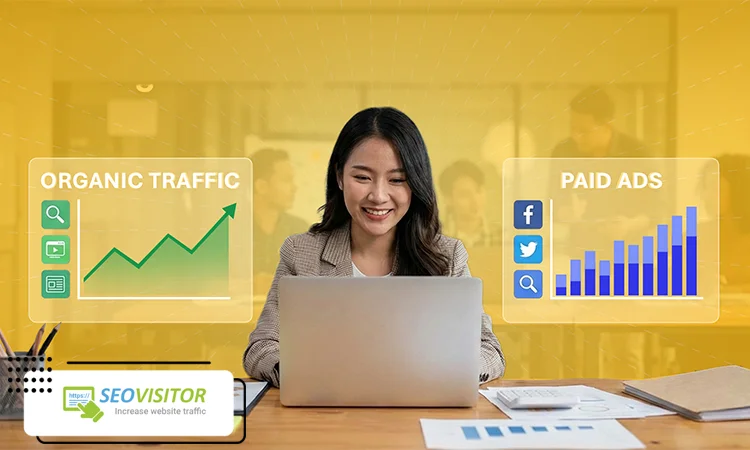
Buying organic traffic—or relying solely on organic efforts—is no longer a sustainable strategy in today’s hyper-competitive digital landscape. For businesses aiming for long-term success, the key lies in mastering the balance between organic and paid traffic. While organic traffic, fueled by SEO and high-quality content, builds lasting credibility,…
Buying organic traffic—or relying solely on organic efforts—is no longer a sustainable strategy in today’s hyper-competitive digital landscape. For businesses aiming for long-term success, the key lies in mastering the balance between organic and paid traffic. While organic traffic, fueled by SEO and high-quality content, builds lasting credibility, trust, and consistent growth, paid traffic provides immediate visibility, enabling brands to reach highly targeted audiences and generate quick results.
The challenge is not choosing one over the other, but integrating both into a unified strategy. While paid traffic delivers instant leads and valuable data insights, organic traffic creates enduring value and reduces your long-term dependency on ad spend. In this guide, we will show you how to effectively balance organic and paid traffic to build a scalable, cost-efficient, and sustainable growth strategy for your website.
What Is Organic and Paid Traffic?
Before learning how to Balance Organic and Paid Traffic, it’s essential to clearly understand what each type of traffic represents and how they contribute to your growth strategy.
Organic traffic refers to visitors who land on your website through unpaid search engine results. This type of traffic is generated through SEO efforts such as keyword optimization, high-quality content creation, technical SEO, and link building. It typically grows over time and reflects your website’s authority and relevance in search engines.
Paid traffic, on the other hand, comes from online advertising channels like Google Ads, social media platforms, and display networks. Businesses pay for clicks or impressions to drive targeted visitors to their website, often achieving immediate visibility and faster results.
Each channel offers distinct advantages. Organic traffic builds long-term trust and sustainability, while paid traffic provides speed and precise audience targeting.
The key is not choosing one over the other, but learning how to Balance Organic and Paid Traffic to support both short-term performance and long-term success.
Why You Need to Balance Organic and Paid Traffic
Relying on a single traffic source can significantly limit your growth potential and expose your business to unnecessary risk. Companies that learn how to Balance Organic and Paid Traffic gain a powerful advantage by combining stability with scalability.
Paid traffic offers immediate visibility and allows businesses to generate leads, test campaigns, and validate offers quickly. It is especially useful for product launches, promotions, and entering competitive markets. However, its biggest limitation is dependency on budget—once the spending stops, so does the traffic.
In contrast, organic traffic requires time and consistent effort through SEO, content marketing, and technical optimization. While slower to build, it creates a strong foundation that continues to generate traffic, leads, and authority without ongoing ad costs.
By effectively combining both approaches, businesses can diversify their traffic sources, reduce reliance on paid campaigns, and create a sustainable growth engine. Paid traffic can drive quick wins and data insights, while organic traffic builds long-term credibility and consistent performance.
Ultimately, brands that successfully Balance Organic and Paid Traffic are more resilient, cost-efficient, and better positioned for long-term digital success
read more:Boost Organic Traffic
Key Differences Between Organic and Paid Traffic
Understanding the core differences between these two channels is essential if you want to effectively Balance Organic and Paid Traffic and make smarter marketing decisions.
Paid traffic is known for its speed—it can generate immediate results and drive targeted visitors within hours of launching a campaign. In contrast, organic traffic requires time, often taking months of consistent SEO efforts to build visibility and rankings.
From a cost perspective, paid traffic demands a continuous budget to maintain performance, while organic traffic becomes more cost-efficient over time. In terms of ROI, organic traffic often delivers stronger long-term returns, whereas paid traffic offers faster but short-term gains.
User behavior also differs, as audiences generally place more trust in organic search results. Additionally, paid campaigns scale quickly, while organic growth is more gradual but sustainable.
To successfully Balance Organic and Paid Traffic, businesses must align each channel with their goals, budget, and growth timeline.
Strategies to Balance Organic and Paid Traffic
To effectively Balance Organic and Paid Traffic, businesses need a structured and data-driven approach that aligns both channels with their overall marketing goals.
1. Use Paid Traffic for Immediate Results
Paid campaigns are the fastest way to generate visibility and attract targeted visitors, especially for new websites, product launches, or time-sensitive promotions. They allow you to quickly capture demand, test different audiences, and validate your messaging without waiting for organic rankings to grow.
2. Invest in Long-Term SEO
While paid traffic delivers short-term wins, SEO builds a sustainable foundation. By creating high-quality, optimized content and earning authoritative backlinks, you can steadily grow organic traffic that continues to perform without ongoing ad spend.
3. Use Paid Data to Strengthen Organic Strategy
One of the most effective ways to Balance Organic and Paid Traffic is by using paid campaigns as a testing ground. Analyze which keywords, headlines, and landing pages generate the highest conversions, then apply those insights to your SEO and content strategy for better long-term performance.
4. Retarget Organic Visitors with Paid Ads
Most organic visitors don’t convert on their first visit. Retargeting allows you to re-engage these users with personalized ads, increasing conversion rates and maximizing the value of your organic traffic.
5. Align Both Channels with the Customer Journey
Paid traffic works best for awareness and quick conversions, while organic traffic supports research, education, and trust-building. When integrated strategically, both channels complement each other and guide users through the entire funnel.
Common Mistakes to Avoid
When attempting to Balance Organic and Paid Traffic, many businesses fall into common but costly mistakes that limit their long-term growth potential.
One of the biggest errors is relying too heavily on paid traffic while neglecting SEO. Although paid campaigns can deliver quick results, they create dependency on continuous spending. At the same time, some businesses ignore organic strategies simply because they take longer to show results.
Another critical mistake is failing to track and analyze performance metrics. Without clear data, it becomes impossible to optimize campaigns or allocate budget effectively. Additionally, treating organic and paid channels as separate strategies rather than integrating them leads to missed opportunities and inefficiencies.
A common misconception is that paid traffic can replace organic growth. In reality, paid traffic stops when the budget ends, while organic traffic continues to generate value over time.
To truly succeed, businesses must think long-term and develop a balanced, integrated strategy.
Measuring Success and ROI
To effectively Balance Organic and Paid Traffic, continuous tracking, analysis, and optimization are essential. Without clear performance insights, it’s impossible to understand which channel is driving real value.
Key metrics to monitor include cost per acquisition (CPA), conversion rate, organic keyword rankings, return on ad spend (ROAS), and customer lifetime value (LTV). These indicators help you evaluate both short-term performance and long-term profitability.
Paid traffic offers immediate and precise data, allowing for quick adjustments and optimization. In contrast, organic traffic requires a longer evaluation period, as SEO results build gradually over time. However, its long-term impact often leads to stronger and more sustainable returns.
By analyzing both channels together, businesses can make smarter budget allocation decisions, identify growth opportunities, and continuously refine their strategy to successfully Balance Organic and Paid Traffic for maximum overall performance.
Conclusion
Learning how to Balance Organic and Paid Traffic is essential for building a sustainable and scalable digital marketing strategy. While paid traffic delivers immediate visibility and quick wins, organic traffic creates long-term value, trust, and consistent growth over time.
The most successful businesses don’t rely on just one channel—they strategically integrate both. Paid campaigns allow you to test, optimize, and scale rapidly, while SEO ensures a steady flow of traffic and reduces long-term acquisition costs.
When these two approaches work together, they form a powerful marketing ecosystem that is both flexible and resilient.
If your goal is to achieve consistent growth, improve efficiency, and maximize ROI, the path forward is clear: start implementing a strategy to Balance Organic and Paid Traffic and turn your traffic sources into a sustainable growth engine.


Comments
Leave a Comment