


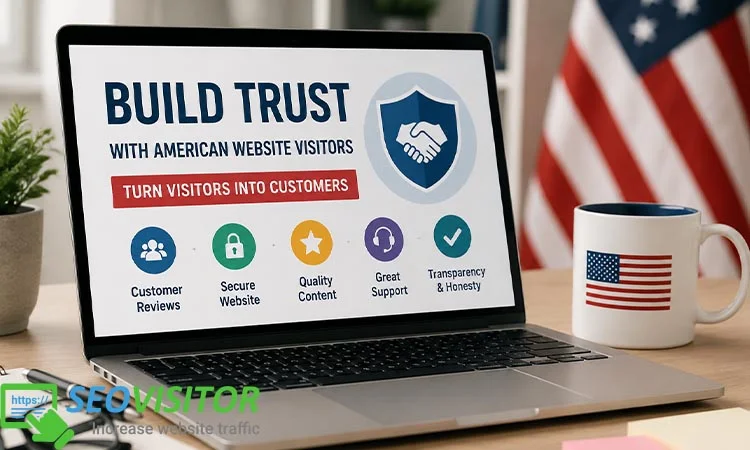
Attracting visitors from the United States is a major goal for many online businesses, but generating traffic alone does not guarantee sales or business growth. Many companies invest in SEO, advertising, and digital marketing strategies, and some even consider options such as buy USA web traffic to increase…
Attracting visitors from the United States is a major goal for many online businesses, but generating traffic alone does not guarantee sales or business growth. Many companies invest in SEO, advertising, and digital marketing strategies, and some even consider options such as buy USA web traffic to increase their website exposure and reach a larger American audience. However, bringing visitors to a website is only the first step.
The real challenge begins when those visitors arrive and decide whether they can trust the brand enough to make a purchase, submit their information, or contact the business. Without strong credibility signals, even high-quality traffic may fail to generate meaningful conversions.
American online customers carefully evaluate businesses before making decisions. They want to know whether a company is legitimate, whether their information is protected, whether previous customers have had positive experiences, and whether they will receive reliable support after purchasing.
Understanding how to build trust with American website visitors is essential for businesses that want to improve conversion rates and create long-term relationships with US customers. A trustworthy website does not only attract visitors; it creates confidence through transparency, security, professional design, and a customer-focused experience.
Why Trust Matters for American Website Visitors
Trust is one of the most important factors influencing online purchasing decisions. Unlike traditional shopping experiences, online visitors cannot physically interact with a business before buying. They cannot meet the team, examine the product directly, or immediately verify the reputation of a company.
Instead, they rely on different digital signals to determine whether a website is safe, professional, and reliable. These signals help visitors decide whether they should continue exploring the website or leave and choose a competitor.
For American consumers, trust affects almost every stage of the buying process. A trusted website encourages visitors to spend more time exploring products, submitting information, contacting the company, and completing purchases.
On the other hand, a website that lacks credibility can lose potential customers even if the product quality and pricing are competitive.
read more:Spam Links: What They Are and How to Remove Them
How American Customers Evaluate Website Credibility
American customers usually form their first impression of a website within seconds. Before reading detailed information, they evaluate the overall appearance, professionalism, and reliability of the business.
Visitors are constantly looking for answers to important questions: Is this a real company? Can I trust this business with my payment information? Are other customers satisfied? Will I receive support if something goes wrong?
A credible website provides clear answers through professional design, transparent company information, customer reviews, security features, and helpful content.
Businesses that understand these expectations can create a stronger relationship with visitors before they even make their first purchase.
Why Lack of Trust Reduces Website Conversions
Many businesses focus on increasing website traffic but ignore the reasons why visitors leave without taking action. A visitor may be interested in a product or service but still decide not to buy because something creates uncertainty.
Trust problems are often difficult to identify because customers rarely explain why they leave. They simply move to another website that feels safer and more professional.
Missing Business Information Creates Uncertainty
One of the most common reasons visitors lose confidence is the absence of clear business information. Online customers want to know who they are dealing with before they provide payment details or personal information.
A professional website should clearly explain the company background, experience, contact methods, and the people behind the brand.
Important trust-building pages include an About Us page, Contact page, company history, team information, and transparent business details.
When visitors cannot verify who operates a website, they may question whether the business is legitimate. Transparency helps remove doubts and creates confidence.
Unclear Pricing and Policies Reduce Customer Confidence
American customers value transparency when making online purchasing decisions. Hidden costs, unclear refund policies, and missing service details can quickly reduce trust.
A trustworthy website should clearly explain pricing, shipping information, return conditions, guarantees, and terms of service.
When customers understand exactly what they will receive and what expectations they should have, they feel more comfortable completing a purchase.
Poor Website Experience Damages Brand Reputation
The quality of a website directly affects how visitors perceive a company. A slow, outdated, or confusing website can create the impression that the business is unreliable.
Visitors often connect website quality with service quality. If a company cannot provide a smooth digital experience, customers may question whether they will receive a professional experience after purchase.
Improving website speed, navigation, mobile usability, and overall structure can significantly increase customer confidence.
How to Build Trust with American Website Visitors Through Social Proof
Social proof is one of the strongest methods for reducing customer hesitation. People naturally look for evidence that others have already trusted a business before making their own decision.
For online companies targeting American customers, social proof provides reassurance and demonstrates that real people have already benefited from the product or service.
Customer Reviews and Testimonials Build Confidence
Customer reviews are among the most powerful trust signals for American online shoppers. Many consumers check reviews before purchasing because they want to understand the experiences of previous customers.
However, effective testimonials should provide specific details rather than simple statements. A review that explains the customer’s problem, the solution provided, and the final result creates much stronger credibility.
For example, a statement such as “Great service” provides limited information. A detailed review explaining how a company helped save time, reduce costs, or solve a specific challenge feels more authentic.
Businesses should encourage customers to share real experiences, measurable results, and detailed feedback because authentic stories create stronger connections with new visitors.
Case Studies Demonstrate Real Business Results
Case studies are another powerful trust-building element, especially for service-based businesses, software companies, and B2B organizations. While testimonials show customer satisfaction, case studies provide deeper evidence by explaining the complete customer journey.
A strong case study describes the customer’s initial challenge, the solution provided by the company, and the measurable results achieved after using the product or service.
For American website visitors, real examples are often more convincing than general marketing statements. Instead of simply claiming that a service works, businesses can demonstrate their expertise through documented success stories.
Case studies help potential customers imagine similar results for their own situation, which increases confidence and reduces hesitation before making a decision.
Brand Partnerships and Certifications Increase Authority
Displaying partnerships, certifications, awards, and professional memberships can significantly improve how visitors perceive a brand.
When users see that a company has worked with recognized organizations or has received professional recognition, they are more likely to view the business as established and reliable.
Examples of authority-building elements include client logos, industry certifications, security badges, professional memberships, and media mentions.
However, businesses should only display genuine achievements. Fake or exaggerated credibility signals can damage reputation and create the opposite effect.
How Website Design Builds Trust with American Visitors
Website design is not only about creating an attractive appearance. It directly influences how visitors judge the professionalism and reliability of a business.
A website is often the first interaction a customer has with a brand. If the experience feels outdated, confusing, or unprofessional, visitors may assume that the company itself lacks quality.
For American audiences, where users are familiar with highly optimized digital experiences, website quality plays an important role in building confidence.
Professional Website Design Creates a Strong First Impression
The first few seconds after a visitor lands on a website can determine whether they continue exploring or leave immediately.
A professional website should communicate trust through clean layouts, consistent branding, high-quality visuals, and clear messaging.
Good design does not mean adding unnecessary elements. In many cases, simple and organized designs create stronger credibility because visitors can quickly understand the business, products, and next steps.
A well-designed website makes visitors feel that the company is organized, experienced, and focused on customer needs.
User Experience Influences Customer Confidence
User experience is one of the most important factors affecting online trust. Even a professional-looking website can lose credibility if visitors struggle to find information or complete important actions.
A trustworthy website should provide a smooth journey from the first visit to the final conversion. Visitors should be able to easily find products, understand services, contact support, and complete purchases.
Important user experience improvements include simple navigation, clear calls-to-action, mobile-friendly layouts, and an easy checkout process.
When users can complete tasks without confusion, they develop more confidence in the business behind the website.
Website Speed Affects Trust and Conversion Rates
Website performance is closely connected to customer perception. Slow-loading pages can create frustration and make visitors question the reliability of a business.
Users expect websites to load quickly, especially when browsing from mobile devices. A slow website can increase abandonment rates and reduce the number of visitors who complete desired actions.
Improving website speed through image optimization, better hosting, technical SEO improvements, and efficient coding creates a smoother experience and strengthens customer confidence.
Security Features That Make American Visitors Feel Safe
Security is one of the biggest concerns for online customers, especially when websites collect personal information or process payments.
American visitors expect businesses to protect their data and provide a secure environment for online transactions. Websites that demonstrate strong security practices are more likely to gain customer confidence.
HTTPS and SSL Certificates Improve Website Trust
An HTTPS-secured website helps protect communication between users and the website. It also provides an important visual trust signal because browsers indicate whether a connection is secure.
When visitors see security warnings or signs that a website is not protected, they may immediately leave because they do not feel comfortable sharing personal information.
Using SSL security is a basic but essential step for any business that wants to build credibility online.
Secure Payment Options Increase Purchase Confidence
Payment security has a direct impact on online conversions. Customers want reassurance that their financial information will remain protected.
Offering trusted payment methods and clearly displaying secure checkout options can reduce purchase anxiety.
Businesses targeting American customers should consider providing familiar payment solutions and making the checkout process simple, transparent, and secure.
Clear Privacy and Return Policies Build Transparency
Transparent policies demonstrate that a company respects its customers and operates professionally.
Important pages such as Privacy Policy, Terms of Service, Refund Policy, and Shipping Information help visitors understand how the business operates.
When customers know their rights and understand what happens after purchase, they feel more confident making a decision.
How Content Builds Trust with American Website Visitors
A website cannot build long-term trust through design and security features alone. The content published on a website plays a major role in showing expertise, answering customer questions, and proving that a business understands its audience.
American customers often research before making purchasing decisions. They compare different brands, read educational content, look for answers to their concerns, and evaluate whether a company has real knowledge about its industry.
High-quality content helps businesses position themselves as reliable sources of information instead of simply appearing as companies trying to sell something.
Educational Content Demonstrates Expertise
One of the most effective ways to build credibility is by creating helpful educational content. Articles, guides, tutorials, and resources allow businesses to demonstrate their knowledge and provide value before asking customers to make a purchase.
For example, a software company can publish guides explaining how businesses can improve productivity, while an eCommerce brand can create educational content about product selection, maintenance, or usage.
When visitors find useful answers on a website, they are more likely to trust the company because it demonstrates expertise and a willingness to help customers.
Transparent and Authentic Brand Messaging Creates Connection
American customers respond positively to brands that communicate honestly and clearly. Overly aggressive sales messages or unrealistic promises can reduce credibility.
Instead of focusing only on promotional statements, businesses should explain their values, experience, and the real benefits they provide.
Authentic brand messaging helps visitors understand what makes a company different and why they should choose it over competitors.
Helpful FAQs Reduce Customer Uncertainty
Frequently Asked Questions sections are valuable trust-building tools because they address common concerns before customers need to contact support.
A well-designed FAQ section can answer questions about pricing, delivery, product features, refunds, security, and service processes.
By providing clear answers, businesses show that they understand customer concerns and are prepared to support them throughout the buying journey.
How Customer Support Builds Trust with American Visitors
Customer support is one of the strongest indicators of whether a business truly cares about its customers. Many visitors evaluate support availability before making a purchase because they want reassurance that help will be available if problems occur.
A company that provides accessible and responsive support creates a stronger sense of reliability and professionalism.
Offer Multiple Communication Channels
American customers often expect businesses to provide convenient ways to communicate. Depending on the industry, these channels may include live chat, email support, phone assistance, and help centers.
Providing multiple communication options shows visitors that the company is available and willing to assist customers.
A website that makes it difficult to find contact information can create uncertainty and reduce conversion opportunities.
Fast Responses Improve Customer Confidence
Response speed can strongly influence customer perception. When visitors receive quick and helpful answers, they develop greater confidence in the company.
Slow or unclear communication can create doubts, especially before a purchase decision.
Businesses should create clear support processes and ensure customers can easily receive answers to their questions.
Proactive Customer Support Prevents Objections
The best businesses do not wait for customers to experience problems. They proactively provide information that helps visitors make better decisions.
Examples include detailed product pages, comparison guides, tutorials, onboarding resources, and clear policies.
By answering questions before they become obstacles, businesses create a smoother and more trustworthy customer experience.
Common Mistakes That Make American Visitors Lose Trust
Building trust requires consistency. Even small mistakes can create doubts and prevent visitors from becoming customers.
Many businesses unintentionally damage credibility by focusing too much on selling and not enough on creating confidence.
Using Exaggerated Marketing Claims
Overpromising results can quickly reduce trust. Statements that sound unrealistic or unsupported may make visitors question the honesty of a brand.
Instead of making exaggerated claims, businesses should use real examples, customer results, and clear explanations.
Evidence-based communication is usually more persuasive than aggressive promotional language.
Ignoring Mobile Website Experience
A large percentage of American users browse websites through mobile devices. A website that works poorly on smartphones can create frustration and reduce credibility.
Mobile optimization should include responsive design, easy navigation, fast loading times, readable content, and simple checkout processes.
A smooth mobile experience demonstrates that a company understands modern customer expectations.
Lack of Customer Proof
A website that makes claims without showing evidence may struggle to convince new visitors.
Customer reviews, testimonials, case studies, and real examples provide proof that a company can deliver what it promises.
The more evidence visitors see, the easier it becomes for them to trust the brand.
How to Measure Trust and Improve Website Conversions
Trust is not only a concept; it can be measured through user behavior and conversion data. Businesses can analyze how visitors interact with their websites and identify areas that need improvement.
Analyze User Behavior Data
Tools such as Google Analytics and Search Console can provide valuable insights into visitor behavior.
Important metrics include bounce rate, average session duration, conversion rate, and checkout abandonment rate.
These measurements help businesses understand whether visitors feel comfortable enough to continue through the customer journey.
Use A/B Testing to Improve Trust Elements
A/B testing allows businesses to compare different versions of website elements and determine which options create better results.
Companies can test different versions of headlines, testimonials, call-to-action buttons, pricing sections, and trust badges.
Small improvements in trust elements can create significant improvements in conversion rates over time.
Conclusion: Building Trust Is the Key to Converting American Website Visitors
Building trust is one of the most important strategies for businesses that want to succeed in the US digital market. Visitors do not become customers simply because they find a website. They convert when they feel confident that the company is reliable, transparent, and capable of delivering value.
Professional website design, customer reviews, strong security practices, helpful content, transparent policies, and responsive support all contribute to a stronger sense of credibility.
Understanding how to build trust with American website visitors allows businesses to create better customer experiences, increase conversion rates, and build long-term relationships with their audience.
If your website receives visitors from the United States but struggles to generate sales, the first step is not always attracting more traffic. Start by improving trust signals, strengthening credibility, and creating an online experience that makes customers feel confident.
Build trust first, and conversions will follow.
Frequently Asked Questions (FAQ)
Why is trust important for American website visitors?
Trust helps American customers feel confident when purchasing online. It reduces uncertainty and increases the chance that visitors will complete purchases or contact a business.
How can I build trust with American website visitors?
Businesses can build trust by using customer reviews, professional website design, secure payment systems, transparent policies, helpful content, and strong customer support.
What are the most important website trust signals?
Important trust signals include testimonials, customer reviews, company information, security certificates, clear policies, professional design, and real customer success stories.
Why do American visitors leave websites without buying?
Common reasons include lack of trust, poor user experience, unclear pricing, missing reviews, slow website speed, and insufficient information about the company.
Do customer reviews increase website conversions?
Yes. Customer reviews provide social proof and help visitors feel more confident because they can see the experiences of previous customers.


Comments
Leave a Comment