


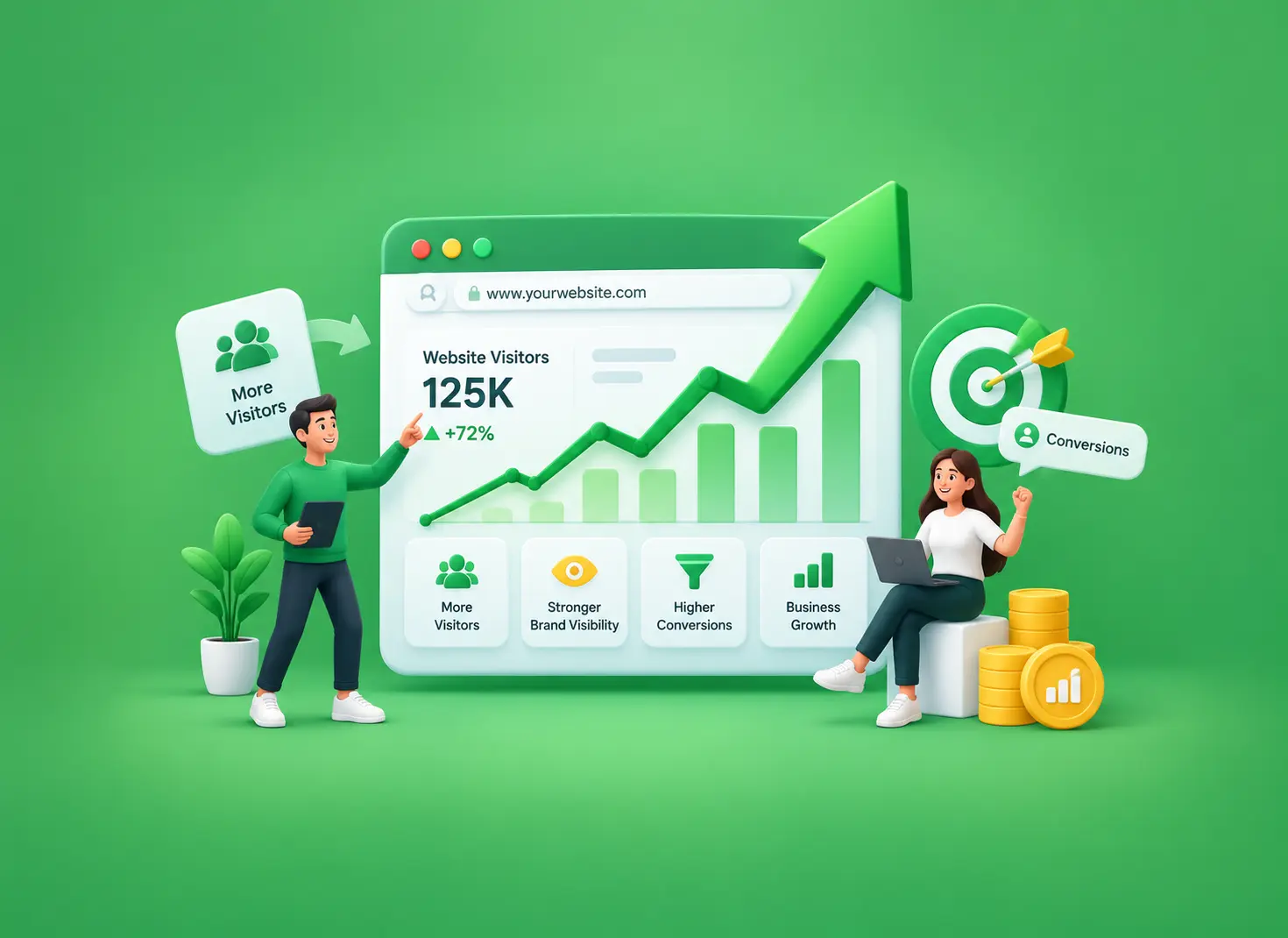
Learn why website traffic matters, how qualified visits support leads and sales, and which metrics show whether traffic creates real business value.
Increasing website traffic is important because every qualified visit creates an opportunity for discovery, trust, and action. A visitor may read a guide, compare services, join an email list, request a quote, make a purchase, or return when the need becomes urgent.
Traffic volume alone is not the goal. A smaller audience with strong intent can produce more value than thousands of irrelevant sessions. The real objective is to attract the right people, guide them to the right page, and measure whether the visit supports a meaningful business outcome.
What does website traffic mean?
Website traffic describes the users and sessions that reach a site through channels such as organic search, paid search, referrals, social media, email, direct visits, affiliates, and display campaigns. Users, sessions, and page views are different metrics: one person can return for several sessions and view many pages.
A useful traffic objective identifies the audience, destination, action, and time period. For example, a service company might aim to increase qualified organic visits to its location pages while maintaining the rate of completed quote requests.
Why is increasing website traffic important?
Relevant traffic supports several parts of a digital business at the same time. It expands reach, supplies evidence for better decisions, and creates more chances to convert interest into revenue or another valuable action.
1. More opportunities for leads and sales
Every suitable visitor can become a subscriber, lead, customer, or returning buyer. If a landing page already converts well, increasing qualified visits can raise the total number of conversions. If conversions remain flat, the business should investigate targeting, intent, trust, pricing, friction, and the call to action before purchasing more traffic.
2. Greater brand awareness
People rarely choose an unfamiliar business after one exposure. Repeated discovery through search, communities, recommendations, social content, and email helps a brand become recognizable. Measure this effect with returning users, branded searches, assisted journeys, customer research, and direct conversions rather than relying on one last-click report.
3. Better evidence about audience demand
Qualified visits reveal what people search for, which landing pages they choose, where they hesitate, and which offers attract action. That evidence can guide content priorities, product positioning, navigation, pricing, and campaign targeting. Low-quality or invalid traffic produces weaker evidence and can distort decisions.

Attract search-focused visitors to important pages and measure engagement, conversions, and campaign quality in your analytics.
4. More value from content and landing pages
Research, articles, tools, and landing pages require time to create. Distribution helps those assets reach the audience they were designed to serve. Traffic also shows which resources deserve updates, internal links, promotion, or consolidation.
5. A larger audience for retention
Visitors who choose to subscribe, bookmark a page, create an account, or follow a brand can return without being reacquired from scratch. Useful follow-up content, onboarding, and customer support increase the value of the original visit. Consent and privacy requirements should shape every retention program.
6. Reduced dependence on one platform
A business that relies entirely on one acquisition source is exposed to algorithm updates, auction prices, account restrictions, and seasonal demand. A balanced mix of search, referral, email, social, direct, and paid traffic can reduce that risk when every channel reaches a relevant audience.
7. More opportunities for partnerships and referrals
Useful resources can be cited by publications, partners, associations, newsletters, and communities. These mentions introduce a business to adjacent audiences and may help search engines discover pages. The value comes from relevance and editorial purpose, not from collecting links at any cost.
Does more traffic improve SEO?
Traffic volume alone is not a guaranteed Google ranking factor. Google recommends helpful, reliable, people-first content, crawlable links, descriptive wording, and a strong overall page experience. Paying for advertising also does not buy a better organic position.
The relationship usually works in the other direction: effective SEO can increase relevant search traffic. Promotion may still produce indirect benefits when the right people discover, share, cite, or return to genuinely useful content, but those outcomes should not be presented as guaranteed ranking manipulation.
Quality matters more than raw traffic
Two traffic sources can generate the same number of sessions and produce completely different results. Qualified traffic matches the page topic, geographic market, device experience, and intended action. Unqualified traffic may leave immediately, trigger no useful events, or create leads that never become customers.
Evaluate each channel with metrics close to the business objective:
- Landing-page relevance: Does the page match the query, post, email, or advertisement?
- Engagement: Do visitors read, navigate, watch, download, or use the intended feature?
- Conversion: Do they complete a purchase, form, call, signup, or other key event?
- Economics: Are acquisition cost, revenue, margin, and customer value sustainable?
- Retention: Do customers return, renew, recommend, or purchase again?
Which traffic sources should a business use?
Select channels according to audience intent, business economics, available resources, and the speed at which feedback is needed.
Organic search
Organic search can attract people who actively express a need. Growth depends on crawlability, indexing, relevant content, clear titles and headings, useful internal links, and a good page experience. Search Console reports impressions and clicks before the visit, while analytics measures behavior after arrival.
Referral and partner traffic
Referral traffic arrives through links on other websites. Industry publications, directories, partners, podcasts, and newsletters can send highly relevant visitors when their audiences overlap with the offer.
Email and returning visitors
Email helps a business maintain a direct relationship with people who have chosen to receive updates. Segment messages by interest and lifecycle, use consistent campaign tags, and send each audience to the most relevant page.
Social media
Social networks can distribute educational content, demonstrations, announcements, and community discussions. Adapt the message to each platform and ensure the landing page fulfills the promise made in the post.
Paid campaigns
Paid search, social, display, and controlled traffic campaigns can create visits quickly. Judge them by incremental conversions, qualified leads, revenue, and learning value rather than clicks alone.
How to increase traffic without sacrificing quality
Begin with one audience and one valuable action. Improve the landing page, verify analytics, and choose the channel that matches the audience’s intent. Use descriptive internal links so visitors and search engines can discover related resources.
Compare similar periods and segment results by source, medium, landing page, device, location, and new versus returning users. Scale the combinations that maintain quality, and stop sources that produce irrelevant, invalid, or unprofitable visits.
Final takeaway
The importance of increasing website traffic lies in the opportunities created by qualified attention. The right visitors can strengthen awareness, improve decisions, generate leads and sales, and support long-term customer relationships. Measure traffic as part of a complete journey and improve acquisition, page experience, and conversion together.
Frequently Asked Questions
Quick answers to common questions about importance of increasing website traffic
Qualified traffic creates more opportunities for people to discover a business, evaluate its offer, become leads or customers, and return later. The important measure is not visits alone but the value those visits create.
Qualified traffic consists of visitors whose needs, location, device, and intent match the page and offer. These visitors are more likely to engage, convert, or return than a broad untargeted audience.
Compare source and medium, landing pages, engagement, key events, conversion rate, revenue or lead quality, acquisition cost, and retention. Use Search Console separately for Google Search impressions, clicks, queries, CTR, and position.
There is no universal best source. Organic search, referral, email, social, direct, and paid traffic can all work when the audience, message, landing page, and business objective are aligned.
No. Traffic volume by itself does not guarantee higher rankings. Organic visibility depends on crawlability, indexing, relevance, helpful content, links, and a strong overall page experience.

Comments
Leave a Comment