


Step-by-Step Guide to Launching a Traffic Campaign
Running a traffic campaign is one of the fastest ways to bring visitors to a website, validate an offer, and start generating leads or sales. But in reality, most campaigns fail not because the ads platform doesn’t work, but because the strategy behind it is weak or incomplete.
Many people assume traffic campaigns are just about setting up ads and putting a budget behind them. However, a successful campaign is a structured system that includes planning, audience research, creative strategy, landing page optimization, tracking, and continuous improvement. Without these elements working together, you end up with traffic that does not convert or worse, traffic that wastes your budget.
In this guide, we will go step by step through the entire process of launching a traffic campaign that is not only active, but actually profitable and scalable.
Step 1: Define Your Campaign Goal Clearly
The first and most important step in any traffic campaign is defining the exact goal. Without a clear goal, every decision you make later will be random and ineffective.
A traffic campaign can serve different purposes, and each purpose requires a different approach. Some campaigns are focused purely on getting website visits, while others aim to generate leads, collect emails, or drive sales.
For example, if your goal is brand awareness, you may focus on impressions and reach. But if your goal is lead generation, then conversion rate and cost per lead become the most important metrics.
You should also define secondary goals such as increasing time on site, reducing bounce rate, or testing a new landing page. Having a layered goal structure helps you measure success more accurately.
Step 2: Identify Your Target Audience
Audience targeting is the foundation of any successful traffic campaign. If you target the wrong audience, even the best ad creative will fail.
Start by defining basic demographic information such as age range, gender, income level, and geographic location. Then move deeper into psychographic data like interests, pain points, behavior patterns, and online habits.
For example, if you are promoting SEO services, your ideal audience might include small business owners, startup founders, digital marketers, or e-commerce store owners who are actively trying to increase their online visibility.
You should also think about intent level. Some users are actively searching for a solution right now, while others are just exploring ideas. High-intent users usually convert faster and are more valuable for traffic campaigns.
Step 3: Choose the Right Traffic Source
Choosing the correct platform is critical because each traffic source behaves differently.
Google Ads is best for capturing users with high intent because they are actively searching for a solution. Facebook and Instagram Ads work better for interest-based targeting where users are not actively searching but may still be interested.
LinkedIn Ads is powerful for B2B campaigns where decision-makers are the target audience. Native advertising platforms can also be useful for content-driven campaigns where storytelling is important.
In some cases, combining multiple platforms is the best strategy. For example, using Google Ads for high-intent traffic and Meta Ads for retargeting and awareness creates a full-funnel approach.
Step 4: Build a High-Converting Landing Page
Your landing page is where traffic turns into results. Even if your ads are perfect, a weak landing page will destroy your conversion rate.
A high-converting landing page should have a clear and focused headline that immediately tells the visitor what they will get. The value proposition must be simple and easy to understand within a few seconds.
You also need a strong call to action that guides the user toward the next step, whether that is filling a form, booking a call, or making a purchase.
Page speed is another critical factor. If your landing page takes too long to load, users will leave before even seeing your content. Mobile optimization is equally important because most traffic today comes from mobile devices.
Adding trust elements like testimonials, reviews, case studies, and guarantees can significantly increase conversion rates by reducing hesitation.
Step 5: Create Effective Ad Creatives
Ad creatives are what users see before they even visit your website, so they must be compelling enough to stop scrolling.
A strong ad creative includes three key elements: attention, relevance, and clarity. First, it must grab attention immediately. Second, it must match the user’s interest or problem. Third, it must clearly explain the benefit.
Instead of vague statements like “Grow your business,” you should use specific outcomes like “Get 1,000 targeted visitors in 7 days using proven traffic strategies.”
Visuals also play a major role. High-quality images or videos perform much better than generic stock visuals. Testing multiple variations of creatives is essential because small changes in wording or design can significantly impact performance.
Step 6: Set Budget and Bidding Strategy
Budget planning is often underestimated, but it can determine whether your campaign succeeds or fails.
You should start by defining a total budget and then breaking it down into daily or weekly spending limits. For new campaigns, it is better to start with a smaller budget to collect data before scaling.
Bidding strategy also matters. Manual bidding gives more control, while automated bidding relies on platform algorithms to optimize performance. Beginners often benefit from automated bidding, while experienced marketers may prefer manual optimization for better cost control.
The key is not to overspend at the beginning but to focus on data collection and optimization first.
Step 7: Launch and Monitor Performance
Once your campaign is live, your job is not finished. In fact, this is where the real work begins.
You need to continuously monitor key performance indicators such as click-through rate, cost per click, bounce rate, conversion rate, and cost per acquisition. These metrics tell you how efficiently your campaign is performing.
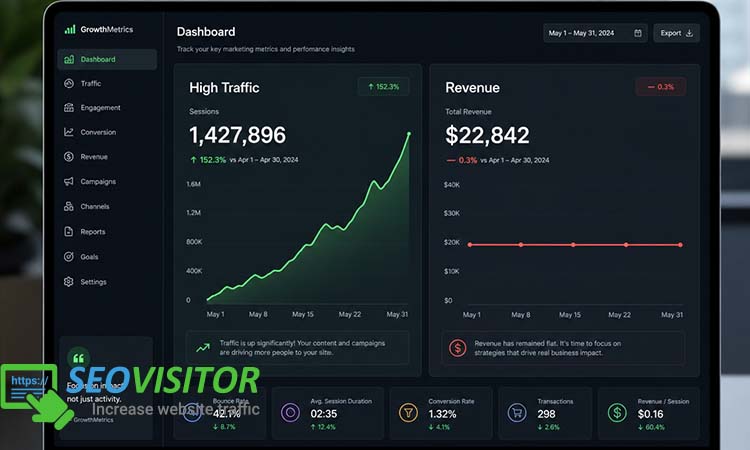
If you notice high traffic but low conversions, the problem is likely your landing page. If you have low clicks, the issue is usually targeting or ad creatives.
Regular monitoring allows you to make fast adjustments instead of letting budget get wasted.
Step 8: Optimize and Scale Your Campaign
Optimization is where profitable campaigns are built. After collecting enough data, you should start refining your targeting and improving your creatives.
You should remove underperforming ads and focus your budget on the ones that deliver the best results. Testing new headlines, visuals, and audience segments is essential for continuous improvement.
Scaling should always be gradual. Sudden increases in budget can disrupt platform learning phases and reduce performance. A controlled scaling strategy ensures stability and growth at the same time.
Step 9: Retargeting Visitors for Better Results
Most users will not convert on their first visit, which is why retargeting is extremely important.
Retargeting allows you to show ads to people who have already interacted with your website. These users are much more likely to convert because they are already familiar with your brand.
You can use retargeting campaigns to remind users about your offer, provide additional information, or offer incentives to complete an action. Platforms like Google Display Network and Meta Ads are commonly used for this purpose.
Step 10: Analyze Data and Improve Strategy
After your campaign has been running for a while, you need to analyze performance in detail.
Look at which ads brought the most conversions, which audiences performed best, and which traffic sources delivered the highest ROI. This data is extremely valuable for improving future campaigns.
The most successful marketers treat every campaign as a learning process. Instead of focusing only on results, they focus on understanding what worked and why it worked.
Common Mistakes in Traffic Campaigns
One of the most common mistakes is targeting too broad an audience, which leads to irrelevant traffic and low conversions. Another major issue is sending traffic to poorly optimized landing pages that are not designed for conversion.
Many advertisers also ignore analytics and make decisions based on assumptions instead of data. This leads to repeated mistakes and wasted budget.
Another mistake is stopping campaigns too early before enough data has been collected to optimize performance properly.
Conclusion
A successful traffic campaign is not just about running ads. It is a complete system that includes strategy, targeting, creative development, landing page optimization, and continuous improvement.
When all these elements work together, traffic campaigns can become a powerful engine for growth, generating consistent visitors, qualified leads, and long-term business results. The real success comes not from traffic volume, but from traffic quality and conversion efficiency.

Lasted Comments (0)