


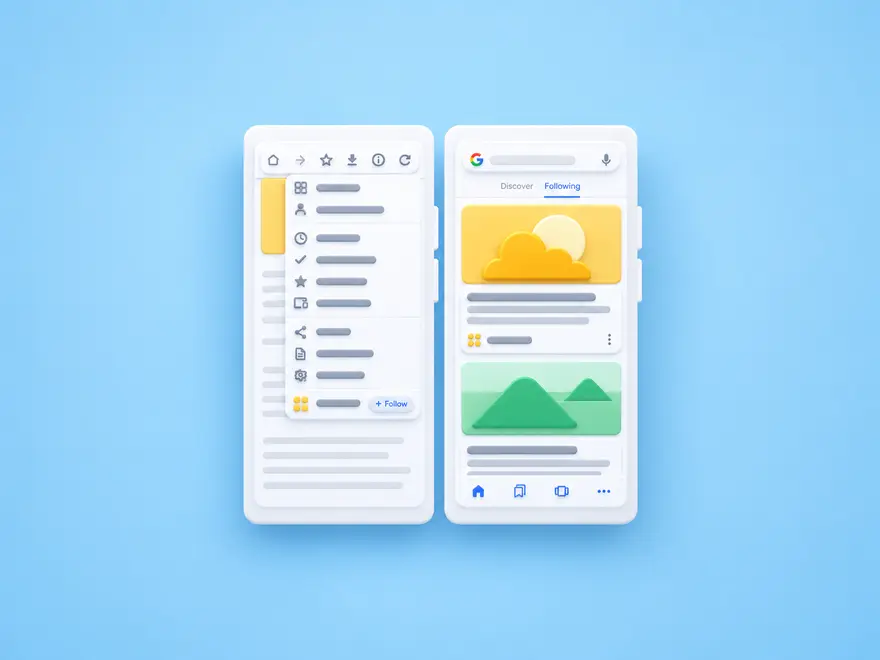
Google Discover recommends content based on users’ interests without requiring a search query. Learn how it works, how to customize it, and the current 2026 best practices for getting your content eligible for Discover.
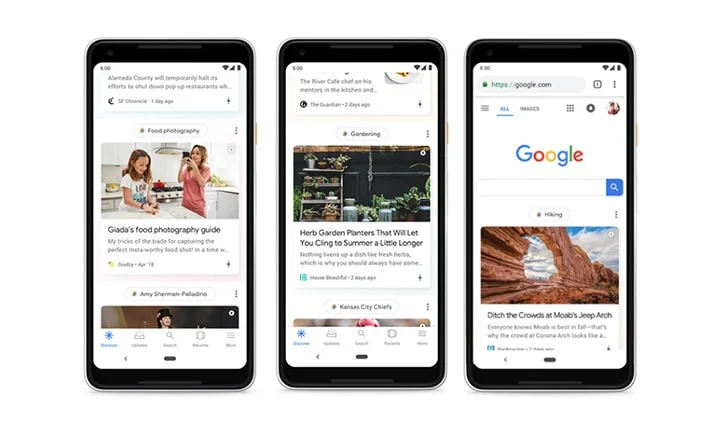
Google Discover is a personalized content feed from Google that shows people articles, videos, and other web content related to their interests—often before they search for anything. For publishers and website owners, Discover can create significant visibility, but it works very differently from traditional keyword-based Google Search.
There is no special button, tag, or schema markup that guarantees a place in Google Discover. Content becomes eligible automatically when it is indexed by Google and follows Discover’s content policies, but eligibility does not guarantee that Google will show it. Success depends on producing helpful, original, trustworthy content that matches users’ interests and is presented with strong titles, images, and page experience.
What Is Google Discover?
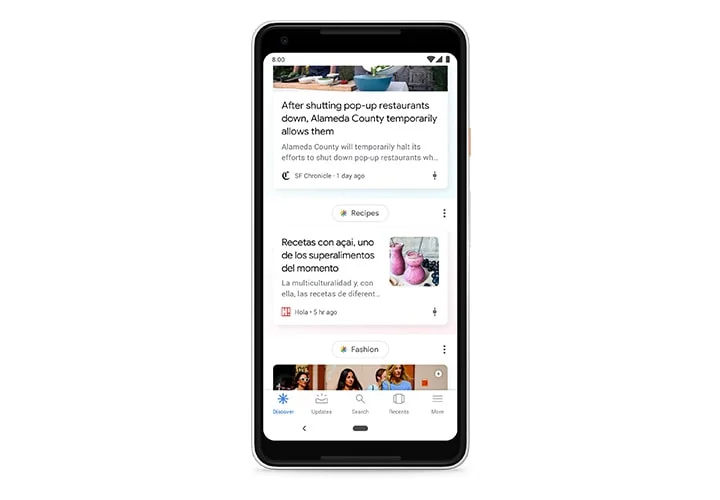
Google Discover is an interest-based feed within Google Search. Instead of waiting for a user to type a query, Discover recommends content based on signals such as saved activity, personalized recommendations, location, interests, and interactions with content. Discover can surface many types of topics, including:
- Technology.
- Business.
- Sports.
- Entertainment.
- Health.
- Travel.
- Science.
- Food and lifestyle.
- News and current interests.
- Evergreen content that remains useful to a specific user.
An important point is that Discover is not limited to breaking news. Older content can also appear when Google believes it is useful and relevant to a person’s interests.
Where Can You Find Google Discover?
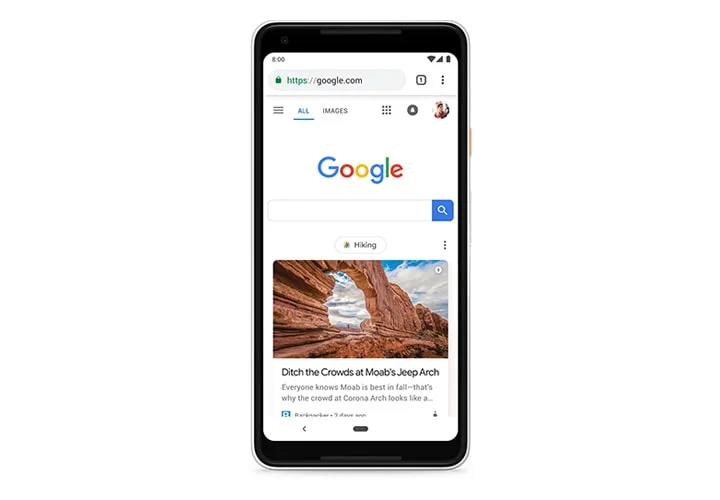
Depending on the device, country, language, and Google settings, Discover can appear in several places.
- In the Google app.
- On google.com in a mobile browser on supported Android devices.
- On some Android devices when swiping right from the home screen.
- In Chrome on Android as suggested Discover articles on the New Tab page.
Google regularly changes how personalization settings are presented, so the exact menu labels can differ between accounts and app versions.
How Does Google Discover Work?
Discover tries to predict which content a user may find useful or interesting. Google can use information from the device, Search activity, account settings, location-related information, and activity from Google products when personalization settings allow it.
For example, a person who frequently searches for camera reviews, follows photography topics, and interacts with photography articles may see more photography-related content in Discover.
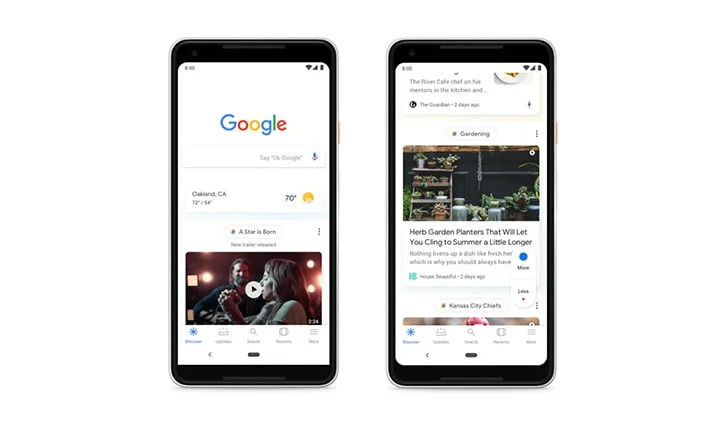
Users can also influence recommendations by:
- Following topics or sources where available.
- Marking content as liked.
- Selecting “Not interested” for topics or stories.
- Hiding a publisher or source.
- Changing personalization and activity settings.
Google’s systems continuously adjust recommendations as users’ interests and activity change. This is one reason Discover traffic can rise or fall even when a website has not made a major change.

Google Discover vs Google Search
Google Discover and traditional Google Search are related, but they serve different user behaviors.
| Feature | Google Discover | Google Search |
|---|---|---|
| User action | Content is recommended without a search query | User enters a query |
| Main matching concept | Interests and personalization | Search intent and query relevance |
| Traffic stability | Can fluctuate significantly | Usually more predictable for established rankings |
| Content freshness | Timely content can perform well, but older useful content can also appear | Depends on the query and intent |
| Optimization approach | People-first content, strong images, compelling but accurate presentation, topical expertise | Search intent, relevance, technical SEO, content quality, links and other search signals |
Discover should generally be treated as supplemental traffic rather than a replacement for keyword-driven organic search traffic.
Google Discover vs Position Zero
Google Discover should also not be confused with Google position zero. Position zero is an informal SEO term commonly used for a featured snippet in search results. It appears in response to a search query, while Discover is a personalized feed that can show content without the user entering a query.
If your goal is to improve visibility in query-based search results as well as personalized surfaces, understanding both concepts is useful.
How to Turn Google Discover On or Off
The exact settings can vary because Google is updating how Search history and personalization controls work. In current Google apps, Discover and personalized recommendations can usually be managed from your Google account, Search personalization settings, or Google app settings.
On supported Android devices and Chrome, users can also control whether the Discover feed appears. If the exact menus on your device do not match an older tutorial, update the Google app or Chrome and look for settings related to:
- Discover.
- Personalized recommendations.
- Search Services History or Web & App Activity.
- Manage interests.
How to Customize Google Discover
Discover becomes more useful when users actively refine their interests.
Depending on the interface available to your account, you may be able to:
- Follow topics.
- Unfollow topics.
- Hide topics you do not want to see.
- Hide content from a specific publisher.
- Like recommended content.
- Adjust personalized recommendations.
These controls affect the user’s personal Discover experience; they are not SEO tools for publishers.
Benefits of Google Discover for Users
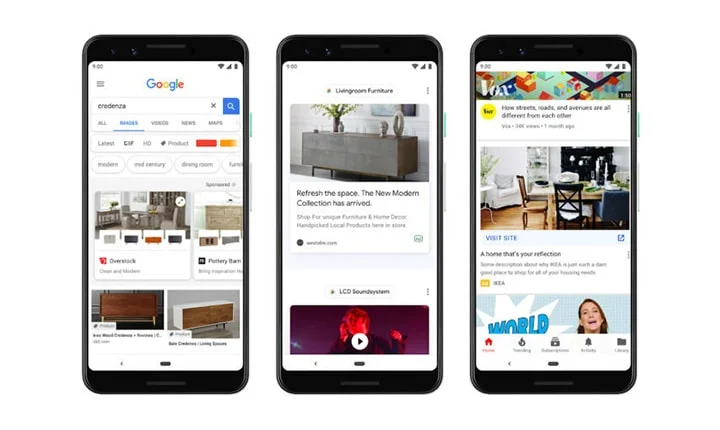
Discover can be useful because it removes the need to search for every topic manually. Instead, Google attempts to surface content that matches a user’s interests.
- Discover content without searching: Users can find articles, videos, and topics without typing a query.
- Find new sources: Discover can introduce users to websites and publishers they have not visited before.
- Stay updated: Timely content related to current interests can appear automatically.
- Personalized recommendations: The feed changes according to interests, activity, and settings.
- User control: Users can indicate which topics and sources they want to see more or less often.
Why Google Discover Matters for Publishers
For website owners, Discover can create exposure beyond traditional search queries. A strong Discover appearance may introduce your brand to people who are already interested in your topic but did not specifically search for your website. Potential benefits include:
- Additional organic visibility.
- Exposure to new audiences.
- Traffic to articles and videos.
- Brand awareness.
- More opportunities for returning visitors and subscribers.
However, Discover traffic can be highly volatile. A page may receive a large number of impressions for a short period and then decline quickly as user interests, content types, or Google’s systems change.
Who Is Eligible to Appear in Google Discover?
Google’s current requirements are simpler than many older SEO tutorials suggest. Content is automatically eligible to appear in Discover when:
- The page is indexed by Google.
- The content follows Google Discover content policies.
No special Discover tag is required. Google also states that no special structured data is required to become eligible.
Eligibility does not mean guaranteed visibility. Google decides automatically whether content is appropriate for a particular user’s feed.
How to Increase Your Chances of Appearing in Google Discover
There is no guaranteed optimization formula, but Google provides clear recommendations that can improve your chances.
1. Create Helpful, People-First Content
Discover uses many of the same systems that Google Search uses to identify useful, people-first content. Your content should provide genuine value rather than existing mainly to capture clicks. Strong content may include:
- Original reporting.
- First-hand experience.
- Expert analysis.
- Unique data.
- Useful explanations.
- Timely coverage.
- Fresh perspectives on established topics.
2. Develop Real Topical Expertise
Google’s February 2026 Discover core update placed additional emphasis on in-depth, original, timely content from websites that demonstrate expertise in a topic.
This does not mean a website must focus on only one subject. A broader website can still develop expertise in individual topic areas if it consistently publishes useful and credible content within those areas.
For example, a general business publication can still build strong topical authority around SEO if it has a deep, well-maintained body of useful SEO content.
3. Avoid Clickbait and Sensational Titles
A title should attract attention while accurately representing the article. Avoid:
- Misleading claims.
- Withholding critical information only to force a click.
- Exaggerated emotional language.
- Shock-based headlines unrelated to the actual content.
- Images that promise something the page does not deliver.
Google specifically advises publishers to avoid clickbait and sensationalism in Discover.
4. Use Strong, High-Quality Images
Images are particularly important in Discover because the feed is highly visual. Google currently recommends Discover images that:
- Are at least 1200 pixels wide.
- Contain more than 300,000 total pixels.
- Work well in a 16:9 landscape format.
- Are high resolution and relevant to the page.
- Are enabled for large previews with
max-image-preview:largeor AMP.
Google also recommends specifying a strong representative image using og:image or appropriate schema markup. Avoid using your site logo as the main Discover image and avoid text-heavy images when possible.
5. Make Titles and Images Work Together
The image and headline should communicate what the article is actually about. A strong Discover preview should make a user curious because the topic is relevant—not because the headline hides essential information or exaggerates the story.
6. Maintain Strong Page Experience
Your page should work well when users open it from a mobile feed. Important considerations include:
- Fast loading.
- Mobile-friendly layout.
- Readable text.
- Stable page elements.
- Clear navigation.
- Reasonable advertising.
- No intrusive elements that make the content difficult to access.
7. Keep Publisher Information Transparent
Trust is especially important for content distributed through recommendation feeds. Where appropriate, clearly show:
- Author name.
- Publication or updated date.
- Information about the publisher.
- Author information or biography.
- Contact information.
Sponsored or paid content should also be clearly disclosed rather than presented as independent editorial content.
8. Follow Discover Content Policies
Content must comply with Google Search policies, spam policies, and Discover-specific policies. Policy areas include deceptive content, dangerous content, manipulated media, misleading previews, excessive advertising, transparency, and other restricted content categories.
Do You Need Structured Data for Google Discover?
No special structured data is required for Discover eligibility. This is a common misunderstanding. Structured data can still be valuable for helping Google understand certain types of content and for other Search features, but there is no dedicated “Google Discover schema” that guarantees inclusion.
For Discover images, Google can use metadata such as og:image and schema.org markup when choosing a representative thumbnail.
Does Page Speed Directly Guarantee Discover Visibility?
No. A fast page does not automatically earn Discover placement. Page experience is useful because users should be able to access and interact with content comfortably. Google recommends providing a strong overall page experience, but publishers should avoid reducing Discover optimization to a single speed score.
Does Content Have to Be New to Appear in Discover?
No. Timely content can perform well because Discover reflects current interests, but Google explicitly states that older content may also appear when it remains helpful and relevant to an individual.
This means evergreen content can still have Discover potential when it remains accurate, valuable, visually strong, and relevant to user interests.
How to Monitor Google Discover Traffic
If your site receives enough Discover visibility, Google Search Console can provide a dedicated Discover performance report. The report can show:
- Impressions.
- Clicks.
- Click-through rate (CTR).
- Pages receiving Discover traffic.
Google’s current documentation says Discover performance data can cover the previous 16 months, provided the property reaches the minimum impression threshold required for the report.
The report also includes Discover traffic from Chrome and tracks a site’s Discover traffic across surfaces where users interact with Discover.
Why Does Google Discover Traffic Fluctuate?
Discover traffic is less predictable than keyword-driven Search traffic. A sudden drop does not automatically mean that your website was penalized or that an article became low quality.
Google lists several reasons Discover traffic can change:
Changing User Interests
Discover responds to what users are interested in. If interest in a topic declines, content about that topic may receive fewer impressions.
Changes in Content Types
Google continuously adjusts the types of content shown in Discover.
Google Search and Discover Updates
Google Search updates can also affect Discover because Discover is part of Google Search.
Personalization
Different people see different feeds. A page may perform well with one audience or interest group and barely appear for another. For these reasons, Discover traffic should be considered an additional source of traffic rather than a channel on which your entire content strategy depends.
Google’s 2026 Discover Core Update
In February 2026, Google announced a dedicated Discover core update. Google said the update was designed to improve several areas of the experience, including:
- Showing more locally relevant content from websites based in a user’s country.
- Reducing sensational content and clickbait.
- Showing more in-depth, original, and timely content from sites with expertise in a topic.
This reinforces an important principle: long-term Discover optimization should focus on genuine subject expertise and useful content rather than headline tricks.
How to Use Google Discover as a Reader
For users, Discover is largely automatic. Open a supported Discover surface and browse the recommended cards. You can then improve recommendations over time by:
- Following relevant topics or sources where available.
- Liking content that matches your interests.
- Marking irrelevant recommendations as “Not interested.”
- Hiding sources you do not want to see.
- Reviewing your Search personalization and activity settings.
Because Google changes interfaces frequently, there is no need to rely on a fixed six-step menu path that may become outdated after an app update.
Does Watching YouTube Affect Google Discover?
Google states that Discover can use information from a user’s device and other Google products, depending on account and personalization settings. This means activity across Google services can contribute to personalized recommendations.
However, it would be inaccurate to say that watching a specific YouTube video will definitely cause a particular article or topic to appear in Discover.
For website owners, YouTube viewing activity is not a Discover SEO tactic. You cannot make your article enter Discover by generating YouTube views or trying to manipulate user activity across Google products.
The useful takeaway is simply that Discover is personalized and that Google may use permitted activity from its ecosystem to understand user interests.
Google Discover Optimization Checklist
Before publishing content that you hope may appear in Discover, review this checklist:
- Is the page indexable by Google?
- Does the content comply with Discover and Search policies?
- Is the article genuinely useful and people-first?
- Does the site demonstrate real expertise in the topic?
- Is the headline accurate and compelling without clickbait?
- Does the article provide original information, perspective, or value?
- Is the main image at least 1200 pixels wide?
- Does the image work well in a landscape 16:9 crop?
- Is
max-image-preview:largeenabled? - Is a relevant representative image specified with
og:imageor appropriate metadata? - Is the page mobile-friendly and easy to use?
- Are author and publisher details clear?
- Are sponsored elements clearly disclosed?
- Is the content being monitored in Search Console if a Discover report is available?
Conclusion
Google Discover gives publishers an opportunity to reach people based on interests rather than only search queries. However, it should not be treated as a guaranteed or fully controllable traffic channel.
The strongest strategy is to publish helpful, reliable, people-first content, develop genuine expertise around your topics, use compelling high-quality images, avoid clickbait, provide a strong mobile page experience, and follow Google’s Discover policies.
For publishers, Discover works best as an additional source of organic visibility alongside a broader SEO strategy. Continue building keyword-driven search traffic, monitor your Discover performance in Search Console, and focus on content that users would genuinely want to read even if Discover did not exist.
Frequently Asked Questions
Quick answers to common questions about Google Discover
Google Discover is a personalized feed that recommends articles, videos, and other web content related to a user’s interests without requiring the user to enter a search query.
Yes. Google describes Discover as part of Google Search, although it is interest-driven rather than query-driven.
Your content is automatically eligible when it is indexed by Google and complies with Discover content policies. No special tag or dedicated structured data is required, and eligibility does not guarantee that your content will be shown.
No. Google does not require special structured data for Discover eligibility. Standard structured data can still be useful for other Search features and for helping Google understand your content.
Google recommends high-quality images that are at least 1200 pixels wide, contain more than 300,000 total pixels, work well in a 16:9 landscape format, and are enabled for large previews with max-image-preview:large or AMP.
No. Discover often surfaces timely content, but older content can also appear if Google believes it is helpful and relevant to a user’s interests.
No. Discover is highly personalized and its traffic is less predictable than keyword-based Search traffic. No SEO service, tag, schema, or publishing frequency can guarantee Discover visibility.
If your site reaches the required impression threshold, Google Search Console can show a dedicated Discover performance report with metrics such as impressions, clicks, and CTR.
No. Google Discover is a personalized content feed. Position zero is an informal term for a featured snippet shown in response to a search query.


Comments
Leave a Comment