Key User Engagement Signals That Impact SEO
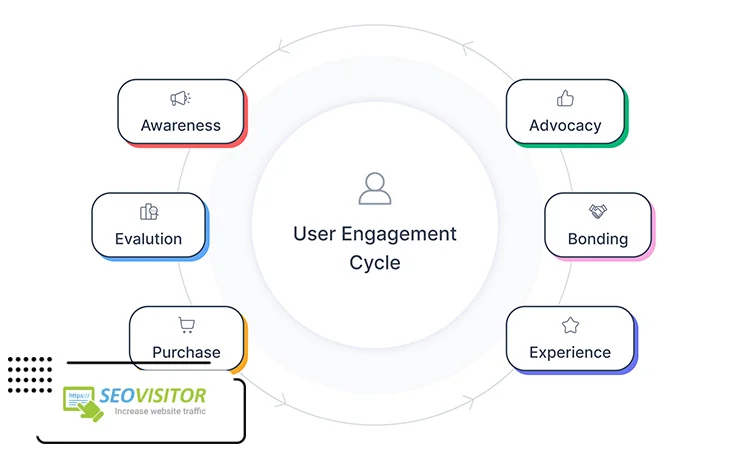
User engagement signals are behavioral metrics that help search engines understand how users interact with a webpage. These signals do not work in isolation, but together they provide a strong indication of content quality, relevance, and user satisfaction.
Click-Through Rate (CTR)
Click-Through Rate (CTR) refers to the percentage of users who click on a website link after seeing it in search engine results. It is directly influenced by how compelling and relevant the page title and meta description appear in the search results. Well-optimized titles and descriptions can significantly increase CTR by attracting more attention and matching user intent more effectively.
CTR can also influence rankings indirectly, as higher click rates often signal to search engines that a result is relevant to a query. This is closely connected to user satisfaction, since users are more likely to click results that promise clear value and relevance.
Dwell Time
Dwell time is the amount of time a user spends on a webpage before returning to the search results. It is often used as an indicator of how engaging and useful the content is. When users stay longer on a page, it usually suggests that the content is high quality and meets their expectations.
However, longer dwell time is not always better. Its value depends on search intent. For example, users searching for a quick answer may leave a page quickly even if they are satisfied, while in-depth informational searches naturally lead to longer engagement.
Pogo-Sticking
Pogo-sticking occurs when a user clicks on a search result, quickly returns to the search engine, and selects another result. This behavior typically indicates that the first page did not satisfy the user’s intent or expectations.
It can negatively impact rankings because it signals poor relevance or low-quality content. For example, if a page promises a solution in its title but fails to deliver useful information, users are likely to leave immediately and try another result.
Bounce Rate
Bounce rate refers to the percentage of users who leave a website after viewing only one page. While it is often confused with pogo-sticking, they are not the same. Bounce rate does not necessarily indicate dissatisfaction, as users may leave after finding exactly what they needed.
Bounce rate is not always a negative signal. Its interpretation depends heavily on the type of page and user intent. Good user experience (UX), clear navigation, and relevant content can help reduce unnecessary bounce rates and improve engagement quality.
On-Page Engagement
On-page engagement includes all interactions users have while staying on a webpage. This can involve scrolling behavior, clicking internal links, watching videos, or interacting with images and other elements.
These actions are strong indicators of content quality because they show that users are actively engaging with the material rather than passively or briefly viewing it. Higher on-page engagement generally suggests that the content is useful, well-structured, and aligned with user expectations.
How Google Analyzes User Engagement
Google evaluates user engagement through a combination of behavioral data and large-scale interaction patterns to better understand whether search results are satisfying user intent. This includes analyzing how users interact with search results and what they do after landing on a webpage.
One important source of insight is click and behavior data, such as which results users choose, how quickly they return to the search page, and how they navigate through websites. These patterns help Google estimate whether a result was relevant and useful for a specific query.
Machine learning systems also play a key role in ranking evaluation. These systems process massive amounts of user interaction data to identify patterns that indicate high-quality or low-quality search results. Over time, they help improve how results are ranked by learning what types of content tend to satisfy users.
Another important factor is collective user behavior. Instead of relying on individual actions, Google looks at aggregated behavior from many users to identify trends. If a large number of users consistently prefer certain pages or quickly leave others, this can influence how rankings adjust over time.
It is also important to understand the difference between direct and indirect ranking signals. Direct signals are explicitly used in ranking algorithms, while indirect signals help inform quality assessments and system training. User engagement is generally considered an indirect ranking factor rather than a direct one, but it still plays a significant role in shaping search results through quality evaluation systems.
Is User Engagement a Direct Ranking Factor?
Google has consistently stated that user engagement metrics are not used as direct ranking factors in its core algorithm. In other words, signals such as clicks, dwell time, or bounce rate are not individually plugged into the ranking system as fixed ranking inputs.
However, this does not mean user engagement is irrelevant. In practice, it has a strong indirect influence on rankings because it reflects how well a page satisfies users. When users consistently engage positively with a page, it suggests that the content is useful, relevant, and aligned with search intent.
User engagement contributes to content quality signals, helping search systems understand which pages provide better answers compared to others. It is also closely tied to user satisfaction, since engaged users are more likely to find what they are looking for and less likely to abandon the page immediately.
Another important effect is the reduction of return-to-SERP behavior. When users do not quickly go back to search results, it signals that their query was successfully answered, which can reinforce the perceived value of the page over time.
Why User Engagement Can Change Rankings
Search engines aim to deliver results that best satisfy user intent, which is why modern algorithms place strong emphasis on user satisfaction signals. When users consistently interact positively with a page, it suggests that the content is relevant, useful, and aligned with what they were searching for.
One of the key behavioral indicators is how quickly users return to search results. A fast return to the search engine after clicking a page often indicates that the content did not meet expectations, which can be interpreted as a negative signal for relevance and quality.
On the other hand, longer engagement on a page such as spending more time reading, scrolling, or interacting with content generally reflects a positive experience. It suggests that users are finding value in the information provided and are more likely to have their query fully satisfied.
How to Improve User Engagement for SEO
Improving user engagement is one of the most effective ways to strengthen SEO performance because it directly enhances how users interact with your content and how satisfied they feel after visiting your page. A better user experience leads to longer visits, more interactions, and stronger relevance signals.
Optimize Titles and Meta Descriptions (Improve CTR)
Your title and meta description are the first elements users see in search results. Writing clear, compelling, and intent-matching titles increases Click-Through Rate (CTR), which brings more qualified traffic to your website. A well-optimized snippet should accurately reflect the content while encouraging users to click.
Create Strong Opening Hooks
The first few seconds after a user lands on your page are critical. A strong opening hook should immediately address the user’s problem, confirm they are in the right place, and create interest to continue reading. This reduces early exits and increases engagement.
Improve Readability and Structure
Content should be easy to scan and understand. Using clear headings, short paragraphs, bullet points, and logical structure helps users find information quickly. Better readability increases time on page and overall engagement.
Use Images, Videos, and Visual Content
Visual elements make content more engaging and easier to understand. Images, videos, charts, and infographics can help explain complex topics and keep users interested for longer, increasing interaction signals on the page.
Smart Internal Linking Strategy
Internal links guide users to related content within your website. This encourages deeper exploration, increases session duration, and helps distribute authority across pages. It also improves site structure for both users and search engines.
Improve Site Speed and Mobile UX
A slow or poorly optimized website leads to frustration and early exits. Fast loading times and mobile-friendly design are essential for keeping users engaged. Good technical performance directly supports better user experience and SEO results.
Match Content with Search Intent
The most important factor in engagement is relevance. Content must fully match what users are searching for—whether informational, navigational, or transactional. When intent is satisfied, users stay longer, interact more, and are less likely to return to search results.
Common Mistakes That Reduce User Engagement
One of the biggest reasons websites fail to improve their SEO performance is poor user engagement caused by avoidable mistakes. These issues often lead to shorter visit durations, higher exit rates, and lower satisfaction, all of which negatively affect how users interact with the content.
Low-value long content is a common problem where articles are extended in length without providing meaningful information. Users quickly lose interest when content is repetitive or filled with unnecessary explanations. Similarly, misleading titles or clickbait can attract clicks initially, but they often lead to immediate drop-offs when the content does not match user expectations.
Slow-loading pages are another major issue, as users are less likely to wait for content to appear and will quickly return to search results. In addition, annoying ads or intrusive popups disrupt the reading experience and reduce trust, which directly impacts engagement levels.
Poor content structure also plays a significant role. When information is not clearly organized with headings, spacing, and logical flow, users struggle to find what they are looking for and are more likely to leave the page early.
Conclusion
User engagement is a critical indirect SEO factor that plays a key role in how search engines evaluate content quality. While it may not be a direct ranking signal, Google uses behavioral data to better understand whether users find a page useful and relevant.
Ultimately, the primary goal of SEO is not just achieving higher rankings, but delivering real user satisfaction. When users find value in your content and interact positively with your website, it leads to stronger engagement signals.





Comments
Leave a Comment