


For over a decade, digital marketers lived by a strict, state-sanctioned doctrine handed down from Google’s public search liaisons: “Click-Through Rate (CTR) and user behavior are not direct ranking factors.” We were told that Google only used click data for quality control, evaluation, and post-processing tests—never as a…
For over a decade, digital marketers lived by a strict, state-sanctioned doctrine handed down from Google’s public search liaisons: “Click-Through Rate (CTR) and user behavior are not direct ranking factors.” We were told that Google only used click data for quality control, evaluation, and post-processing tests—never as a live, algorithmic lever to push a website from position four to position one.
Then came the antitrust trials and the cataclysmic Google API document leak.
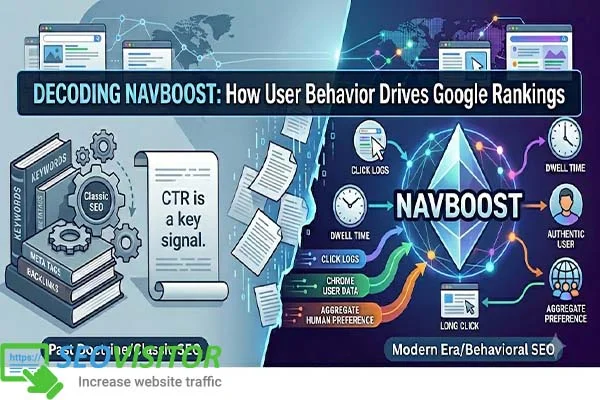
The curtain was pulled back, exposing a massive internal data-logging and ranking component that infrastructure engineers had been perfecting for years: the Google Navboost algorithm. The leaked documents proved definitively what gray-hat SEOs and behavioral data analysts had long suspected: Google doesn’t just watch how users interact with search engine results pages (SERPs)—it memorizes those interactions, scores them, and directly reshuffles organic rankings based on human behavior.
If you want your website to survive the modern era of search, you can no longer rely solely on legacy optimization techniques. This comprehensive guide will dissect the exact mechanics of the Navboost infrastructure, break down how Google distinguishes legitimate human interaction from automated bot fraud, and provide an actionable roadmap to align your everyday content strategy with behavioral algorithms.
The Anatomy of the Google API Document Leak: How Navboost Was Exposed
The search marketing industry was fundamentally disrupted when thousands of pages of internal Google API documentation were leaked to the public. This wasn’t a standard corporate press release or a vague search console update; it was a raw, unfiltered look at the structural blueprints of the world’s most powerful search engine.
For years, mainstream SEO strategy focused almost exclusively on a highly predictable, two-sided coin: on-page content optimization (keywords, entities, headings) and off-page link acquisition (backlinks, anchor text, domain authority). While those foundational elements still matter, the leaked documentation revealed that Google runs a far more dynamic, real-time feedback loop.
When the antitrust trial documents from the U.S. Department of Justice vs. Google were unsealed, senior engineers admitted under oath that a massive system built on user signals was heavily driving core search results. While competitor blogs continue to treat SEO as a static checklist of keyword densities, advanced digital strategies must adapt to the reality that search engines act as living mirrors of aggregate human preference. The leak didn’t just expose a new tool; it invalidated the traditional, rigid boundaries of technical optimization.
What Is Navboost and How Does It Process User Behavior Signals?
To optimize for this architecture, we must first define what it actually is. Navboost is a foundational layer of Google’s ranking infrastructure designed specifically to collect, aggregate, and execute ranking weights based on user click logs.
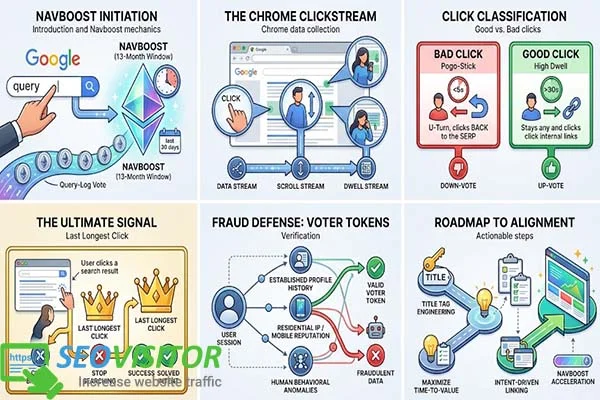
Think of it as an algorithmic voting machine. Every time a user executes a query, Google presents a list of options. The way users navigate that list provides a direct signal of relevance that no automated web crawler could ever replicate. According to the internal documentation, Navboost tracks these behavioral patterns across a rolling 13-month window, keeping a sharp, hyper-focused eye on the last 30 days to catch sudden shifts in user intent, viral trends, or seasonal anomalies.
The Chrome Factor: How Google Collects Click Streams
One of the most eye-opening revelations within the leaked documentation was the explicit confirmation of how deeply Google leverages its web browser infrastructure. Navboost doesn’t merely track what happens on the isolated google.com domain; it pulls continuous click streams from billions of active Google Chrome sessions.
When a user searches for a term, clicks a link, scrolls through a landing page, or abandons a site to try a different query, Chrome logs that behavior. This vast network allows Google to measure exact user interaction metrics even after a visitor leaves the SERP layout. It provides a continuous stream of validation data that confirms whether a webpage actually solved a user’s problem or simply looked good in the search snippet.
read more:The difference between real users and bot traffic
Good Clicks vs. Bad Clicks: Decoding Navboost’s Quality Metrics
The Navboost algorithm is not a blunt instrument that blindly counts total hits. It is an incredibly sophisticated classification engine designed to categorize the quality, intent, and authenticity of every interaction. To understand how this impacts your organic rankings, we must break down the specific types of click signals defined within the internal engineering documentation.
1. Bad Clicks (The Pogo-Stick Effect)
A “Bad Click” occurs when a user selects a search result, spends fewer than five seconds on the target page, and immediately clicks the “Back” browser button to return to the search results. In internal documents, this behavior patterns closely with negative quality classifiers. It signals to the algorithm that while the meta title and description were enticing enough to win the initial click, the actual landing page content failed to satisfy the user’s intent. If a URL accumulates a high ratio of bad clicks relative to its competitors, Navboost systematically downgrades its position for that specific search query.
2. Good Clicks (High Dwell Time)
Conversely, a “Good Click” is logged when a user navigates to a website and remains engaged for an extended duration—often measured as 30 seconds or longer—or interacts with the page layout by clicking internal links, watching an embedded video, or scrolling to the bottom of the text. This sustained dwell time signals to the core ranking classifiers that the page contains highly relevant, valuable data that aligns perfectly with what the user was looking for.
3. Last Longest Clicks (The Ultimate Signal)
The absolute highest tier of positive reinforcement within the Navboost data pipeline is the “Last Longest Click.” This occurs when a user clicks your search result, spends significant time consuming your content, and then either closes the browser tab or stops searching entirely. To Google, this is definitive proof that your website successfully killed the search loop. You solved the user’s problem completely, meaning there was no need for them to return to the SERP to seek alternative sources. Command enough “Last Longest Clicks,” and your organic visibility will scale dramatically.
Understanding “Voter Tokens”: Google’s Shield Against Click Fraud
The moment the SEO industry realized that click data heavily dictates organic rankings, an immediate question arose: Can we simply build automated bot networks to click our links and force our websites to the top of Google? Google’s engineers anticipated behavioral manipulation years ago, building a sophisticated defensive perimeter centered around a parameter uncovered in the leak known as voterTokenCount.
Google doesn’t treat all clicks as equal votes. To prevent click fraud and artificial manipulation from poisoning their core search product, Navboost validates the legitimacy of every user session. A valid “voter token” is only granted if the click originates from a highly verified, trusted environment. The algorithm analyzes cross-referenced signals to determine authenticity, including:
- Established Browser History: Is the click coming from a Chrome profile with an active, multi-month history of natural web browsing, or was the profile created five minutes ago?
- Hardware and Network Reputation: Does the session originate from a standard residential internet service provider (ISP) or a well-known mobile network, or is it routing through a suspicious data center proxy array?
- Human-Like Behavioral Anomalies: Does the user move their cursor with natural deceleration, variable scroll speeds, and erratic pauses, or does the session execute commands with the flawless, programmatic precision of a script?
If an influx of traffic hits a website without accompanying, high-reputation voter tokens, Google’s automated spam filters instantly isolate and discard those signals. In worst-case scenarios, triggering thousands of unverified bot clicks can flag your site for active manipulation, leading to automated manual actions or algorithmic demotions.
Everyday SEO Strategies to Optimize for the Navboost Algorithm
Now that we have decoded the technical infrastructure behind behavioral search engine mechanics, how do we translate this knowledge into practical, everyday optimization tactics? To win the click-signal war, you must shift your content production framework from writing purely for search crawlers to intentionally managing the psychological journey of the search user.
1. Title Tag Engineering for Maximum Organic CTR
Your meta title tag is no longer just a place to stuff your primary keyword and brand name; it is your digital storefront. To win the initial click over positions one, two, and three, your titles must use advanced copy-writing frameworks that trigger immediate psychological curiosity.
- Use Specificity and Brackets: Titles that offer precise value structures (e.g.,
[Case Study],[Step-by-Step Blueprint]) give users a clear picture of what they are buying into before they execute the click. - Address Shifting Layout Real Estate: With AI Overviews and rich snippets eating up vertical space on mobile devices, keep your core value proposition within the first 50 characters of your title to ensure it never gets truncated on smaller screens.
- Avoid Blind Clickbait: Remember the “Bad Click” rule. If your title promises a magical, instant solution but your introductory paragraph delivers standard, generic definitions, users will bounce immediately, destroying your Navboost reputation.
2. Maximizing Time-to-Value to Eradicate “Bad Clicks”
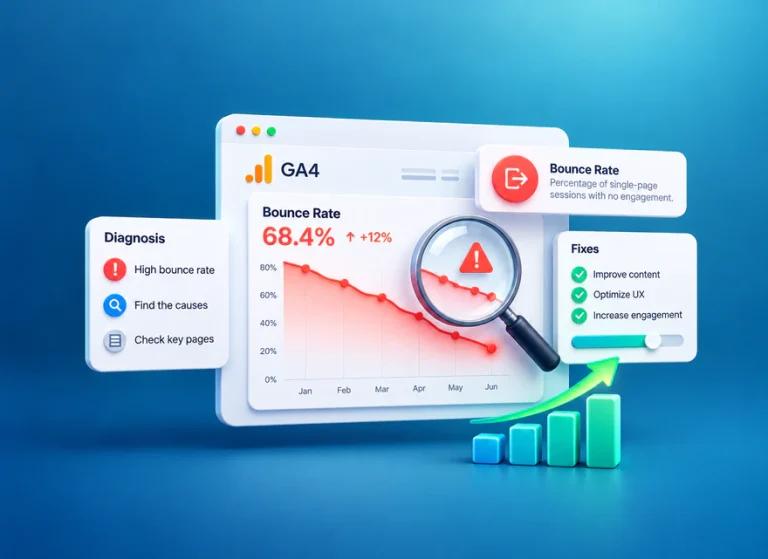
Once a user lands on your site, you have exactly less than five seconds to convince them to stay. If your layout features a massive, slow-loading hero image, two intrusive pop-up banners, and a long-winded, philosophical introduction, the user will immediately hit the back button.
To maximize your time-to-value (TTV), use the Inverted Pyramid Content Model. Place the direct, unambiguous answer to the user’s primary search query at the absolute top of the page—ideally within the first two sentences.
For instance, if someone searches for a technical error code, do not begin with a history of software engineering; state the exact fix immediately in a highlighted callout box. Once the user consumes that initial answer, their immediate panic subsides, making them far more likely to stay on the page to read your secondary explanations, deep-dive tutorials, and structural walkthroughs.
3. Intent-Driven Internal Linking to Foster Click Chains
To signal to Chrome and Navboost that your site offers deep, authoritative value, you want users to view multiple pages during a single session. Design your internal linking structure to act as a logical progression of thought.
At the end of every core section within your article, insert highly visible, contextual internal links that address the natural follow-up question a reader would have. If they are reading about keyword research, embed a clear link pointing to an advanced keyword mapping guide. This transforms a single-page view into an extended, multi-click user session, sending incredibly strong retention signals straight back to Google’s logging systems.
Is CTR Manipulation Safe? The Uncensored Reality of Behavioral SEO
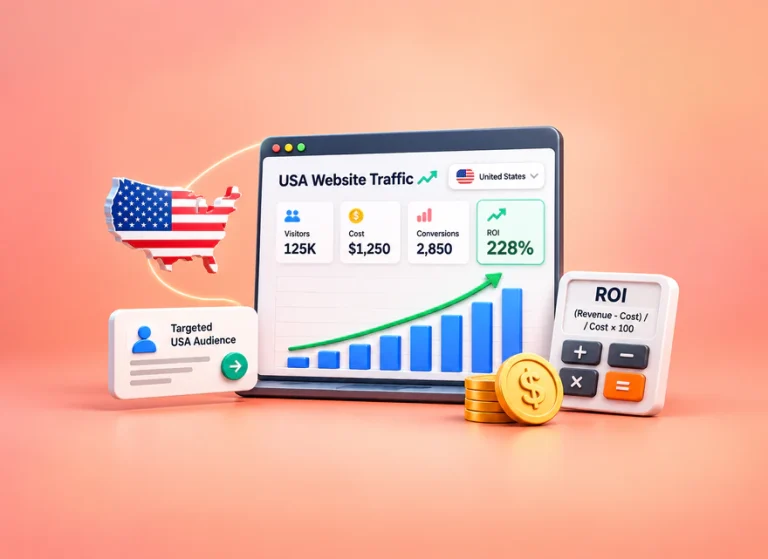
Let’s speak candidly. Because the Google Navboost algorithm relies heavily on user engagement metrics, a massive marketplace for click manipulation has emerged within the growth-hacking community. Marketers across every niche are actively trying to bypass traditional, slow-moving content marketing pipelines by purchasing targeted search traffic.
But is it safe? The reality of modern gray-hat SEO is entirely binary: it depends entirely on the underlying infrastructure of the traffic network you deploy.
| Traffic Quality Indicator | High-Risk / Toxic Networks | Safe / Algorithmic-Compliant Networks |
|---|---|---|
| User Profile Integrity | Newly generated, empty browser profiles with no historical cookie data. | Aged, active Google/Chrome profiles with multi-month natural browsing patterns. |
| Network IP Routing | Cheap data center proxies, server farms, or commercial VPN exit nodes. | Residential ISPs, authentic mobile device data networks, and local geo-targeted IPs. |
| On-Page Interaction | Linear scrolling, instantaneous clicking, and fixed session durations. | Erratic human movements, variable scroll rates, natural pauses, and internal link clicks. |
| Algorithmic Result | Flagged by voterTokenCount; results in immediate algorithmic demotions. |
Successfully logs as authentic human engagement; accelerates organic position gains. |
If you attempt to manipulate search engine metrics using automated bots or low-cost click farms that rely on simulated software, you are wasting your budget and actively putting your digital assets at severe risk. Google’s pattern recognition engines easily identify uniform, non-human behaviors.
However, if your user engagement campaigns leverage authentic, decentralized networks of real human beings executing searches from local residential connections, navigating through your site naturally, and satisfying intent patterns, the algorithm registers those sessions as genuine popularity signals. For competitive niches where everyone already has great content and pristine backlink profiles, safe, behavioral-driven traffic optimization can serve as the ultimate competitive differentiator.
Conclusion: Shifting Your Strategy to Behavioral SEO
The release of the internal API blueprints marks the end of the line for classic, mechanical search optimization. We can no longer view SEO as an isolated task of optimizing text purely for automated crawlers. The Google Navboost algorithm is definitive proof that the modern search engine is fundamentally powered by user behavior, click equity, and continuous human validation.
To secure sustainable, long-term organic visibility, you must transform your website into an environment that actively captures and holds human attention. Every title tag must be precision-engineered to earn the initial click, every introductory paragraph must deliver immediate structural value to eliminate swift bounces, and your entire site architecture must encourage multi-page user engagement.
Now, it’s time to take action on your own digital properties. Head over to your analytics dashboard or Google Search Console today, sort your top-performing landing pages by their Click-Through Rate, and isolate the pages experiencing high impressions but subpar user engagement. Audit their introductions, fix their mobile load times, and implement clear, enticing internal call-to-actions.
Ready to safely scale your search signals?
Ready to scale your organic rankings by feeding positive signals directly into Google’s Navboost algorithm? Avoid risky, automated bot traffic that burns your domain. If you want to safely scale your search signals with verified human profiles, real user history, and maximum engagement patterns, explore our premium Buy Organic Traffic & CTR Optimization Service today to launch your first intelligent campaign.
What are your thoughts on the recent Navboost revelations? Have you noticed a direct correlation between user dwell time and your organic keyword movements? Let us know your experiences or drop your questions in the comments section below—we respond to every single submission!
Frequently Asked Questions
Is the Google Navboost algorithm an official ranking factor?
Yes. While Google’s public representatives spent years minimizing the role of live click data in core search mechanics, unsealed documents from the U.S. antitrust trials and the comprehensive API document leak confirmed that Navboost is a primary, foundational infrastructure layer that actively shapes organic search rankings based on historical user interaction data.
How can I increase my organic CTR safely without risking an algorithmic penalty?
The safest and most sustainable way to improve your CTR is through advanced on-page optimization and psychological headline engineering. Focus on writing hyper-specific, compelling title tags, utilizing structured data to secure eye-catching rich snippets (such as review stars or FAQ drop-downs), and running targeted user engagement campaigns that rely strictly on authentic human profiles and residential networks.
Does Google use Chrome browser data for SEO rankings?
Yes. The leaked API architectural maps explicitly indicate that aggregated user behavior logs, click paths, and session engagement metrics collected throughout the Chrome browser environment are processed and utilized to train, refine, and validate the Navboost scoring model.
What is the difference between a “Good Click” and a “Bad Click” in search infrastructure?
A bad click occurs when a user clicks an organic search result and immediately returns to the search engine within seconds because the content failed to answer their query. A good click occurs when a user stays on the landing page for an extended duration, reads through the text, and interacts with the site layout, signaling deep contextual relevance to Google’s ranking classifiers.
Will automated traffic software help my website rank higher?
No. Standard automated traffic software and bot scripts lack authentic, historical cookie footprints, verified Google account profiles, and natural residential IP addresses. These fraudulent signals are easily isolated by Google’s voterTokenCount security protocols and are completely disregarded, meaning they provide zero ranking benefit while exposing your domain to massive spam filter risks.

Comments
Leave a Comment