



Decoding the Google RankBrain Algorithm: How AI Measures User Satisfaction
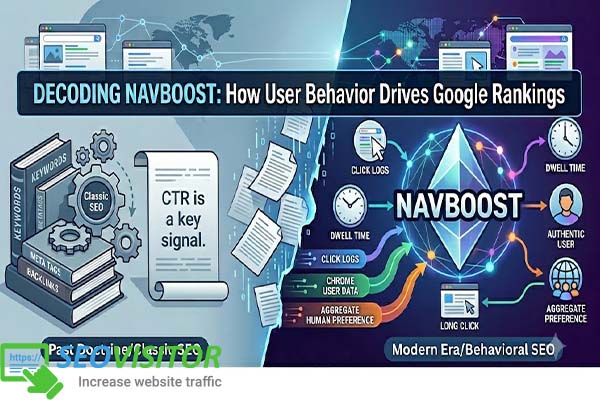
In our previous deep dive, we unmasked the hidden machinery of the SERP, revealing exactly how the Google Navboost algorithm wins the war on search result pages by logging clicks, analyzing search intent validation, and tracking browser footprints.
But securing that initial click from the search results page is only half the battle. Once a user exits the Google interface and lands on your domain, a different, highly sophisticated system takes over the appraisal process.
Enter the Google RankBrain algorithm—Google’s premier machine-learning core component that acts as the ultimate judge of content quality by tracking post-click human interaction.
For years, traditional SEO practitioners treated search engine optimization like an exact math problem: insert a keyword into the title tag, repeat it a fixed number of times within the body copy, stack a few backlinks with exact-match anchor text, and watch the page climb to position one.
If you are still operating under this outdated framework in 2026, you are likely wondering why your organic positions suddenly drop despite your technical optimizations.
The modern search ecosystem does not just read text; it evaluates human experience. This comprehensive guide will dissect the inner workings of RankBrain’s machine learning framework, explore the precise psychological metrics it uses to quantify user satisfaction, and provide an actionable layout blueprint to keep your web properties perfectly aligned with automated machine learning systems.
What is Google RankBrain? The Brain Behind Semantic Search
First introduced to the public core ranking ecosystem in late 2015, RankBrain marked a historical shift in Google’s corporate engineering direction. It transformed Google from a search engine built on rigid, string-based keyword matching into an AI-first entity capable of executing complex semantic search interpretation.
The Shift from Strings to Things
Before this shift, if a user searched a completely unique phrase that Google’s index had never encountered before, the engine struggled to return highly accurate pages. It would look for the literal, exact placement of those specific words across the web.
RankBrain permanently solved this limitation by mapping words into mathematical vectors—known as word embeddings—allowing the system to understand that disparate phrases often share the identical underlying concept or intent.
The Hand-Off Mechanism between Navboost and RankBrain
To build a flawless topical cluster strategy for your website, you must understand the structural relationship between these independent systems. They do not operate in silos; instead, they function as a continuous, algorithmic relay team.
The gatekeeper (Navboost) operates primarily on the live SERP layout. It measures how enticing your snippet is, tracks historical click data for queries, and gives your website a trial position based on initial popularity metrics and user selection choices.
The inspector (RankBrain) operates on the destination page. The moment a user clicks your link, RankBrain tracks exactly how they behave inside your domain. It monitors whether the user settles in to read your analysis or freezes up, experiences immediate friction, and abandons the page.
The Gatekeeper vs. The Inspector
If Navboost is the marketing gatekeeper that gets users through your digital door, RankBrain is the meticulous structural inspector monitoring exactly what those users do once they are standing inside your house.
If visitors leave the premises in disgust within three seconds, RankBrain communicates this directly to the broader ranking core, systematically dismantling the temporary position boosts originally granted by Navboost.
The Psychological Metrics: How RankBrain Quantifies “User Satisfaction”
Artificial intelligence cannot read an article and subjectively decide if the writing is witty, engaging, or truly authoritative. Instead, it must look for proxy metrics—concrete, measurable human behavioral patterns that reflect a user’s internal psychological state. When a user finds exactly what they want, their physical interaction patterns with their device fundamentally change. RankBrain parses these interactions to score a page’s true user satisfaction value.
Demystifying Dwell Time (The Retention Metric)
One of the most critical elements within behavioral search optimization is the concept of dwell time. Dwell time is the precise duration of time that elapses from the exact second a user clicks your link in the search results to the moment they return to the SERP or close their browser window.
Dwell time should not be confused with standard Google Analytics metrics like Average Session Duration or Time on Page, which can be easily skewed by single-page visits or background browser tabs. RankBrain specifically isolates post-click retention.
The Algorithmic Impact of Micro-Sessions
A short session lasting between 0 to 15 seconds signals to the machine learning model that the webpage was either irrelevant, low quality, or structured so poorly that the user refused to spend time digesting the layout.
Conversely, an engaged session lasting 2 minutes or longer serves as an unassailable confirmation of deep domain authority. It tells the algorithm that the user found the material valuable enough to pause their day, stop browsing, and consume the information provided.
Core Interaction Depth and Telemetry
RankBrain is designed to identify and filter out superficial dwell time. For instance, if a user opens your page and accidentally leaves the phone screen active on their desk while making coffee, that extended pause does not trick the algorithm. RankBrain cross-references passive time on page with active, core interaction depth.
The system tracks micromovements sent via browser telemetry through Chrome integrations. It measures active scroll percentages, text highlighting behaviors, clicks on interior dropdown menus, and interactions with interactive elements.
Sensing Authentic Engagement
If a visitor scrolls smoothly to the bottom of a 2,000-word post over several minutes, the machine registers an authentic deep-read pattern.
If the page is static, untouched, and never scrolled, it is flagged as an unengaged or artificial session, and its retention weight is discounted immediately by the machine learning algorithm.
The Dreaded Return to SERP: How RankBrain Flags High Bounce Patterns
The absolute worst outcome for your organic visibility is a behavioral sequence known as search query dissatisfaction, often referred to in advanced communities as short-clicking or negative pogo-sticking.
The Mechanics of Search Query Dissatisfaction
When a user executes a specific search query, they are seeking a definitive solution to a problem. If they select your link, find a generic wall of unreadable text, hit the back button, and immediately click the very next organic result listed in the search results, RankBrain registers a critical failure.
This sequence provides Google’s machine learning model with unambiguous, comparative data. It tells the engine that position A failed to solve the query, while position B successfully answered it.
The Consequence of Automated Demotion
If this behavioral feedback loop repeats across thousands of independent search sessions for a specific term, RankBrain will dynamically override your standard on-page metadata optimization.
The algorithm will systematically pull down your URL down the SERP while elevating the competitor page that successfully killed the search loop and satisfied the user intent.
Aligning Content Architecture with Machine Learning Frameworks
To win the long-term favor of machine learning models, you must fundamentally restructure how your web copy is styled and formatted. You can no longer save your best insights for the bottom of the article to artificially stretch out time on page. Instead, you must build an editorial framework engineered to arrest the user’s immediate attention and eliminate quick bounce motivations.
The Inverted Content Funnel Architecture
The standard approach used by legacy content writers is to introduce an article with lengthy background contexts, introductory fluff, and historical explanations before finally delivering the actual answer halfway down the screen. In the era of RankBrain, this approach is optimization suicide.
Instead, execute the Inverted Content Funnel. Place a bold, unambiguous, zero-fluff summary of the exact answer to the user’s primary query within the first three sentences of the article, positioned high above the digital fold line.
Eliminating the Urge to Bounce
When an anxious user lands on your page and immediately sees the precise answer highlighted in a clean callout box, their psychological urge to click the back button vanishes.
You have successfully resolved their immediate panic. Because they now trust that your page contains the right solution, they are highly incentivized to remain on your site to read the subsequent deep-dive technical steps, edge cases, and structural walkthroughs. You have neutralized the bad click before it could form.
Interactive Micro-Conversions
To turn a standard single-page visit into an extended, multi-click user session that delights RankBrain’s data pipelines, you should intentionally plant interactive micro-conversions throughout your layouts.
Use dynamic accordion tabs that force users to actively click to expand deep-dive sections, creating trackable interaction events. You should also integrate lightweight javascript calculators, custom assessment forms, or interactive comparison charts relevant to your industry.
Strategic Internal Resource Routing
Do not use basic text hyper-links at the end of your sections; design distinct callout blocks that state: “Read Next: Advanced Troubleshooting Protocols for Infrastructure Security.”
Every time a user interacts with these structural components or navigates deeper into your subpage architecture, they log a new layer of positive engagement metrics, proving to the machine learning core that your domain provides an indispensable ecosystem of value.
💡 How to Activate Backlinks for the RankBrain & Navboost Core?
Google doesn’t just crawl backlinks; it measures how real users navigate between domains using RankBrain telemetry. If you want to transform your existing backlinks and reportage links into active behavioral trust signals, explore our premium
Buy Backlinks Traffic
today. Send verified human visitors through your links to log natural scrolling, extended dwell times, and multi-page user journeys that search algorithms recognize as genuine authority.Leveraging Organic Traffic Systems to Feed RankBrain Positive Data
Let us look at the marketplace realistically. Because the modern search ecosystem is increasingly dictated by behavioral metrics, attempting to scale organic visibility solely through traditional outreach and technical cleanups can feel incredibly slow.
If your brand is stuck in position seven, you are structurally blocked from earning the natural volume of human user signals needed to prove your authority to the Google RankBrain algorithm.
The Visibility Trap in Competitive Niches
This visibility trap has forced advanced digital growth teams to actively integrate managed user engagement strategies into their standard launch processes. However, executing behavioral optimization requires extreme infrastructure precision.
If you use low-cost traffic bots, bulk software emulators, or basic server proxy scripts to inflate your on-page time metrics, RankBrain’s defensive protocols will easily isolate the uniform, non-human patterns. The voter token counts will return zero, the automated spam filters will discard the sessions, and your site’s quality score will plummet.
The Necessity of Real Human Infrastructure
To successfully feed positive, authoritative data vectors into machine learning search components, your traffic strategies must rely exclusively on real human infrastructure.
True behavioral optimization requires authentic human beings utilizing aged browser histories, localized residential ISP connections, and natural, erratic browsing movements.
When real users naturally execute your target search terms, select your brand, read your contents, and click through your internal resource chains, the algorithm registers genuine, unmanipulated consumer popularity. For highly competitive niches where match-grade content and strong domain ratings are already standard across page one, deploying safe, human-powered behavioral engagement campaigns can serve as the ultimate operational accelerator.
Conclusion: The New Era of Behavioral SEO
The deep integration of machine learning into the core search pipeline marks a definitive evolution in digital marketing. We are no longer writing for simple, predictable indexing bots; we are optimizing for a fluid system modeled on human satisfaction metrics. The Google RankBrain algorithm proves that user retention, interaction depth, and session quality are now the definitive yardsticks of modern search authority.
To safeguard your brand’s digital real estate, you must stop treating user experience as an afterthought. Every piece of content you push live must be architected to arrest attention, satisfy search intent within seconds, and provide an intuitive journey that encourages deep site exploration.
Take a proactive step today: audit your top ten highest-traffic URLs. Look at their real-world user engagement metrics inside Microsoft Clarity or Google Search Console. If you find high impression counts paired with short dwell times, rewrite your introductions immediately, remove intrusive interstitial pop-ups, and structure your text for rapid readability.
What are your experiences adapting to Google’s machine learning updates? Have you seen a noticeable lift in your keyword rankings after restructuring your layout for better dwell time? Drop your insights, success stories, or technical questions in the comments section below—our strategy team reads and responds to every submission!
Frequently Asked Questions (FAQs)
What is the main purpose of the Google RankBrain algorithm?
RankBrain’s primary function within the search ecosystem is to leverage machine learning to interpret complex, ambiguous, or conversational search phrases, map those queries to accurate semantic concepts, and dynamically adjust rankings based on live user satisfaction metrics.
Does RankBrain look at keyword density for on-page SEO?
No. RankBrain does not look at arbitrary keyword repetition percentages. Instead, it utilizes natural language processing and semantic entity mapping to analyze the broader context of a page, focusing heavily on how thoroughly and interactively the content answers the intent of the search query.
How do Navboost and RankBrain work together in Google’s infrastructure?
Navboost operates as an initial gatekeeper on the search results layout, measuring click popularity, snippet attraction, and historical SERP preferences to grant a page a trial ranking. RankBrain acts as an internal inspector, evaluating the user’s actual behavior, scroll depth, and retention time after they click through to the destination website.
Can low dwell time destroy a website’s page one rankings?
Yes. If a page consistently logs extremely short dwell times alongside high pogo-sticking rates (users returning to the SERP to choose a competitor link), RankBrain flags the content as non-responsive to that specific search intent, which will systematically pull down its organic positions over time.
How can I ensure my traffic campaigns are safe for RankBrain’s filters?
To ensure your traffic campaigns pass RankBrain’s validation checkpoints, you must entirely avoid automated scripts, data center proxies, and software emulators. Campaigns must utilize decentralized networks of real human users with established Chrome browser histories, real mobile or residential ISP connections, and completely natural, unscripted on-page interaction behaviors.
Lasted Comments (0)