


How Google AI Overviews (SGE) Are Changing Organic Traffic in 2026
For most of the past two decades, search engine optimization operated on a relatively stable foundation: rank higher in Google’s organic results, earn more clicks, and grow your website traffic. In 2026, that foundation has shifted significantly. Google AI Overviews — the evolution of what was originally announced as the Search Generative Experience (SGE) — have fundamentally altered the relationship between search rankings and organic traffic.
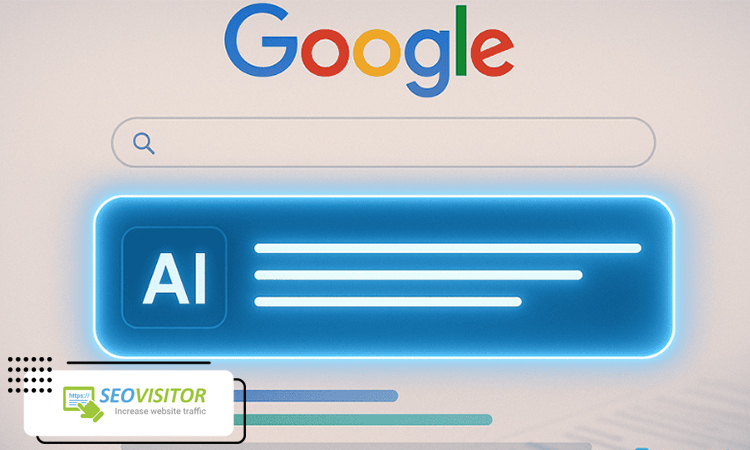
AI Overviews are AI-generated summaries that appear at the very top of Google’s search results page, directly answering a user’s query before any traditional organic links are displayed. For millions of queries every day, users can now get a complete, synthesized answer without ever clicking through to a website. This shift has accelerated the already-growing phenomenon of zero-click searches — queries that begin and end on the search results page itself.
The implications for website owners, content creators, and SEO professionals are profound. Websites that once relied on strong rankings for informational queries are seeing click-through rates decline even as their impressions hold steady or grow. The visibility that once reliably translated into traffic now sometimes means nothing more than being cited — or not cited — in an AI-generated paragraph.
At the same time, Google AI Overviews have not made SEO irrelevant. They have made it more demanding. Websites that demonstrate genuine expertise, publish original research, build strong brand authority, and structure their content for AI comprehension are finding new opportunities to be featured prominently in AI-generated answers — reaching users in a completely new way that complements, rather than replaces, traditional organic visibility.
Understanding exactly how AI Overviews work, which websites they affect most, and what content strategies hold up in this new environment is now essential knowledge for anyone serious about organic traffic in 2026 and beyond.
What Are Google AI Overviews (SGE)?
Definition of Search Generative Experience (SGE)
The Search Generative Experience (SGE) was Google’s original name for its AI-powered search feature, introduced during its experimental phase in 2023. By 2024, Google had broadly rolled out this technology under the name AI Overviews, and by 2026 it has become a standard feature of Google Search for hundreds of millions of users globally.
AI Overviews are AI-generated responses that synthesize information from multiple web sources to directly answer a user’s search query. They appear above the traditional “ten blue links” that have defined Google’s search results page for decades, and they often include citations to the web pages whose content was used to generate the summary.
How Google AI Overviews Work
Google AI Overviews are powered by Google’s large language models — most notably the Gemini family of AI systems — which have been trained on vast quantities of web content and are continuously updated with fresh information from Google’s crawling and indexing infrastructure.
When a user submits a query, Google’s systems determine whether the query is one for which an AI-generated summary would be helpful. If so, the model synthesizes an answer by drawing on indexed web content and presents it in a structured format at the top of the results page. The model identifies and cites the sources it considers most authoritative and relevant for each component of its answer.
Difference Between Traditional SERPs and AI Overviews
In a traditional SERP, Google presents a ranked list of links to web pages, and users click through to the pages most likely to answer their query. The user does the synthesis — reading multiple pages, comparing information, and forming their own conclusions.
With AI Overviews, Google does the synthesis on behalf of the user. The model reads, processes, and summarizes multiple sources into a single coherent response. Users who are satisfied with the AI-generated answer have no reason to click further — which is both the fundamental value proposition of AI Overviews and the primary challenge it creates for website publishers.
Types of Queries Most Affected by AI Answers
- Informational queries: ‘how does X work’, ‘what is X’, ‘why does X happen’
- Definition and explanation queries: concepts, terminology, historical facts
- Simple how-to queries with straightforward procedural answers
- Health, science, and general knowledge questions
- Comparison queries: ‘X vs Y’, ‘difference between X and Y’
Queries with commercial, transactional, or highly local intent are generally less affected, as these require actions — purchases, bookings, directions — that an AI summary alone cannot fulfill.
How AI Overviews Are Changing Organic Traffic
Rise of Zero-Click Searches
Zero-click searches — queries that resolve on the search results page without any click to an external website — have been growing for years, driven by featured snippets, knowledge panels, and other SERP features. AI Overviews have dramatically accelerated this trend
In 2026, industry research indicates that a significant and growing proportion of informational queries in categories like health, finance, education, and general knowledge now resolve without a click to any external website. For publishers who built their traffic model around ranking for informational keywords, this represents a structural challenge that cannot be solved by traditional SEO tactics alone.
Declining Organic CTR for Informational Queries
Even when a website ranks highly in organic results beneath an AI Overview, its click-through rate is often substantially lower than it would have been before AI Overviews appeared for that query. Users who receive a satisfactory answer from the AI summary have no incentive to scroll past it and click a link.
Data from Google Search Console for many publishers shows a consistent pattern: impressions for informational queries remain stable or even increase (because the page still appears in results), while clicks and CTR decline. This impression-click divergence is one of the clearest measurable signatures of AI Overviews’ impact on organic traffic.
Increased Competition for Top Citations
While AI Overviews reduce the click value of organic rankings for many queries, they have created a new form of visibility: being cited within the AI-generated answer itself. When Google’s AI model cites your content as a source, your brand and a link to your page appear prominently within the most-read section of the entire results page.
Competition for these AI citations is intense and operates by different rules than traditional ranking. It rewards authoritative sourcing, clear and direct writing, well-structured factual claims, and strong E-E-A-T signals — not just keyword optimization.
Shift From Ranking to Visibility
The AI Overviews era has accelerated a shift in how SEO success should be measured. Ranking in position three and receiving no AI citation may deliver fewer clicks than ranking in position seven and being featured prominently in the AI Overview above. The concept of search visibility — how prominently and frequently your brand appears across the entire SERP, including AI-generated sections — is becoming more important than rank position alone.
Changes in User Search Behavior
AI Overviews are also shaping how users interact with search itself. Users are increasingly comfortable asking longer, more conversational questions — knowing that the AI can synthesize complex answers. This shift toward more natural language querying is influencing the kinds of content that perform well, favoring comprehensive, conversational, and contextually rich content over tightly keyword-optimized pages.
Which Websites Are Most Affected by Google AI Overviews?
Blog and Informational Websites
Pure informational blogs — websites whose primary value is answering questions through educational articles — face the most direct impact from AI Overviews. When the central purpose of a page is to answer a question that an AI can now answer directly in the search results, the fundamental traffic model of that page is threatened. Publishers in this category need to evolve their content strategy toward formats and topics that AI cannot fully replicate.
Affiliate Marketing Sites
Affiliate websites built around product recommendations and comparison content are significantly affected, particularly for informational affiliate content like ‘what is the best X’ or ‘how does X work’. However, transactional affiliate content — specific product reviews, detailed comparison tables, and purchase-oriented landing pages — retains more click value because users making purchasing decisions typically want to verify information, compare options, and complete transactions on actual retailer pages.
Review and Comparison Websites
Review platforms face a nuanced challenge. For generic ‘best of’ summaries, AI Overviews can provide quick answers that reduce click-through. However, in-depth, original reviews backed by first-hand experience, proprietary testing data, and authentic user perspectives are harder for AI to replicate and more likely to be cited as authoritative sources within AI answers.
News and Media Platforms
Breaking news and timely reporting are generally excluded from AI Overviews, as Google’s systems are designed to direct users to current news sources for recent events. However, evergreen news analysis, explainer content, and background articles are more vulnerable. News organizations are adapting by emphasizing original reporting, exclusive data, and expert commentary that AI systems cannot generate independently.
Local Businesses and Service Websites
Local businesses are relatively less affected by AI Overviews than informational publishers. Queries with local intent — ‘plumber near me’, ‘best restaurant in [city]’, ‘dentist open on Saturday’ — typically trigger local pack results and map listings rather than AI-generated summaries. The commercial and transactional nature of local queries preserves much of their click value even in the AI Overview era.
How Google AI Overviews Affect SEO Strategies
Importance of E-E-A-T Signals
Google’s E-E-A-T framework (Experience, Expertise, Authoritativeness, and Trustworthiness) has become more important than ever in the AI Overview era. The sources Google’s AI model cites are overwhelmingly those that demonstrate strong E-E-A-T signals — established author credentials, institutional authority, verifiable first-hand experience, and a track record of accurate, trustworthy publishing.
For SEO practitioners, this means that investment in brand authority, author profiles, credentialing content, and trust-building signals is no longer optional. It is the foundation on which AI citation eligibility is built.
Need for High-Authority Content
Generic, surface-level content — regardless of how well it is technically optimized — is increasingly invisible in the AI Overview era. Google’s AI systems are trained to identify and synthesize the most authoritative and comprehensive sources available. Content that adds genuine depth, presents original perspectives, and demonstrates domain expertise is far more likely to be cited and to maintain organic click value.
Semantic SEO and Topic Clusters
Semantic SEO — organizing content around comprehensive topic clusters rather than individual keywords — aligns naturally with how AI models understand and retrieve information. Websites that build deep, interconnected content ecosystems around specific subject areas signal to Google’s systems that they are authoritative domain experts, rather than simply pages that contain certain keyword combinations.
Optimizing for User Intent Instead of Keywords Alone
AI Overviews have reinforced what progressive SEOs have argued for years: user intent is more important than keyword matching. Content that precisely addresses the underlying question, concern, or goal behind a search query — regardless of the exact phrasing — is more likely to satisfy both users and AI systems than content mechanically optimized around specific keyword strings.
Structured Data and Schema Markup
Structured data and schema markup help Google’s systems understand the context, type, and credibility of your content. Properly implemented schema for articles, reviews, FAQs, how-to content, and author credentials makes it easier for AI systems to extract and cite your content accurately. In a competitive AI citation landscape, structured data is a meaningful technical differentiator.
Content Strategies That Work in the AI Search Era
Creating Original and Experience-Based Content
The single most important content differentiator in the AI Overview era is genuine originality. Content that draws on direct personal experience — first-hand product testing, case study data from real clients, observations from field research, or expert opinions formed through years of practice — cannot be replicated by AI systems that have no direct experience of the world.
This is the content that Google’s AI is most motivated to cite, because it adds something to the search experience that the AI model itself cannot provide directly: real human experience and perspective.
Publishing Expert-Level Insights
Expert-level content goes beyond explaining what something is. It explains why it matters, how it fits into a broader context, what experienced practitioners know that beginners do not, and where conventional wisdom is incomplete or wrong. This depth of insight signals genuine expertise and provides the kind of authoritative perspective that AI systems seek out when generating comprehensive answers.
Using Statistics, Research, and Unique Data
Original data — proprietary surveys, internal analytics, original research, exclusive interviews — is among the most highly cited content in AI Overviews. When your website is the primary source of a unique statistic or finding, AI systems must cite you to use that information. Investing in original research, even on a modest scale, creates a class of content that AI cannot generate independently.
Building Strong Brand Signals
Brand signals — the frequency with which your brand name appears across the web in positive, authoritative contexts — increasingly influence AI citation decisions. When users, journalists, and other publishers consistently reference your brand as an authority in your field, Google’s systems learn to treat your content as a trusted source. Brand-building activities like thought leadership, media relations, and community participation have become core SEO activities.
Optimizing for Featured Mentions in AI Results
To maximize your chances of being cited in AI Overviews, structure your content to deliver direct, clearly stated answers to specific questions. Concise, well-organized sections that answer one question at a time — supported by evidence and clearly attributed to a credible author — are the format Google’s AI most readily extracts and cites.
How to Optimize Content for AI Overviews
Answer Questions Clearly and Concisely
AI models prefer content that provides direct answers to specific questions without unnecessary preamble. Lead each section with a clear, direct statement that answers the implied question, then provide supporting context and nuance. This structure mirrors how AI systems extract information: they identify the direct answer first, then look for supporting detail.
Use FAQ Sections Strategically
Well-structured FAQ sections are among the most frequently cited content formats in AI Overviews. Each question and answer pair provides a clear, self-contained unit of information that AI systems can easily identify, extract, and attribute. FAQ sections should address the genuine questions your target audience asks, use natural language phrasing, and provide complete answers within each response.
Improve Readability and Content Structure
Content that is logically organized, clearly written, and structured with descriptive headings is significantly easier for AI systems to parse and extract accurately. Use headings that clearly describe the content of each section, keep paragraphs focused on single ideas, and ensure that your most important claims are stated explicitly rather than implied.
Add Author Credibility Signals
Every piece of content should include clear attribution to a qualified author, along with visible credentials and a link to a comprehensive author bio page. AI systems use author credibility as a quality signal when deciding which sources to cite. Authors with established expertise, publication history, and professional credentials are more likely to have their content cited than anonymous or inadequately credentialed sources.
Use Internal Linking for Contextual Relevance
A well-developed internal linking structure signals to Google’s systems that your website has deep, interconnected expertise across a topic area. When AI systems identify your page as a potential citation, the presence of strong related content linked from that page reinforces the impression of comprehensive domain authority — increasing the likelihood and quality of your AI citation.
The Relationship Between AI Overviews and Zero-Click Searches
Why Users Click Less in 2026
The primary driver of declining click rates is simple: if users get the answer they need within the search results page itself, they have no reason to click. AI Overviews are designed to be comprehensive enough to satisfy most informational queries without requiring a click-through. For Google, this represents an improvement in user experience. For website publishers, it represents a structural reduction in traffic for query types that were previously reliable traffic sources.
Queries That Still Generate Clicks
Not all queries have been equally affected. Clicks remain strong for:
- Transactional queries where users need to complete a purchase or booking
- Highly specific or complex queries requiring detailed, extended reading
- Queries where users want to verify, cross-reference, or explore multiple perspectives
- Queries requiring real-time information such as prices, availability, or live data
- Local queries where users need directions, contact information, or current hours
- Queries where trust and source credibility matter, such as medical or legal information
How Commercial Intent Searches Behave Differently
Queries with strong commercial and transactional intent — ‘buy X’, ‘best price for Y’, ‘hire a Z near me’ — are significantly less affected by AI Overviews because the AI cannot complete the transaction itself. Users searching with buying intent still need to visit the actual website to purchase, compare live pricing, check availability, or contact a service provider.
Strategies to Maintain Organic Traffic Despite AI Answers
- Focus content investment on transactional, commercial, and navigational intent keywords
- Build content that goes beyond what AI can summarize, such as original data and first-hand experience
- Develop content formats that require user interaction, such as tools, calculators, and interactive guides
- Build email subscribers and direct audiences to reduce dependence on search traffic
- Optimize for AI citations to capture brand visibility even when direct clicks decline
Industries That May Benefit From AI Overviews
Brands With Strong Authority
Established brands with high domain authority and strong E-E-A-T signals are disproportionately likely to be cited in AI Overviews. For these brands, AI citations represent a new premium visibility placement — appearing at the very top of results pages in a section that captures the highest user attention. Strong brands that invest in content quality are finding AI Overviews to be a net positive for brand visibility even when direct traffic from those citations is modest.
Websites With Unique Data
Original research publishers, data analytics companies, industry associations, and any organization that produces proprietary statistics or findings have a significant advantage in the AI Overview era. AI systems must cite original data sources, creating a reliable citation pipeline for organizations that consistently produce and publish unique quantitative insights.
Niche Expert Publishers
Deeply specialized publishers with narrow but comprehensive expertise are well-positioned in the AI search era. When a website is the recognized authority on a specific subject — covering it more completely and at a higher level of expertise than any competitor — AI systems identify it as the natural citation source for queries within that domain.
Businesses Focused on Transactional Intent
E-commerce platforms, service providers, local businesses, and any organization whose primary web goal is transactional rather than informational are relatively insulated from the AI Overview impact. Their core traffic comes from users ready to act, and AI Overviews are not designed to substitute for the actual transaction.
Common SEO Mistakes in the AI Search Era
Publishing Generic AI-Generated Content
One of the most counterproductive strategies in 2026 is using AI tools to generate generic, templated content at scale and publishing it without substantial human enhancement. Google’s systems are specifically trained to identify and devalue content that lacks genuine expertise, original perspective, and real-world experience. Publishing AI-generated content that says nothing new actively accelerates the irrelevance of your website in AI-powered search.
Ignoring Brand Building
SEO in isolation from brand strategy is no longer viable. Brand signals — how often your name appears across the web in authoritative, positive contexts — are a meaningful input into AI citation decisions. Website owners who invest exclusively in on-page technical SEO while neglecting media relations, thought leadership, community engagement, and digital PR are missing one of the most important levers in the AI Overview era.
Over-Focusing on Keywords
Keyword optimization remains important, but keyword-first content strategy increasingly produces diminishing returns. Content created primarily to rank for specific keyword strings — rather than to genuinely serve user needs and demonstrate domain expertise — tends to be exactly the kind of generic, surface-level content that AI Overviews render irrelevant.
Weak Content Depth and Topical Authority
Publishing a large volume of shallow content across a wide range of loosely related topics signals low topical authority to both human editors and AI systems. In the AI search era, depth beats breadth. A website with fifty comprehensive, expert-level articles on a single topic area will typically earn more AI citations and maintain stronger organic traffic than a website with five hundred thin articles spread across unrelated subjects.
Not Updating Old Content
AI systems favor current, accurate information. Old content with outdated statistics, obsolete recommendations, or stale perspectives is progressively deprioritized both for AI citations and organic rankings. Systematic content auditing and updating — refreshing statistics, adding new insights, correcting outdated claims — is an increasingly important content maintenance practice in 2026.
How to Measure Organic Traffic Changes After AI Overviews
Monitoring CTR in Google Search Console
Google Search Console’s Performance report is the most direct tool for measuring the impact of AI Overviews on your organic traffic. Track click-through rate trends by query category — particularly for informational queries where AI Overviews are most prevalent. A divergence between stable or growing impressions and declining clicks is the primary signature of AI Overview impact.
Tracking Impression Growth vs Click Decline
Monitoring the ratio of clicks to impressions over time reveals the evolving impact of AI Overviews on your specific query portfolio. Create segments for different query intent types — informational, commercial, transactional, navigational — and track click-to-impression ratios separately for each segment. This granular view identifies which parts of your traffic are most affected and where optimization efforts should be concentrated.
Analyzing User Intent Trends
Review your top-performing queries regularly to identify shifts in user intent patterns. Queries that previously generated strong informational traffic but are now captured by AI Overviews create a gap that may be filled by related commercial or navigational variants. Understanding these intent shifts helps you adapt your content strategy proactively.
Measuring Engagement Instead of Only Traffic
As raw traffic numbers become a less reliable measure of SEO success, engagement metrics take on greater importance. Monitor session duration, pages per visit, conversion rates, and return visitor rates for the traffic you do receive. In the AI Overview era, the traffic that reaches your website is increasingly self-selected for genuine interest — meaning engagement quality often improves even as volume declines.
Using Analytics Tools for SEO Forecasting
Tools like Ahrefs and SEMrush now provide AI Overview tracking features that allow you to monitor which of your target queries trigger AI-generated responses and whether your content is being cited within them. Combine these insights with Seovisitor’s traffic monitoring capabilities to build a comprehensive picture of how AI Overviews are affecting your overall search visibility and to model the traffic impact of different optimization strategies.
How Seovisitor Can Help Businesses Adapt to AI Search
Adapting to the AI Overview era requires a combination of content strategy evolution, technical SEO refinement, and traffic diversification. Seovisitor provides a suite of services designed to help website owners navigate this transition and maintain strong organic performance despite the structural changes AI Overviews are introducing.
AI-Focused SEO Strategies
Seovisitor’s approach to traffic growth in the AI Overview era centers on identifying the query categories and content types most likely to retain click value — and concentrating optimization investment there. By analyzing your existing traffic patterns through tools compatible with Google Analytics and Search Console data, Seovisitor helps you build a strategy aligned with the realities of AI-powered search.
Content Optimization for SGE
Seovisitor’s Keyword Traffic service delivers real users who engage with your content through keyword-based search behavior — reinforcing the engagement signals that tell Google’s systems your content genuinely satisfies user intent. Strong engagement signals are increasingly important for both AI citation selection and traditional organic ranking.
Traffic Recovery Techniques
For websites experiencing organic traffic decline due to AI Overviews, Seovisitor’s traffic diversification services help bridge the gap by building a more balanced traffic portfolio across direct, referral, social, and keyword channels. Reducing dependence on any single traffic source is a core resilience strategy in the volatile AI search landscape.
Authority and Brand Signal Building
Seovisitor’s Backlinks Traffic service and referral campaign tools support the authority-building work that underpins AI citation eligibility. A strong, diverse referring domain profile signals to Google’s systems that your content is recognized and valued across the web — one of the most important factors in AI Overview citation selection.
Future of Organic Search Beyond 2026
Will Traditional SEO Still Matter?
The answer is unambiguously yes — but its role is evolving. Traditional SEO practices like technical site health, page speed optimization, structured data implementation, and link building remain foundational. What has changed is the purpose of these practices: they are increasingly important not just for achieving organic rankings, but for meeting the quality signals that determine AI citation eligibility.
The Rise of AI Search Optimization (AISO)
A new discipline is emerging alongside traditional SEO: AI Search Optimization (AISO) — the practice of structuring content, building authority signals, and optimizing technical implementations specifically to maximize visibility within AI-generated search results. AISO incorporates traditional SEO principles but extends them with new practices around conversational content, E-E-A-T signal amplification, structured data enrichment, and brand authority development.
Human Expertise vs AI-Generated Content
The most durable competitive advantage in the AI search era is human expertise that AI systems cannot replicate: first-hand experience, original research, specialized domain knowledge, and authentic perspective. Websites that invest in genuine human expertise — through hiring subject-matter experts, conducting original research, and cultivating authentic community engagement — are building assets that become more valuable as AI-generated content proliferates.
Predictions for Search Behavior in the Next 5 Years
Looking beyond 2026, several trends appear likely to intensify. Voice and multimodal search will grow, requiring content optimized for conversational and visual formats. AI agents that autonomously conduct research and complete tasks on behalf of users will reduce certain categories of direct human search. Brand and authority signals will become even more central to both traditional rankings and AI citations. And the line between search engine and AI assistant will continue to blur.
The publishers and brands that will thrive in this environment are those that focus on genuine value creation — producing content and experiences that serve real human needs in ways that AI alone cannot match.
Final Thoughts
Google AI Overviews have fundamentally changed the relationship between search rankings and organic traffic — but they have not made SEO obsolete. They have raised the bar. The era of ranking for generic informational keywords with surface-level content is effectively over. The era of building genuine authority, demonstrating real expertise, and creating content that AI systems want to cite has arrived.
Websites with strong E-E-A-T signals, original research, deep topical authority, and a genuine commitment to serving user needs are finding that the AI Overview era rewards them with a new form of premium visibility — featuring their content at the very top of the search results page in front of every user who searches for their topics.
The strategic response to Google AI Overviews and SGE is not to fight the change but to adapt to it: diversify your traffic sources, invest in content quality over quantity, build your brand authority deliberately, and optimize your content structure for AI comprehension. Organic traffic is not disappearing — it is evolving, and the websites that understand and embrace that evolution are the ones that will maintain and grow their search presence in 2026 and beyond.
Platforms like Seovisitor support this transition by helping you build diversified, high-quality traffic profiles that are resilient to the volatility of AI SEO and zero-click search dynamics — ensuring your website continues to grow regardless of how Google’s algorithms evolve.
Frequently Asked Questions
What is Google AI Overviews (SGE)?
Google AI Overviews — originally announced as the Search Generative Experience (SGE) — is Google’s AI-powered search feature that generates synthesized, conversational responses to user queries at the top of the search results page. Powered by Google’s Gemini AI models, AI Overviews draw on indexed web content from multiple sources to construct comprehensive answers, citing the sources used. They appear above traditional organic results for a wide range of informational queries.
How does SGE affect organic traffic?
SGE primarily affects organic traffic through two mechanisms. First, it increases zero-click searches for informational queries — users who receive a complete answer from the AI Overview have no need to click through to a website. Second, it shifts the most important form of visibility from ranking position to AI citation status. Websites cited within AI Overviews gain brand exposure at the top of the page, while websites that rank well in traditional results but are not cited may see declining click-through rates even as their impressions remain stable.
Will AI Overviews reduce website clicks?
Yes, for informational content, AI Overviews are associated with reduced click-through rates — a trend that became clearly measurable in 2024 and has continued into 2026. However, the impact is not uniform. Transactional, commercial, and local queries retain strong click values because AI cannot complete the actions users need to take. Websites that adapt their content strategy toward these higher-intent query types, original research, and expert-level content can offset much of the traffic decline from purely informational queries.
How can websites optimize for AI search results?
Optimizing for AI search results requires a multi-dimensional approach: build genuine E-E-A-T signals through author credentials, institutional authority, and a track record of accuracy; create original, experience-based content that AI cannot replicate; structure content with clear headings, direct answers, and FAQ sections; implement structured data and schema markup; develop deep topical authority through comprehensive content clusters; and build brand signals through digital PR, thought leadership, and media coverage.
What types of content perform best in AI Overviews?
Content that performs best in AI Overviews combines several characteristics: it provides direct, clearly stated answers to specific questions; it is attributed to credible, expert authors with verifiable credentials; it is supported by original data, research, or first-hand experience; it is well-structured with descriptive headings and logical organization; it uses structured data markup; and it comes from websites with strong domain authority and diverse, high-quality backlink profiles.
Is traditional SEO still effective in 2026?
Yes, traditional SEO remains effective and essential in 2026 — but its context has evolved. Technical SEO practices, quality link building, content optimization, and keyword research all remain important, particularly for commercial, transactional, and navigational queries that AI Overviews do not fully capture. What has changed is that these traditional practices must now be complemented by E-E-A-T signal development, brand authority building, original content creation, and optimization for AI comprehension to maintain competitive organic visibility in the AI-powered search landscape.

Lasted Comments (0)