



Compare state-level and nationwide campaign scopes, check the controls a provider actually offers, and measure useful outcomes. SEOVisitor’s current USA service targets the United States at country level; state and city selection are unavailable.
Getting website traffic from the United States is valuable only when the campaign fits the people and locations your business can serve. State-level targeting can narrow a campaign’s geographic scope on a platform that supports it; nationwide targeting selects the country as a whole. Neither choice establishes that the visitors will become customers.
This guide compares those general campaign options and how to evaluate them. SEOVisitor’s current USA traffic service offers United States country-level targeting only. State and city selection are not available. A state shown in an analytics report is not a state you selected in an SEOVisitor order. If a campaign must be limited to particular states or cities, confirm that the chosen platform supports those controls before buying.
What Is State-Targeted USA Traffic?
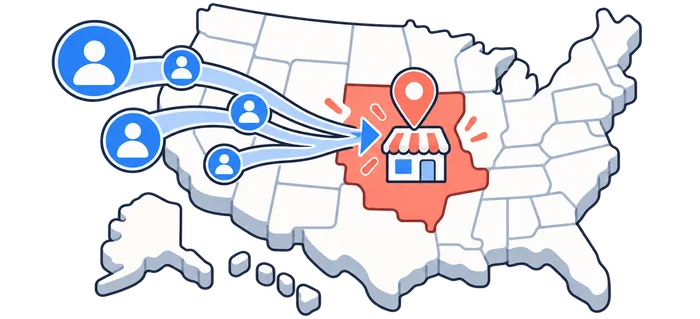
State-targeted USA traffic refers to a campaign configured for selected US states on a platform that offers that setting. For example, a supported platform may let a business choose California, Texas, Florida, or New York rather than the whole country. This describes a geographic control, not a guarantee of physical location, customer intent, or sales.
This approach is particularly useful when the geographic location of a customer has a direct relationship with the product or service being offered. A local contractor, real estate company, law firm, healthcare provider, or regional retailer may have little commercial value from visitors who live outside its service area.
For a roofing business, visits from outside its service area may add to the traffic count without creating an enquiry it can fulfil. A narrower geographic setting can improve the fit of a campaign’s scope, but the business must still verify the eligibility and value of any resulting enquiries.
The potential advantage of state targeting is a narrower geographic scope. Instead of choosing a location solely for its visit volume, the business can focus on the areas it can serve—provided its campaign platform offers the necessary controls.
How Does State-Level Traffic Targeting Work?
Geographic targeting and geographic reporting perform different jobs. Targeting controls influence where a platform tries to deliver a campaign. Analytics reports describe the location associated with recorded activity after visits occur. A report containing state or city names does not establish that those locations can be selected in the order.
Geographic targeting should not be interpreted as perfectly precise physical-location tracking. Location estimates can be affected by networks, devices, settings, and other limitations. For example, Google explains that its location targeting uses multiple signals and is not always fully accurate. Those are Google Ads controls; they do not add state or city selection to SEOVisitor.
Where reliable measurement is available, geographic reports can help a business identify patterns to investigate.
A website owner can examine which states generate the most visitors, which locations produce the strongest engagement, which regions generate leads, and which states contribute the most revenue.
This information becomes especially valuable when comparing state-targeted campaigns with broader nationwide campaigns.
Who Should Use State-Targeted USA Traffic?
On a platform that supports it, state targeting may suit a business whose customers are concentrated in particular geographic areas.
Local service companies can use state targeting to focus on their actual service regions. Real estate websites can use it to reach potential buyers or sellers in specific markets. Regional retailers can target states where they have physical stores or distribution capabilities.
It can also be useful for franchise businesses, home service companies, contractors, law firms, healthcare providers, moving companies, and businesses offering location-specific services.
If your company cannot realistically serve customers across the entire United States, verify the provider’s geographic controls before placing an order. SEOVisitor’s country-level USA service cannot be configured to select the states where your company operates.
What Is Nationwide USA Traffic?
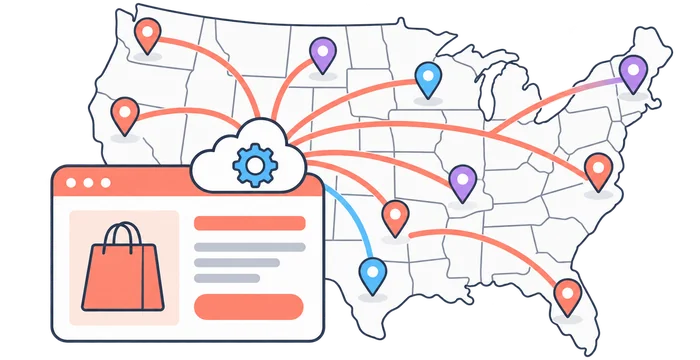
Nationwide USA traffic refers to a campaign targeted at the United States at country level, rather than a setting that selects individual states. This is the geographic scope currently offered by SEOVisitor’s USA service.
A country-level setting does not allocate an equal share of visits to every state. It also does not give you a separate selection control for California, Texas, Florida, or other individual states.
This approach is particularly useful for companies that operate nationally or whose products and services are not restricted by geographic boundaries.
US-wide software subscriptions, online education, and stores with nationwide delivery are possible national use cases. Each business still needs to confirm its actual coverage and restrictions rather than treating its product category as proof of national eligibility.
In these situations, limiting traffic to a handful of states could unnecessarily reduce the potential audience.
How Does Nationwide USA Traffic Work?
Nationwide campaigns operate with a much broader geographic scope. Visitors can come from different states, and the exact distribution can vary depending on the campaign, traffic source, audience availability, and targeting settings.
One important point is that nationwide does not mean every state will necessarily produce the same amount of traffic.
Some states may naturally contribute more visitors because of population size, internet usage, audience availability, or other factors.
This is why country-level campaigns can still be reviewed geographically. A pattern in recorded engagement or purchases may inform a future decision, but moving from a nationwide campaign to selected states requires a platform that actually supports state controls.
Who Benefits Most From Nationwide USA Traffic?
Nationwide USA traffic is generally suitable for businesses that serve a national audience.
Examples include ecommerce stores with nationwide shipping, SaaS companies, online courses, digital products, affiliate websites, national publishers, subscription services, and online marketplaces.
It can also be useful for websites that are still trying to discover which geographic markets have the greatest potential.
Instead of deciding in advance that only certain states are valuable, a nationwide campaign can provide broader market exposure and allow performance data to identify promising locations.
State-Targeted vs Nationwide USA Traffic: Key Differences
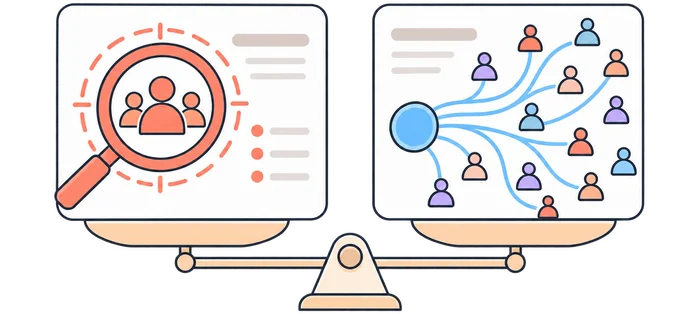
The biggest difference between these two strategies can be summarized as precision versus scale.
State-targeted traffic focuses on geographic precision. Nationwide traffic focuses on broader geographic reach.
| Factor | State-targeted campaign | Nationwide USA campaign |
|---|---|---|
| Geographic setting | Selected states, where the platform supports them | United States at country level |
| Potential reach | Narrower geographic scope; actual reach depends on the channel | Broader geographic scope; no promise of delivery to every state |
| Location accuracy | Dependent on platform signals and limitations | Dependent on platform signals and limitations |
| Possible business fit | A business with relevant state-level coverage | A business that can serve a national audience |
| Regional testing | Requires verified state selection or exclusion controls | May provide regional reports; reports do not create state selection |
| Scaling | Additional locations depend on provider options and campaign results | Broader scope does not guarantee useful customers or profitable scale |
| Audience control | Geographic scope alone does not establish interest or intent | Geographic scope alone does not establish interest or intent |
| SEOVisitor availability | State and city selection are not available | USA country-level targeting is available |
| Success measure | Verified useful outcomes in relation to campaign costs | Verified useful outcomes in relation to campaign costs |
Neither approach is inherently superior.
The question is which geographic scope fits the task, which controls the platform actually offers, and whether the resulting activity produces useful outcomes.
Precision vs Scale
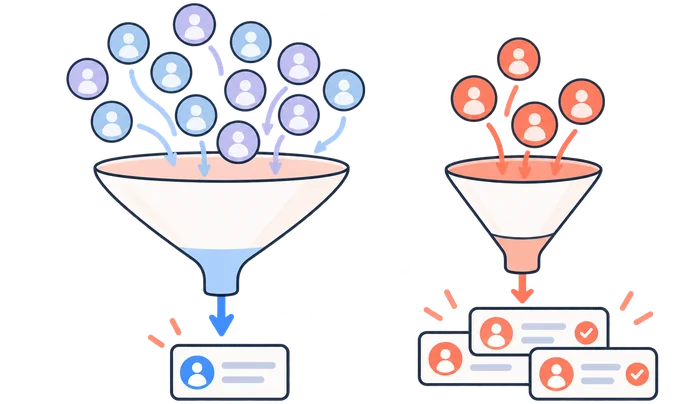
A narrower setting limits the geographic scope a platform tries to reach; it does not certify a visitor’s intent or purchasing eligibility. If a business can serve only selected states, broader reach may create activity it cannot use. Check the actual selection and exclusion controls before comparing visit totals.
For a business with national coverage, an unnecessary state restriction may narrow the test before there is evidence for that choice. Country-level reporting can help identify patterns, but a state’s appearance in a report does not make it a selectable campaign setting. The useful comparison is between the business requirement and the controls available.
Is State-Targeted Traffic Better Than Nationwide Traffic?
There is no universal winner.
State-targeted traffic is usually more appropriate when geographic relevance is central to the business. Nationwide traffic is generally more appropriate when the product or service is available throughout the United States.
The correct choice should begin with a simple question: Where can your business actually serve customers?
If the answer is “only in certain states,” look for a platform that explicitly supports those boundaries. A country-level order is not a substitute for a state restriction.
If the answer is “anywhere in the United States,” nationwide traffic may provide better reach.
When State-Targeted Traffic Is the Better Choice
State-targeted traffic can be a strong option when a company has a limited service area.
For a location-dependent service, visits from outside the supported area may not produce an enquiry the business can accept. A platform’s geographic setting should therefore be checked against the actual service boundary, not only a country name.
State targeting can also be useful when different locations have different offers, pricing structures, regulations, or customer preferences.
Another important use case is geographic market testing.
A regional market test needs both a serviceable offer in that region and a platform that supports the required locations. Confirm those conditions and the measurement plan before interpreting enquiries or purchases as evidence of demand.
This approach provides a more focused way to evaluate a new market.
When Nationwide USA Traffic Is the Better Choice
Nationwide traffic is generally more suitable for businesses that can sell or provide services throughout the country.
Ecommerce is one of the clearest examples.
If an online store ships products to customers in all 50 states, restricting traffic to only a few locations may unnecessarily limit its potential audience.
SaaS companies can also benefit from nationwide targeting because software products can often be sold to customers regardless of their location.
Digital education, online subscriptions, affiliate websites, publishers, and other internet-based businesses may similarly benefit from a broad geographic audience.
Nationwide traffic can also be useful when a company is unsure which states are most relevant. Where suitable measurement is available, it can collect broader geographic evidence. Treat those reports as information to investigate, not a promise that the campaign can subsequently be restricted to particular states.
State-Targeted USA Traffic for Local Businesses
Local businesses are among the strongest candidates for geographic traffic targeting.
A location-dependent business needs to define which enquiries or orders it can fulfil. The relevant boundary may be a state, several states, a city, or a smaller service area; a national visitor count does not answer that eligibility question.
The same principle applies to plumbers, electricians, roofing contractors, moving companies, healthcare providers, attorneys, restaurants, and many other location-dependent businesses.
For these businesses, geographic relevance can have a major effect on the commercial value of traffic.
Why Geographic Relevance Matters
Traffic becomes more valuable when it matches the business’s actual market.
A useful way to think about this is:
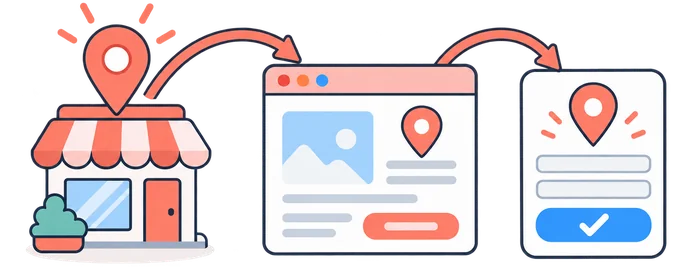
Traffic Location → Service Area → Landing Page → Offer → Conversion
If these elements are aligned, the visitor has a clear reason to engage with the business.
If they are disconnected, traffic volume becomes much less meaningful.
Make service coverage, landing pages, and offers consistent. If acquisition must be restricted to a state, use a platform with that setting. A state-specific landing page does not itself restrict a country-level campaign to the same state.
This can create a more consistent experience from acquisition through conversion.
State vs City Targeting
State targeting is not always the most precise option.
A company may operate across an entire state, but another business may serve only one metropolitan area or city.
For a business serving a single city or metro area, an entire state may still be too broad.
This creates different levels of geographic targeting:
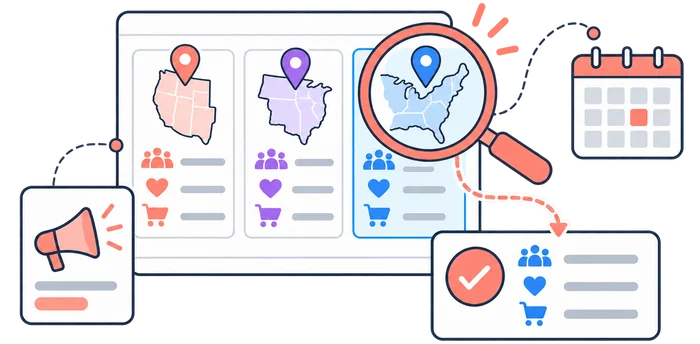
Nationwide → State → Region/Metro → City
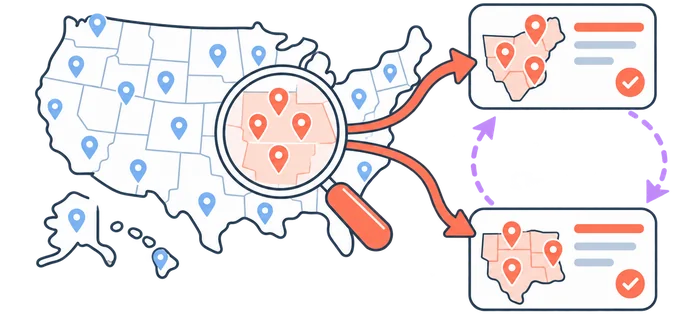
The appropriate level depends on the actual service area and the controls the chosen platform provides. SEOVisitor currently offers USA country-level targeting, so a business requiring a selected city or state needs a different geographic setup.
The more geographically concentrated the business is, the more valuable precise targeting may become.
Nationwide USA Traffic for Ecommerce and Online Businesses
Nationwide traffic is particularly relevant to ecommerce businesses that serve customers throughout the United States.
Before choosing national coverage, check where orders can be delivered, whether the offer is available throughout the country, and whether regional restrictions affect fulfilment.
If the business can accept orders from customers across the country, there is little reason to restrict the traffic campaign to only one or two states unless there is a specific strategic reason.
When Ecommerce Stores Should Target the Whole US
Nationwide targeting can be suitable when products are available across the country, shipping is nationwide, pricing is relatively consistent, and the website can process orders regardless of the customer’s location.
It can also help ecommerce businesses discover geographic patterns.
Compare recorded regional activity with verified orders and delivery eligibility. Look for a pattern that can be investigated, rather than declaring a winning state from visit totals or a few high-value orders.
This information can then influence future marketing decisions.
When Ecommerce Stores Should Use State Targeting
State-level targeting can still be valuable for ecommerce businesses.
Certain products may have regional demand. Shipping costs can vary between states. Inventory may be distributed across regional warehouses. Some products may also be affected by state-specific regulations.
If a business identifies a particularly strong state, it can investigate a separate campaign through a platform that supports that geographic control. A state appearing in a country-level report does not make it selectable in the existing service.
State-Targeted vs Nationwide Traffic for SEO
One of the most important points to understand is that traffic acquisition and SEO rankings are not the same thing.
A website should not assume that purchasing traffic from a particular state will automatically improve its Google rankings for searches performed in that state.
A geographic campaign should be judged against its stated marketing task. Purchasing visits from a state or country is not evidence that organic rankings have improved; measure any organic-search change separately from paid or purchased campaign activity.
Does State-Targeted Traffic Improve Google Rankings?
Not simply because the visitors come from a particular state.
If a website receives visitors from Texas, that alone doesn’t mean Google will automatically rank the website higher for users searching from Texas.
The potential value lies elsewhere.
When relevant visitors and reliable measurement are available, regional campaign data may help a business investigate audience behavior or landing-page performance. These observations do not establish a direct organic-ranking benefit.
These benefits are useful, but they are different from directly manipulating organic rankings.
Can Nationwide Traffic Support an SEO Strategy?
Nationwide acquisition and organic SEO should have separate objectives and measurements. Any claimed benefit to brand awareness or customer acquisition needs evidence from the actual campaign.
It can also help businesses understand how users from different regions interact with their website.
However, website owners should still evaluate the actual purpose of the traffic.
If the objective is lead generation, track leads.
If the objective is ecommerce, track purchases and revenue.
If the objective is audience research, track engagement and user behavior.
Traffic volume should be treated as one metric rather than the entire definition of success.
Why Traffic Quality Matters More Than Volume
Visit volume and business value answer different questions. A campaign can create more recorded activity without creating more valid enquiries or paid orders. Verify the outcome the business needs before describing one geographic scope as better.
Keep the reporting unit consistent. A user count, session count, submitted form, paid order, and profit are not interchangeable measures. For a comparison, name the unit, use the same date range, and explain which records qualify as verified outcomes.
Which Is More Cost-Effective: State-Targeted or Nationwide USA Traffic?
Cost depends on many factors, so there is no universal answer.
Pricing can depend on traffic volume, campaign duration, traffic source, provider, and targeting controls actually offered. A service without state selection does not provide a state-targeted pricing alternative to compare within that same service.
Nationwide campaigns can benefit from scale, while state-targeted campaigns can potentially reduce wasted geographic reach.
However, cost per visitor should never be considered in isolation.
A consistent cost measure is:
Cost per verified outcome = total campaign spend ÷ verified outcomes
Choose one outcome for that calculation, such as an eligible enquiry or a paid order. Use the same campaign period and verification rule. If there are no verified outcomes, do not report the result as zero cost per outcome.
A higher cost per visit can still be compatible with a useful test, while cheap visits can produce no verified outcomes. The conclusion depends on total spend and the business value of the outcomes, not the geographic label alone.
Compare the verified outcome cost with the value and fulfilment cost of a customer. That assessment is separate from deciding whether the provider’s geographic controls can meet the service-area requirement.
How to Choose the Right USA Traffic Targeting Strategy
Choosing the right strategy becomes much easier when you follow a structured process.
Step 1: Define Your Actual Service Area
First determine where your company can realistically serve customers.
Do you operate in one state? Multiple states? The entire United States?
This is the foundation of the targeting decision.
Step 2: Define Your Conversion Goal
Next, determine what you expect visitors to do.
Your goal might be a purchase, lead submission, phone call, account registration, SaaS signup, download, email subscription, or another measurable action.
The clearer the goal, the easier it becomes to compare traffic campaigns.
Step 3: Analyze Existing Geographic Performance
Before launching a new campaign, examine your current website data.
Look at which states generate the most visitors, which states produce the strongest engagement, which locations generate leads, and which states contribute the most revenue.
An important question is whether your highest-traffic states are also useful customer markets. Confirm enquiries or purchases against business records; a regional analytics label alone does not prove customer location or establish a targeting option.
Step 4: Match Targeting With Business Coverage
A simple framework can help:
Local business → Check for controls matching the actual city or service area.
Regional business → Verify selected-state or exclusion controls before committing to a provider.
National business → Consider country-level targeting if the service and campaign objective fit.
Unknown market → Review nationwide evidence, then use regional controls only where a platform actually supports them.
Step 5: Test Before Scaling
Whenever possible, test the strategy before committing a large budget.
Compare geographic location, engagement, conversions, landing page performance, and overall campaign cost.
Once you have dependable evidence, decide whether to continue, refine, or stop the test. Moving to a selected state or city requires a supporting platform; it is not an option in SEOVisitor’s current USA service.

Buy USA Website Traffic
Run a USA traffic campaign with country-level targeting. State and city selection are not available. Check that this scope fits your service area, then evaluate verified enquiries or purchases alongside campaign cost.
How to Measure the Quality of State-Targeted and Nationwide Traffic
Getting visitors is only the beginning.
The real question is what those visitors do after arriving on your website.
Metrics to Monitor
Useful measures include recorded users or sessions, campaign cost, reported geography, source, eligible enquiries, and verified paid orders. Choose the measures that match the objective and check their definitions before combining reports.
Regional analytics is an estimate of recorded activity, not proof of a person’s precise physical location. Customer records can verify an order and its delivery eligibility; they do not turn an analytics location into a campaign selection control. Keep campaign attribution separate from a claim that the campaign caused additional sales.
Compare Equivalent Campaigns
When comparing state-targeted and nationwide traffic, try to keep as many variables consistent as possible.
Use similar landing pages, comparable campaign durations, similar traffic volumes, and the same conversion goals.
Otherwise, it becomes difficult to determine whether geographic targeting was actually responsible for the difference in performance.
A Hypothetical Example: From Service Area to Campaign Review
This entire example is hypothetical. The business, budget, counts, and outcomes below are invented to illustrate a decision process; they are not SEOVisitor delivery or performance claims.
Start With the Geographic Requirement
An online kitchenware store currently delivers only to Texas and Oklahoma. Its test objective is paid orders it can fulfil in those states. The owner must therefore check selected-state controls before paying for traffic. SEOVisitor’s current USA country-level option cannot enforce that two-state requirement, so it would not fit this particular test.
The store could investigate a platform that explicitly supports the required states, check its location settings and limitations, and test its own order journey. Choosing a narrower setting would still not guarantee eligible shoppers or accurate physical-location estimates.
Define the Test and Verify the Records
For illustration, the owner chooses a $200 spending limit and a 14-day review period on that supporting platform. These are hypothetical planning choices, not recommended budgets or service options. Before delivery, the store tests its analytics and checkout, records the campaign dates, and decides how it will associate an order with the campaign.
At review, the hypothetical reports and order records show the figures below. If the store cannot reliably separate campaign activity from other sources, it should not attribute all orders during those dates to this campaign.
| Measure | Hypothetical observation | What it establishes |
|---|---|---|
| Campaign spend | $200 | The cost recorded for this defined test |
| Recorded campaign sessions | 500 | Recorded activity, not 500 confirmed people or customers |
| Order submissions linked by the chosen attribution method | 6 | Submissions requiring verification |
| Verified paid orders with eligible delivery | 4 | Orders supported by payment and fulfilment records; the other two do not qualify |
| Cost per verified eligible order | $200 ÷ 4 = $50 | An attributed outcome cost, not proof of profit or incremental sales |
The four verified orders must not be reported as six sales or as 500 customers. Their delivery eligibility helps the store judge service-area fit; it does not prove where every visitor was physically located. Whether $50 per order is acceptable depends on margins, fulfilment costs, and customer value.
Make the Next Geographic Decision
The owner reviews the test against its spending limit, verified records, and actual coverage. A state appearing prominently in analytics is not enough reason to scale, and campaign attribution does not prove that four additional orders were caused by the traffic. Keep the test limited or stop it if the records do not support a useful conclusion.
If the same store later expands delivery across the United States, a country-level test may become relevant. That changes the business requirement; it does not add state or city selection to SEOVisitor. The owner would still confirm the available options and run a separately measured test.
Common Geographic Targeting Mistakes
Several errors come from asking a report to do a job that belongs to campaign settings or business records. Check these distinctions before choosing the next scope.
Treating a regional report as a selection control. Seeing Texas in analytics does not mean Texas was selected in the order or can be selected next time. Verify the provider’s actual controls.
Using a country setting for a mandatory local boundary. A city-specific page or an address in the website footer does not restrict country-level delivery to that city. If the boundary is essential, choose a platform that supports it.
Comparing different units or incomplete outcomes. Keep users, sessions, submitted forms, verified leads, paid orders, and profit distinct. Use a consistent period, source definition, and verification rule when comparing campaigns.
Turning attribution into a ranking or sales claim. Recorded activity associated with a campaign does not establish incremental sales, a direct organic-ranking effect, or profitable scale. Evaluate the specific task the campaign was meant to perform.
State-Targeted vs Nationwide USA Traffic: Which One Should You Choose?
The simplest way to make the decision is to focus on where your customers can actually come from.
Consider a Platform With State Targeting If:
- Your business operates in selected states.
- Your service is location-dependent.
- You’re testing a regional market.
- Your offers differ by state.
- Geographic relevance is particularly important.
- You want to compare specific markets.
Consider Nationwide USA Traffic When Country-Level Scope Fits
First confirm that the business can serve a national audience and that country-level delivery fits the objective. The examples below are possible uses, not reasons to ignore a local service boundary or evidence of profitability.
- You serve customers throughout the United States.
- Your ecommerce store ships nationwide.
- You sell SaaS or digital products.
- Your content has national relevance.
- You want broad exposure across the country.
- You’re still identifying your strongest geographic markets.
Consider a Hybrid Strategy
A business may use a country-level campaign for one task and a separate regional campaign for another. Each needs a suitable offer, available controls, and a measurement plan. This is a possible combination of campaigns, not a promise that one order can switch between geographic levels.
A nationwide report can inform a question about a regional market, but the regional step requires a supporting platform. SEOVisitor’s current USA service remains country-level only.
Conclusion: Choose a Scope You Can Actually Use
Start with the area the business can serve, then verify the provider’s geographic controls. A narrower scope may suit a local or regional task; a country-level setting may suit a national one. Neither choice guarantees useful customers or profitable results.
If you are considering SEOVisitor’s USA traffic service, confirm that United States country-level targeting fits the objective. State and city selection are not available. A required local boundary needs a platform that explicitly supports it.
Run a test the business can evaluate, keep the reporting units consistent, and verify the outcomes before continuing or scaling. Geography describes campaign scope; business records establish whether the resulting enquiries or orders are useful.
Frequently Asked Questions
Quick answers to common questions about State-Targeted vs Nationwide USA Traffic
State targeting selects particular US states on a platform that supports it. Nationwide targeting selects the United States at country level; it does not mean equal delivery to every state. SEOVisitor’s current USA service provides country targeting only.
Neither option is universally better. Match the campaign to the business’s actual service area and the controls the provider offers, then compare verified outcomes rather than visit totals. Narrower geography does not guarantee customers or organic rankings.
SEOVisitor’s current USA service supports United States country targeting only; state and city selection are unavailable. Choose it only if country-level delivery fits your objective. If particular states must be selected or excluded, verify those controls with a provider that explicitly supports them.
Start with actual service coverage and verified customer evidence. An analytics report listing US states describes recorded activity; it does not select states or prove that a provider can target them. Check available geographic controls before planning a regional campaign.
Nationwide targeting may fit a store that can serve customers across the US, but shipping coverage alone does not make traffic profitable. Compare verified purchases and campaign costs. Regional testing requires a platform with the necessary geographic controls.
Use the same campaign dates when reviewing recorded geography, source, landing pages and useful actions. Verify enquiries or purchases against actual business records. Geographic analytics is approximate; a regional report does not prove physical location or state selection in an order.
Match targeting to the actual service area. A state can be too broad for a business serving one city, and a country-level order cannot enforce a local boundary. If location restrictions are essential, use a platform that explicitly supports them and verify its settings.



Comments
Leave a Comment